Summary
Updating a risk control framework is more than a compliance exercise—it’s a strategic decision that shapes how organizations identify, evaluate, and respond to uncertainty. Leaders must consider evolving regulatory expectations, technology risks, operational complexity, and cultural alignment. A thoughtful update improves resilience, supports decision-making, and helps organizations manage financial, operational, and reputational risks more effectively.
Why Risk Control Frameworks Require Periodic Updates
Risk control frameworks are not static systems. They are living structures that must evolve as organizations grow, technologies change, and regulatory environments shift.
Across the United States, businesses are facing increasingly complex risk landscapes. Cybersecurity threats, supply chain disruptions, data privacy regulations, and economic volatility have all increased the importance of proactive risk management.
According to research from the National Association of Corporate Directors, over 70% of board members report that risk oversight responsibilities have expanded significantly in the past decade. At the same time, frameworks designed ten years ago often struggle to address modern operational realities.
When organizations fail to update their frameworks regularly, several problems tend to appear:
- Controls designed for outdated systems
- Gaps in emerging risk categories such as cyber or third-party risk
- Poor alignment between strategy and risk tolerance
- Limited visibility for leadership and boards
Updating the framework allows organizations to align risk controls with current operations and future growth plans.

Understanding What a Risk Control Framework Actually Does
Before revising a framework, leaders should revisit its purpose. A risk control framework is not simply a checklist of controls or compliance rules. It is a structured approach that helps organizations understand, manage, and monitor uncertainty.
At its core, a modern framework answers three key questions:
- What risks could affect our objectives?
- How severe could those risks become?
- What controls prevent or reduce their impact?
The framework typically connects several components:
- Risk identification processes
- Risk assessment methodology
- Control mechanisms
- Monitoring and reporting systems
- Governance and accountability structures
Many U.S. companies align their frameworks with established models such as the COSO Enterprise Risk Management Framework or ISO 31000 Risk Management Guidelines, which provide structured approaches widely accepted by regulators and auditors.
A well-designed framework helps leadership translate uncertainty into actionable insight rather than reactive problem-solving.
Signals That It’s Time to Update Your Risk Framework
Organizations often delay framework updates until a major event occurs—such as a regulatory finding or operational disruption. However, several early signals indicate that a review is overdue.
Leaders should consider an update if they notice:
- Rapid organizational growth or restructuring
- Expansion into new markets or products
- Increased technology reliance or cloud migration
- New regulatory obligations
- Recent risk incidents or near misses
- Inconsistent risk reporting across departments
In many organizations, risk frameworks become fragmented over time. Departments develop their own controls, reporting formats, and risk assessments, which leads to inconsistent oversight.
Updating the framework can unify these processes under a consistent structure.
Aligning Risk Control With Business Strategy
One of the most common weaknesses in outdated frameworks is a disconnect between risk management and business strategy.
Historically, risk control functions were designed primarily to support compliance. Today, leading organizations integrate risk thinking directly into strategic planning.
For example, when a company evaluates expansion into a new international market, the framework should guide leaders through a structured evaluation of:
- Regulatory exposure
- Currency risk
- Supply chain vulnerabilities
- Data protection requirements
- Political or geopolitical risk
Instead of simply reacting to issues, the framework enables informed decisions about acceptable levels of risk.
Effective frameworks incorporate risk appetite statements—clear definitions of how much uncertainty the organization is willing to accept in pursuit of strategic objectives.
The Growing Role of Technology Risk
Digital transformation has significantly changed how risk frameworks must operate.
Technology is now deeply embedded in business processes, making operational resilience heavily dependent on cybersecurity, system availability, and data integrity.
According to the IBM Cost of a Data Breach Report, the average cost of a data breach in the United States reached $9.48 million in 2023, the highest of any country.
For leaders updating their frameworks, this means several new considerations:
- Cybersecurity controls must be integrated into enterprise risk management
- Third-party technology providers require formal risk assessments
- Incident response planning must be part of the framework
- Continuous monitoring tools are increasingly necessary
Risk frameworks that treat technology risk as a separate category often fail to capture its enterprise-wide implications.
Governance: Clarifying Who Owns Risk
An effective risk framework clearly defines accountability.
In many organizations, risk management responsibilities are ambiguous. When incidents occur, it becomes unclear whether the issue falls under IT, compliance, operations, or executive leadership.
Updating the framework should establish clear governance structures.
Common governance roles include:
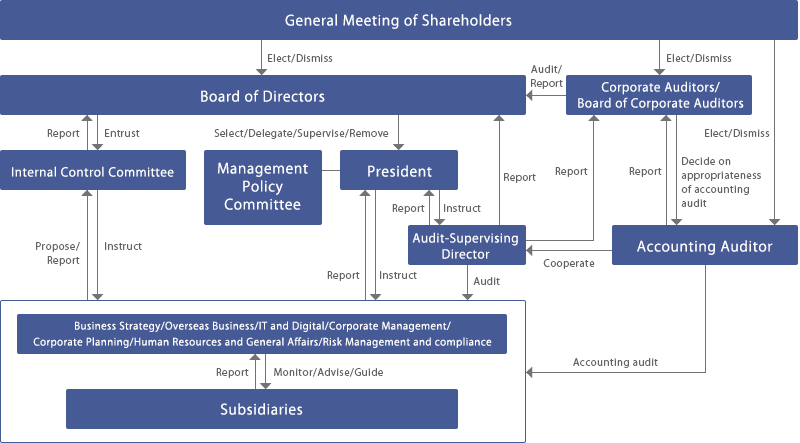
- Board of Directors — provides oversight and risk appetite approval
- Executive Leadership — integrates risk considerations into strategy
- Risk Management Function — coordinates framework implementation
- Operational Leaders — own risks within their departments
- Internal Audit — independently evaluates control effectiveness
The most effective frameworks embed risk ownership within operational teams while maintaining centralized oversight.
Building a Culture That Supports Risk Awareness
A framework is only effective if employees understand and support it.
Risk culture—the shared understanding of how an organization approaches uncertainty—plays a major role in whether controls are followed consistently.
In organizations with strong risk cultures:
- Employees feel comfortable escalating concerns
- Leaders openly discuss risks during planning
- Controls are viewed as operational safeguards, not obstacles
- Training reinforces risk awareness across departments
Without cultural alignment, even well-designed frameworks often become documentation exercises rather than practical management tools.
Integrating Data and Reporting Into Risk Oversight
Modern risk frameworks increasingly rely on data visibility.
Leadership teams need reliable information about emerging risks, control effectiveness, and operational trends. Without structured reporting, it becomes difficult to make timely decisions.
Effective reporting systems often include:
- Risk dashboards for executives and boards
- Key risk indicators (KRIs)
- Incident tracking systems
- Control testing results
- Trend analysis across business units
For example, a financial services firm may track indicators such as fraud attempts, cybersecurity alerts, and regulatory inquiries in a single risk reporting dashboard.
This allows leadership to detect patterns early rather than responding after incidents escalate.
Avoiding Common Pitfalls During Framework Updates
Updating a risk framework can introduce its own challenges. Organizations sometimes implement complex systems that look sophisticated on paper but prove difficult to maintain.
Common pitfalls include:
- Over-engineering the framework with unnecessary complexity
- Treating the update as a compliance project rather than a business initiative
- Failing to train employees on new processes
- Ignoring operational realities in favor of theoretical models
- Lack of executive sponsorship
Successful updates usually involve collaboration across multiple departments rather than relying solely on risk or compliance teams.
Pilot programs and phased rollouts can also help organizations test new processes before full implementation.
How Leaders Can Approach the Update Process
Leaders who approach framework updates strategically tend to follow a structured process.
A typical approach may include:
- Assessment: Evaluate the current framework, identifying gaps and inefficiencies
- Benchmarking: Compare practices with recognized standards such as COSO or ISO 31000
- Stakeholder Input: Gather insights from operational leaders and subject matter experts
- Design: Develop updated controls, governance structures, and reporting mechanisms
- Implementation: Introduce new processes with training and documentation
- Monitoring: Track performance and adjust controls as needed
This structured approach helps ensure that the updated framework remains practical and aligned with organizational goals.
Frequently Asked Questions
1. How often should organizations update their risk control framework?
Most organizations review their frameworks annually and conduct major updates every three to five years, depending on regulatory changes and operational complexity.
2. What is the difference between risk management and risk control?
Risk management involves identifying and evaluating risks, while risk control refers to the specific processes and mechanisms used to reduce or mitigate those risks.
3. Do small and mid-size companies need formal risk frameworks?
Yes. Even smaller organizations benefit from structured approaches to identifying and managing operational, financial, and compliance risks.
4. What industries require the most rigorous frameworks?
Financial services, healthcare, energy, and technology companies typically face the most stringent risk oversight expectations due to regulatory requirements.
5. Who should lead the framework update process?
The risk management function typically coordinates updates, but executive leadership and operational leaders must be actively involved.
6. What role does internal audit play?
Internal audit provides independent assurance that the framework and controls are functioning as intended.
7. How can organizations measure framework effectiveness?
Metrics such as incident frequency, control testing results, regulatory findings, and operational disruptions help evaluate effectiveness.
8. Are risk frameworks mainly about compliance?
No. While compliance is important, modern frameworks focus equally on strategic risk, operational resilience, and decision-making.
9. What technology tools support risk frameworks?
Common tools include governance, risk, and compliance (GRC) platforms, incident management systems, and data analytics dashboards.
10. What is a risk appetite statement?
A risk appetite statement defines the amount and type of risk an organization is willing to accept while pursuing its objectives.
Steering the Organization Through Uncertainty
Updating a risk control framework is not simply an administrative exercise. It represents an opportunity for leaders to strengthen how their organization anticipates challenges, evaluates opportunities, and responds to uncertainty.
When frameworks are aligned with strategy, supported by clear governance, and reinforced by strong risk culture, they become powerful tools for resilience.
Organizations that treat risk oversight as an integrated part of decision-making—not just a compliance obligation—tend to adapt more effectively to changing business environments.
Executive Snapshot: Key Points Leaders Should Remember
- Risk frameworks must evolve alongside organizational growth and technology change
- Aligning risk controls with strategic objectives improves decision-making
- Cybersecurity and digital risks now require enterprise-wide oversight
- Governance structures must clearly define accountability for risk ownership
- Strong risk culture ensures controls are consistently applied
- Data-driven reporting improves visibility for leadership and boards
- Framework updates should prioritize practicality over complexity