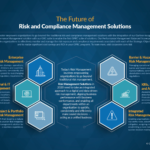
Effective risk control is evolving from a compliance requirement into a strategic business discipline. Organizations that proactively identify, assess, and manage risk are improving decision-making, strengthening resilience, and gaining competitive advantages. This article explores why risk control matters more than ever, how leading companies apply it in practice, and what businesses can do to build a modern, effective risk management framework.
Introduction: A Discipline That Rarely Gets Credit
Risk control rarely headlines strategy discussions, yet it quietly shapes outcomes across industries. From supply chain disruptions to cybersecurity breaches and regulatory shifts, businesses today operate in environments defined by uncertainty. What distinguishes resilient organizations is not their ability to avoid risk entirely, but their ability to understand and manage it effectively.
In the United States, evolving regulatory frameworks, technological complexity, and global interdependence have made risk control a foundational business capability. According to surveys by Deloitte and PwC, companies with mature risk management frameworks report stronger financial performance and fewer operational disruptions.
This shift signals a broader transformation: risk control is no longer a defensive function. It is becoming a defining discipline that informs strategy, protects value, and enables growth.
What Is Risk Control—and Why Is It Changing?
At its core, risk control refers to the processes organizations use to identify, evaluate, and mitigate potential threats to their objectives. Traditionally, it focused on compliance, insurance, and internal controls. Today, its scope has expanded significantly.
Modern risk control includes:
- Strategic risk assessment tied to business goals
- Real-time monitoring of operational and financial risks
- Cybersecurity and data protection frameworks
- Scenario planning and stress testing
- Integration with enterprise decision-making
The shift is driven by several forces. First, risks are more interconnected. A cyber incident can disrupt operations, damage reputation, and trigger regulatory penalties simultaneously. Second, risks evolve faster than traditional controls can adapt. Third, stakeholders—from investors to regulators—expect transparency and accountability.
As a result, risk control is moving upstream, influencing decisions before risks materialize rather than reacting afterward.
Why Effective Risk Control Is Becoming a Competitive Advantage
Organizations that treat risk control as a strategic function are seeing tangible benefits. This advantage is often subtle but powerful.
1. Better Decision-Making Under Uncertainty
Executives increasingly rely on risk insights when evaluating investments, partnerships, and expansion plans. A structured risk framework provides clarity about trade-offs and potential outcomes.
2. Increased Organizational Resilience
Companies with strong risk control systems recover faster from disruptions. During the COVID-19 pandemic, businesses with established contingency plans adapted more quickly to supply chain and workforce challenges.
3. Enhanced Trust and Credibility
Investors, regulators, and customers place greater trust in organizations that demonstrate disciplined risk management. This trust can influence valuations, partnerships, and customer loyalty.
4. Operational Efficiency
Effective risk control reduces costly surprises. By identifying vulnerabilities early, organizations avoid disruptions that can drain resources.
5. Regulatory Alignment
In sectors like finance and healthcare, regulatory expectations are increasingly tied to risk governance. Proactive compliance reduces the likelihood of penalties and reputational damage.

How Leading Organizations Apply Risk Control in Practice
The most effective organizations embed risk control into everyday operations rather than isolating it within compliance departments.
Consider a mid-sized manufacturing company in the Midwest. Facing recurring supply chain disruptions, leadership implemented a risk mapping system to identify dependencies on single suppliers. By diversifying sourcing and monitoring supplier risk indicators, the company reduced production delays by nearly 30% within a year.
In another example, a U.S.-based financial services firm integrated risk analytics into its product development process. Before launching new offerings, teams assess potential regulatory, market, and operational risks. This approach has helped the firm avoid costly product withdrawals and compliance issues.
Common practices among high-performing organizations include:
- Embedding risk assessments into strategic planning
- Using data analytics to monitor risk indicators in real time
- Establishing cross-functional risk committees
- Conducting regular scenario simulations
- Aligning risk appetite with business objectives
These practices reflect a broader mindset shift: risk control is not a barrier to innovation—it enables smarter innovation.
What Are the Most Common Business Risks Today?
Understanding the risk landscape is essential for building effective controls. While risks vary by industry, several categories consistently emerge across U.S. organizations.
Strategic Risks
Changes in market conditions, competitive dynamics, or business models can undermine long-term goals.
Operational Risks
Process failures, supply chain disruptions, and workforce challenges fall into this category.
Financial Risks
Interest rate fluctuations, credit exposure, and liquidity constraints can impact financial stability.
Cybersecurity Risks
Data breaches and ransomware attacks have become among the most significant threats facing businesses.
Regulatory Risks
Evolving laws and compliance requirements create ongoing challenges, particularly in highly regulated sectors.
Reputational Risks
Public perception, often shaped by social media and news cycles, can shift rapidly and impact brand value.
Organizations that systematically assess these risks are better positioned to respond effectively.

How Can Businesses Build an Effective Risk Control Framework?
Building a modern risk control system requires more than policies and checklists. It involves aligning people, processes, and technology.
A practical approach includes:
- Define Risk Appetite: Clearly articulate how much risk the organization is willing to accept in pursuit of its objectives.
- Establish Governance: Assign roles and responsibilities for risk oversight across leadership and operational teams.
- Implement Risk Identification Processes: Use structured methods to identify potential risks across functions.
- Prioritize Risks: Focus resources on risks with the highest potential impact and likelihood.
- Develop Mitigation Strategies: Create actionable plans to reduce or manage risks.
- Monitor and Report: Use dashboards and reporting tools to track risk indicators and performance.
- Continuously Improve: Regularly review and update risk frameworks to reflect changing conditions.
Technology plays a critical role in enabling these capabilities. Risk management platforms, data analytics tools, and automation systems allow organizations to monitor risks more effectively and respond faster.
The Role of Leadership in Risk Control
Leadership commitment is one of the strongest predictors of effective risk control. When executives treat risk management as a strategic priority, it becomes embedded throughout the organization.
Leaders set the tone by:
- Encouraging open discussion of risks
- Integrating risk considerations into decision-making
- Allocating resources to risk management initiatives
- Holding teams accountable for risk outcomes
Boards of directors also play an important role in overseeing risk governance. In the U.S., board-level risk committees are increasingly common, particularly in regulated industries.
A culture that supports risk awareness—not risk avoidance—is essential. Employees should feel empowered to identify and escalate risks without fear of repercussions.
How Technology Is Reshaping Risk Control
Advancements in technology are transforming how organizations manage risk. Data-driven insights are replacing manual processes, enabling more proactive and precise risk control.
Key developments include:
- Predictive Analytics: Identifying potential risks before they materialize
- Artificial Intelligence: Automating risk detection and response
- Cloud-Based Platforms: Providing real-time visibility into risk metrics
- Cybersecurity Tools: Enhancing protection against digital threats
For example, retailers use predictive analytics to anticipate supply chain disruptions, while financial institutions leverage AI to detect fraudulent transactions.
However, technology also introduces new risks, including data privacy concerns and system vulnerabilities. Effective risk control must address both the opportunities and challenges of digital transformation.

What Mistakes Do Companies Make in Risk Control?
Despite its importance, many organizations struggle to implement effective risk control. Common pitfalls include:
- Treating risk management as a compliance exercise rather than a strategic function
- Failing to integrate risk insights into decision-making
- Overlooking emerging risks while focusing only on known threats
- Relying on outdated processes and tools
- Lacking clear accountability for risk management
These issues often stem from a fragmented approach. Without coordination across departments, risk control efforts become inconsistent and less effective.
Frequently Asked Questions
1. What is the primary goal of risk control in business?
To identify, assess, and manage risks in a way that protects organizational value while enabling informed decision-making.
2. How is risk control different from risk management?
Risk control is a component of risk management focused specifically on mitigating and managing identified risks.
3. Why is risk control important for small businesses?
Small businesses often have fewer resources to absorb disruptions, making proactive risk control essential for stability.
4. What industries rely most heavily on risk control?
Finance, healthcare, manufacturing, and technology sectors typically have the most advanced risk control frameworks.
5. How often should risk assessments be conducted?
At least annually, with more frequent reviews for high-risk areas or rapidly changing environments.
6. What role does data play in risk control?
Data enables real-time monitoring, predictive analysis, and more informed decision-making.
7. Can risk control improve profitability?
Yes, by reducing losses, improving efficiency, and supporting better strategic decisions.
8. What is a risk appetite statement?
A formal definition of the level and types of risk an organization is willing to accept.
9. How does cybersecurity fit into risk control?
It is a critical component, addressing threats related to data breaches and digital operations.
10. What is the first step in building a risk control framework?
Defining organizational objectives and identifying the risks that could impact them.
The Emerging Identity of Risk Control in Modern Business
Risk control is no longer confined to back-office functions or regulatory checklists. It is becoming a defining discipline that shapes how organizations think, plan, and act. Businesses that recognize this shift are not simply avoiding risk—they are using it as a lens to make better decisions.
As uncertainty continues to define the business environment, the ability to manage risk effectively will distinguish organizations that adapt from those that struggle. The advantage may be quiet, but its impact is unmistakable.
Key Insights at a Glance
- Risk control is evolving into a strategic business discipline
- Effective frameworks improve decision-making and resilience
- Leadership and culture play critical roles in success
- Technology is transforming risk management capabilities
- Proactive approaches outperform reactive strategies