Risk control in 2026 has moved beyond compliance checklists into a strategic discipline shaping decision-making, resilience, and growth. High-performing organizations are integrating real-time data, cross-functional accountability, and predictive analytics to manage uncertainty. This article explores how leading companies are redefining risk control, what sets them apart, and how others can adopt these practices to stay competitive.
A Shift in Mindset: From Protection to Performance
For decades, risk control was largely reactive—focused on preventing losses, meeting regulatory requirements, and minimizing exposure. In 2026, that model is no longer sufficient.
High-performing organizations are reframing risk control as a performance enabler rather than a defensive function. Instead of asking, “How do we avoid risk?”, they’re asking, “How do we manage risk intelligently to create value?”
This shift is being driven by a convergence of factors:
- Increased market volatility
- Accelerating digital transformation
- Regulatory complexity across industries
- Greater stakeholder scrutiny
According to recent industry reports from firms like Deloitte and McKinsey, organizations that integrate risk into strategic planning outperform peers in both resilience and long-term profitability.
What Does Modern Risk Control Actually Look Like?
In practical terms, risk control today is embedded—not isolated.
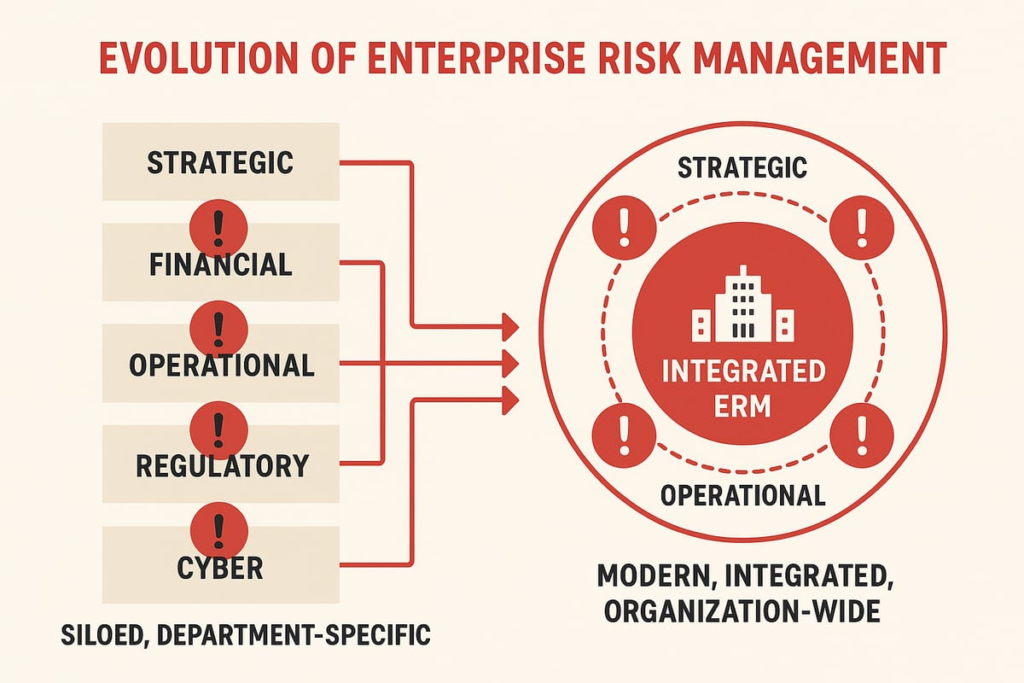
Rather than existing as a standalone compliance department, it is woven into operations, finance, IT, and executive decision-making. This integration allows organizations to identify risks earlier, respond faster, and make more informed trade-offs.
Key characteristics of modern risk control:
- Continuous monitoring instead of periodic reviews
- Data-driven decision-making using real-time dashboards
- Cross-functional ownership of risk
- Scenario planning tied to business strategy
- Clear accountability at leadership levels
For example, a U.S.-based logistics company recently integrated its risk dashboards into daily operations meetings. Instead of reviewing risks quarterly, managers now assess disruptions—like fuel price fluctuations or supply chain delays—every morning, adjusting decisions in real time.
Why Traditional Risk Models Are Falling Short
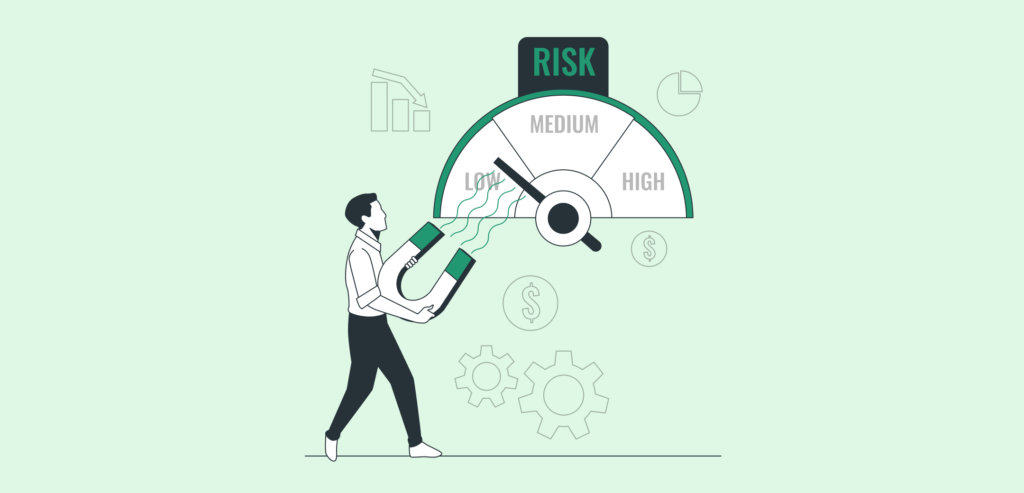
Many organizations still rely on legacy frameworks built for a slower, more predictable environment. These models often fail because they:
- Assume risks are static rather than dynamic
- Depend heavily on historical data
- Operate in silos
- Lack real-time visibility
In 2026, risks evolve too quickly for static models. Cybersecurity threats, geopolitical tensions, and supply chain disruptions require constant reassessment.
A healthcare provider in the Midwest learned this the hard way during a ransomware incident. Their annual risk assessment had identified cybersecurity as a concern—but without real-time monitoring, the organization lacked early warning signals. Recovery costs exceeded $8 million.
The Rise of Predictive and Real-Time Risk Intelligence
One of the most significant shifts is the adoption of predictive analytics.
Organizations are no longer just tracking what has happened—they’re modeling what could happen next.
How predictive risk control is being used:
- Forecasting supply chain disruptions using external data
- Identifying financial risks through anomaly detection
- Anticipating customer churn or reputational risks
- Monitoring cybersecurity threats in real time
A retail chain operating across the U.S. now uses AI-driven tools to detect unusual purchasing patterns that may indicate fraud. This has reduced chargebacks by nearly 30% while improving customer trust.
Real-time dashboards have also become standard. Executives can now view risk exposure across multiple categories—financial, operational, compliance—at any given moment.
Risk Ownership Is No Longer Centralized
In high-performing organizations, risk control is not confined to a single department.
Instead, responsibility is distributed across the organization, with clear accountability at every level.
What this looks like in practice:
- Finance teams manage liquidity and market risks
- IT teams own cybersecurity risk mitigation
- Operations oversee supply chain resilience
- HR monitors workforce-related risks
This distributed model ensures that risk management is closer to the source of potential issues.
A U.S. manufacturing firm implemented “risk champions” within each department. These individuals are trained to identify and escalate risks early. Within a year, incident response times dropped by 40%.
Scenario Planning Has Become a Core Discipline
High-performing organizations are investing heavily in scenario planning—not as an occasional exercise, but as an ongoing process.
Rather than preparing for a single “most likely” future, they explore multiple plausible outcomes.
Common scenarios organizations now model:
- Economic downturns or inflation spikes
- Supply chain disruptions
- Regulatory changes
- Technology failures or cyberattacks
For instance, during recent inflationary pressures, companies that had modeled cost escalation scenarios were able to adjust pricing strategies more effectively than competitors.
Scenario planning is increasingly supported by advanced modeling tools, allowing organizations to simulate complex interdependencies.
Technology Is an Enabler—But Not the Solution
While technology plays a critical role, high-performing organizations understand that tools alone don’t solve risk challenges.
The differentiator lies in how technology is used.
Effective approaches include:
- Integrating risk platforms with core business systems
- Ensuring data quality and consistency
- Training employees to interpret and act on insights
- Aligning technology with strategic goals
A financial services firm invested heavily in a risk analytics platform but initially saw little improvement. Only after aligning the system with business workflows and training staff did they begin to see meaningful results.
Culture: The Often Overlooked Advantage
One of the most consistent differentiators among high-performing organizations is culture.
Risk-aware cultures encourage transparency, accountability, and proactive problem-solving.
Indicators of a strong risk culture:
- Employees feel safe reporting issues
- Leadership openly discusses risk trade-offs
- Mistakes are analyzed constructively
- Risk considerations are part of everyday decisions
In contrast, organizations with weak risk cultures often experience delayed reporting, fragmented responses, and higher long-term costs.
A U.S. airline improved its safety and operational performance by implementing a non-punitive reporting system, encouraging employees to flag potential issues without fear of repercussions.
How Are Leading Organizations Measuring Risk Success?
Traditional metrics—such as number of incidents or compliance violations—are no longer sufficient.
High-performing organizations are adopting more nuanced measures.
Modern risk performance metrics include:
- Time to detect and respond to risks
- Financial impact avoided through proactive measures
- Risk-adjusted return on investment
- Employee engagement in risk processes
- Scenario readiness scores
These metrics provide a more comprehensive view of how effectively risk is being managed.
Practical Steps for Organizations Looking to Evolve
For organizations aiming to modernize their approach, the transition does not require a complete overhaul overnight.
Instead, incremental changes can create meaningful progress.
Recommended starting points:
- Embed risk discussions into regular business meetings
- Invest in real-time data visibility
- Clarify risk ownership across departments
- Introduce scenario planning exercises
- Strengthen organizational risk culture
A mid-sized U.S. technology company began by simply adding a “risk review” segment to weekly leadership meetings. Within six months, decision-making improved noticeably, and operational disruptions decreased.
Frequently Asked Questions
1. What is risk control in simple terms?
Risk control refers to the processes organizations use to identify, assess, and manage potential threats that could impact their objectives.
2. How is risk control different from risk management?
Risk management is the broader framework, while risk control focuses specifically on actions taken to mitigate or reduce risks.
3. Why is risk control important in 2026?
Increased uncertainty, digital risks, and regulatory complexity make proactive risk control essential for business continuity and growth.
4. What industries benefit most from advanced risk control?
All industries benefit, but finance, healthcare, manufacturing, and technology see particularly significant impact.
5. How can small businesses improve risk control?
By focusing on visibility, accountability, and basic scenario planning, even small organizations can significantly improve risk resilience.
6. What role does technology play in risk control?
Technology enables real-time monitoring, predictive analytics, and better decision-making but must be aligned with business processes.
7. What is a risk-aware culture?
A culture where employees actively consider and communicate risks as part of everyday decision-making.
8. How often should risk assessments be conducted?
Continuous monitoring is ideal, supplemented by periodic deep assessments.
9. What are common mistakes in risk control?
Over-reliance on outdated models, lack of integration, and poor communication across teams.
10. Can risk control improve profitability?
Yes, by reducing losses, improving decision-making, and enabling smarter strategic choices.
Redefining Risk as a Strategic Capability
The organizations leading in 2026 are not those that avoid risk—they are those that understand it deeply and act on it intelligently.
Risk control has evolved into a strategic capability that influences everything from daily operations to long-term planning. By embedding risk awareness into culture, leveraging real-time insights, and distributing accountability, high-performing organizations are building resilience that goes beyond compliance.
This transformation is not reserved for large enterprises. Organizations of all sizes can adopt these principles and begin seeing tangible improvements in both stability and performance.
Key Insights at a Glance
- Risk control is shifting from defensive to strategic
- Real-time data and predictive analytics are becoming essential
- Risk ownership is distributed across departments
- Scenario planning is now a continuous process
- Culture plays a critical role in effective risk management
- Modern metrics focus on responsiveness and impact
- Incremental changes can drive meaningful improvements