Summary
Economic trends such as inflation, interest rates, labor market shifts, and technological change are significantly shaping how Americans invest. Individuals and institutions alike are adjusting portfolios, prioritizing diversification, and reevaluating risk. Understanding these macroeconomic forces helps investors make more informed decisions about stocks, real estate, bonds, and emerging opportunities in a constantly evolving U.S. economic landscape.
Understanding the Link Between Economic Trends and Investment Behavior
Investment decisions rarely occur in isolation. In the United States, economic conditions—from Federal Reserve policy to employment data—play a direct role in shaping how individuals and institutions allocate capital.
When economic indicators shift, investor sentiment and strategy often follow. For example, rising inflation may push investors toward assets historically viewed as inflation hedges, such as commodities or real estate. Meanwhile, periods of economic uncertainty may increase demand for defensive investments like Treasury bonds or dividend-paying stocks.
The modern investment environment is also influenced by rapid access to data. Retail investors now follow macroeconomic signals nearly as closely as institutional traders. Monthly inflation reports, Federal Reserve announcements, and employment data releases frequently trigger shifts in asset allocation.
Understanding these signals allows investors to position portfolios in ways that align with broader economic cycles rather than reacting solely to short-term market volatility.

Inflation: The Persistent Factor Shaping Investment Strategies
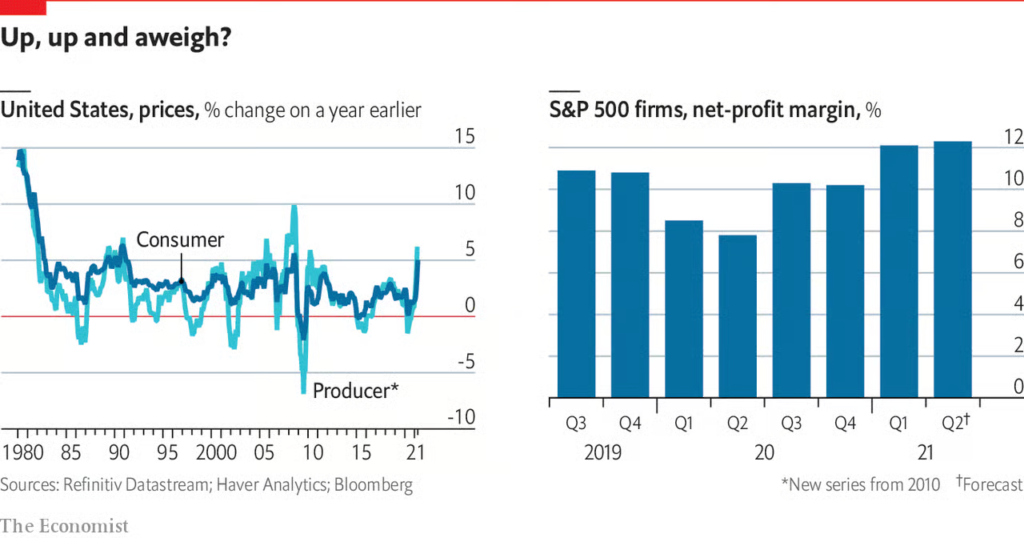
Inflation has become one of the most influential economic forces affecting American investment decisions in recent years. According to the U.S. Bureau of Labor Statistics, inflation surged to levels not seen in decades during 2022 before moderating somewhat in 2023 and 2024.
Higher inflation reduces the purchasing power of cash and fixed income streams, prompting investors to seek assets that historically maintain value when prices rise.
Common investment adjustments during inflationary periods include:
- Increasing exposure to real assets such as real estate and commodities
- Allocating more capital to equities in sectors with pricing power
- Reducing long-duration bonds that are more sensitive to inflation
- Considering Treasury Inflation-Protected Securities (TIPS)
For example, many U.S. investors increased allocations to energy and infrastructure stocks during recent inflation spikes, as companies in these sectors often pass higher costs to consumers.
However, inflation does not affect all industries equally. Technology companies with high growth potential may still attract investment despite inflationary pressure, particularly when innovation drives long-term earnings expansion.
Interest Rates and the Cost of Capital
Interest rate movements are another critical economic factor influencing investment decisions across the United States. The Federal Reserve adjusts benchmark rates primarily to control inflation and stabilize economic growth.
When interest rates rise, borrowing becomes more expensive for both consumers and businesses. This often slows economic activity and affects asset valuations.
Higher interest rates typically lead to several shifts in investment behavior:
- Greater appeal of bonds and fixed-income investments
- Reduced valuations for growth stocks that rely on future earnings
- Increased mortgage rates affecting real estate investment activity
- Stronger returns on savings accounts and money market funds
For instance, during periods of aggressive rate hikes, investors frequently rebalance portfolios toward shorter-duration bonds or cash equivalents, as these instruments offer improved yields with relatively lower risk.
Conversely, when interest rates decline, capital often flows back into equities and growth-oriented investments as borrowing becomes cheaper and corporate expansion accelerates.
Labor Market Strength and Consumer Spending
The strength of the U.S. labor market plays a central role in shaping investor confidence. Employment levels directly influence consumer spending, which accounts for nearly 70% of U.S. economic activity according to the Bureau of Economic Analysis.
When unemployment remains low and wages grow steadily, consumer spending tends to increase. This environment often benefits companies in sectors such as retail, travel, hospitality, and consumer services.
Investors closely watch labor market indicators such as:
- Nonfarm payroll growth
- Wage growth trends
- Labor force participation rates
- Job openings and unemployment claims
A strong labor market can support stock market growth because businesses see stable demand for goods and services. For example, retail companies often perform well when wage growth supports discretionary spending.
However, extremely tight labor markets may also contribute to inflation, which can lead the Federal Reserve to tighten monetary policy. Investors must therefore balance optimism about consumer demand with awareness of potential policy responses.

The Role of Technological Innovation in Investment Trends
Beyond traditional economic indicators, technological innovation has become a powerful force shaping U.S. investment patterns.
Advances in artificial intelligence, cloud computing, renewable energy, and biotechnology are driving long-term capital allocation decisions across both public and private markets.
Investors increasingly seek exposure to sectors positioned for structural growth rather than short-term economic cycles.
Examples of innovation-driven investment areas include:
- Artificial intelligence and machine learning infrastructure
- Semiconductor manufacturing and advanced computing
- Clean energy technologies and battery storage
- Digital financial services and fintech platforms
- Biotechnology and medical research
Large institutional investors such as pension funds and endowments often dedicate significant portions of portfolios to venture capital or growth equities tied to these emerging industries.
For individual investors, exchange-traded funds (ETFs) focused on innovation sectors have become a popular way to participate in technological transformation while maintaining diversification.
Housing Market Conditions and Real Estate Investment
The U.S. housing market remains a critical indicator for both economic health and investment opportunities.
Real estate investment trends often reflect broader economic conditions such as interest rates, population growth, and housing supply constraints.
During periods of low mortgage rates, housing demand typically rises as borrowing costs decline. This can lead to strong price appreciation and increased investor activity in residential properties.
In contrast, higher interest rates tend to slow housing demand by increasing mortgage payments, which can reduce transaction volume and moderate price growth.
Investors in real estate often analyze factors such as:
- Housing supply shortages
- Migration trends between cities and states
- Rental demand in growing metropolitan areas
- Infrastructure development and job growth
For example, population growth in cities across Texas, Florida, and Arizona has drawn significant real estate investment due to strong job markets and relatively affordable housing compared with coastal regions.
Real estate investment trusts (REITs) also provide investors with exposure to property markets without direct ownership, offering liquidity and diversification.
Market Volatility and the Rise of Diversification Strategies
Periods of economic uncertainty often lead investors to emphasize diversification. Volatile markets can highlight the risks of concentrating assets in a single sector or asset class.
A diversified portfolio spreads risk across different investments, reducing the impact of downturns in any one area.
Modern diversification strategies often include:
- Domestic and international equities
- Government and corporate bonds
- Real estate investments
- Commodities and natural resources
- Alternative assets such as private equity
For example, investors who held diversified portfolios during recent market volatility often experienced smaller drawdowns compared with portfolios concentrated solely in technology stocks.
Financial advisors increasingly emphasize asset allocation strategies designed to withstand varying economic conditions rather than relying on market timing.
How Institutional Investors Are Responding to Economic Signals
Institutional investors—including pension funds, insurance companies, and asset managers—often respond to economic trends more gradually but with substantial impact.
These organizations typically analyze long-term macroeconomic forecasts before adjusting portfolio allocations.
Key strategies used by institutional investors include:
- Increasing exposure to infrastructure projects
- Expanding private credit and alternative investments
- Adjusting duration exposure in bond portfolios
- Hedging against inflation through commodities and real assets
Because institutional capital flows are large, their allocation decisions can influence entire sectors of the financial markets.
For example, increased institutional investment in renewable energy infrastructure has accelerated funding for large-scale solar and wind projects across the United States.
Questions Investors Are Asking Right Now
How do economic trends influence stock market performance?
Economic trends affect corporate earnings, interest rates, and investor sentiment. Strong economic growth often supports higher corporate profits, while recessions can reduce earnings expectations and lower stock prices.
What economic indicators should investors monitor regularly?
Key indicators include inflation data (CPI), Federal Reserve interest rate decisions, GDP growth, unemployment rates, and consumer spending levels.
Why do rising interest rates affect stock prices?
Higher interest rates increase borrowing costs and reduce the present value of future corporate earnings, which can lower valuations for many growth-oriented companies.
Is inflation always bad for investors?
Not necessarily. Certain assets—such as real estate, commodities, and companies with strong pricing power—can perform well during inflationary periods.
How do economic recessions affect investment strategies?
During recessions, investors often prioritize defensive assets such as government bonds, dividend-paying stocks, and essential consumer goods companies.
Why are investors paying more attention to Federal Reserve policy?
The Federal Reserve’s decisions directly influence interest rates, borrowing costs, and financial market liquidity, making its policy announcements highly relevant to investors.
Are real estate investments sensitive to economic trends?
Yes. Real estate values and rental demand are influenced by interest rates, employment levels, and population growth.
What role does diversification play during economic uncertainty?
Diversification helps reduce portfolio volatility by spreading investments across different asset classes and sectors.
How does technological innovation influence long-term investing?
Technological breakthroughs can create entirely new industries and drive long-term economic growth, making innovation-focused investments attractive for long-term portfolios.
Should individual investors react immediately to economic news?
Not always. Many financial advisors recommend maintaining long-term strategies rather than reacting impulsively to short-term economic headlines.
Interpreting the Economic Signals That Shape Investment Choices
Economic trends provide valuable context for investment decisions, but they rarely offer simple answers. Inflation, interest rates, employment trends, and technological developments interact in complex ways that influence financial markets.
Successful investors focus on understanding these signals rather than reacting to every market fluctuation. By recognizing how economic cycles affect asset performance, investors can build resilient portfolios designed to perform across a range of economic environments.
In practice, this often means balancing growth opportunities with stability, maintaining diversification, and aligning investments with long-term financial goals rather than short-term economic headlines.
Key Insights at a Glance
- Inflation influences how investors allocate capital across asset classes
- Interest rate changes affect borrowing costs and investment valuations
- Labor market strength supports consumer spending and economic growth
- Technological innovation is shaping long-term investment themes
- Real estate markets respond strongly to interest rate movements
- Diversification helps reduce risk during economic uncertainty
- Institutional investors often drive large capital shifts across sectors