Summary
Modern risk control frameworks help organizations systematically identify, assess, and manage uncertainty in complex environments. They address operational disruptions, regulatory exposure, cybersecurity threats, financial volatility, and strategic decision risks. By standardizing risk processes, improving governance, and enabling faster response to emerging threats, these frameworks allow companies to protect assets, maintain compliance, and make more informed decisions in rapidly changing markets.
Why Risk Management Looks Different Today
Risk management used to be relatively narrow. For many organizations, it meant preventing financial loss, purchasing insurance, or responding to compliance requirements. Today, the risk landscape is dramatically broader and more complex.
Companies now operate in environments shaped by cyberattacks, global supply chains, regulatory expansion, digital transformation, and geopolitical uncertainty. A disruption in one area can cascade across an entire organization. A single ransomware attack, for example, can halt operations, expose sensitive data, trigger regulatory penalties, and damage customer trust.
Modern risk control frameworks were developed to address this complexity. Rather than reacting to problems after they occur, these frameworks create structured systems for identifying risks early, analyzing potential impact, and embedding mitigation strategies into everyday business decisions.
Organizations increasingly rely on recognized frameworks such as:
- NIST Risk Management Framework (RMF)
- ISO 31000 Enterprise Risk Management
- COSO Enterprise Risk Management Framework
According to the National Institute of Standards and Technology (NIST), structured risk frameworks help organizations integrate security and risk management into business operations rather than treating them as isolated compliance tasks.
In practical terms, modern frameworks are designed to answer a fundamental question:
How can organizations make better decisions in uncertain environments?
The Core Problems Risk Control Frameworks Are Built to Solve
Modern frameworks exist because organizations repeatedly encountered the same systemic problems. These frameworks provide structured solutions to those recurring challenges.
1. Fragmented Risk Visibility
In many companies, risks exist in silos.
- IT teams track cybersecurity threats.
- Finance teams monitor financial exposure.
- Compliance teams manage regulatory obligations.
- Operations teams address supply chain disruptions.
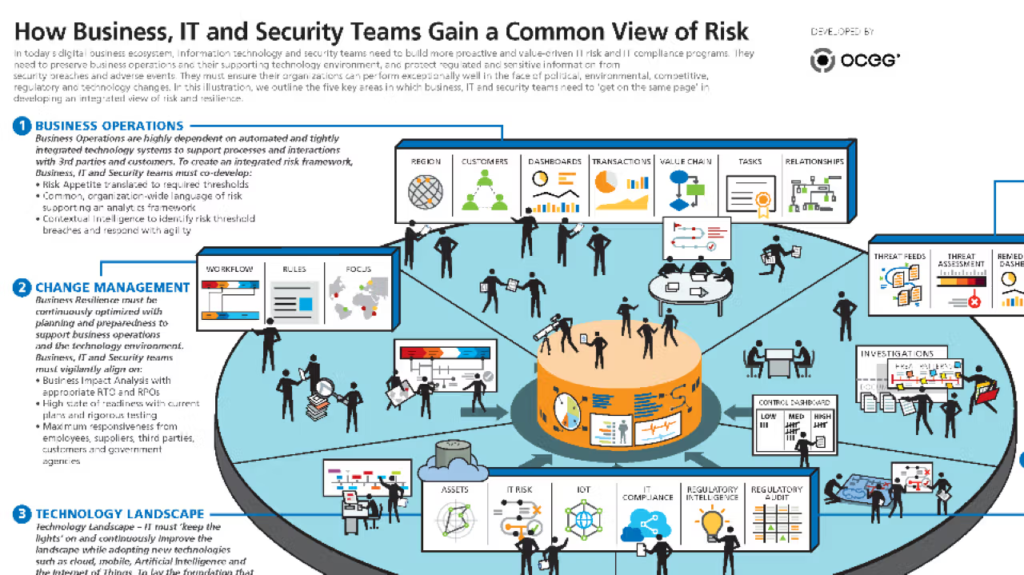
Without a centralized framework, leadership rarely sees the full picture. Risks remain scattered across departments, making it difficult to understand cumulative exposure.
Modern risk frameworks solve this by introducing enterprise-wide risk visibility. They establish standardized methods for identifying and reporting risks across departments.
This allows executives to see:
- Which risks matter most
- Where vulnerabilities overlap
- Which areas require immediate attention
The result is a clearer organizational risk profile.
2. Inconsistent Risk Assessment Methods
Before standardized frameworks, organizations often evaluated risks inconsistently.
One department might rate risks using financial impact, while another evaluates probability alone. This makes comparison difficult and leads to poor prioritization.
Modern frameworks introduce common risk assessment models so risks can be evaluated consistently across the organization.
Most frameworks incorporate structured evaluation methods such as:
- Likelihood vs. impact scoring
- Risk heat maps
- Quantitative loss estimation
- Scenario modeling
For example, a company might assess a cybersecurity breach and a supply chain delay using the same risk matrix, allowing leadership to prioritize based on comparable metrics.
Consistency improves strategic decision-making.
3. Weak Governance and Accountability
Another major problem frameworks address is unclear ownership of risk.
Without defined accountability:
- Risks may go unreported.
- Mitigation steps may stall.
- Leadership may assume someone else is responsible.
Modern risk control frameworks introduce clear governance structures.
Typical governance structures include:
- Board-level risk oversight
- Executive risk committees
- Defined risk owners
- Regular risk reporting cycles
For example, under the COSO Enterprise Risk Management model, organizations assign responsibility for risk identification and response to specific operational leaders. This ensures accountability and ongoing monitoring.
Governance transforms risk management from an abstract concept into an operational responsibility.
4. Reactive Instead of Proactive Risk Management
Historically, organizations addressed risk only after incidents occurred.
Examples include:
- Responding to data breaches
- Managing supply chain disruptions
- Addressing compliance violations
- Handling financial losses
This reactive model often leads to higher costs and greater damage.
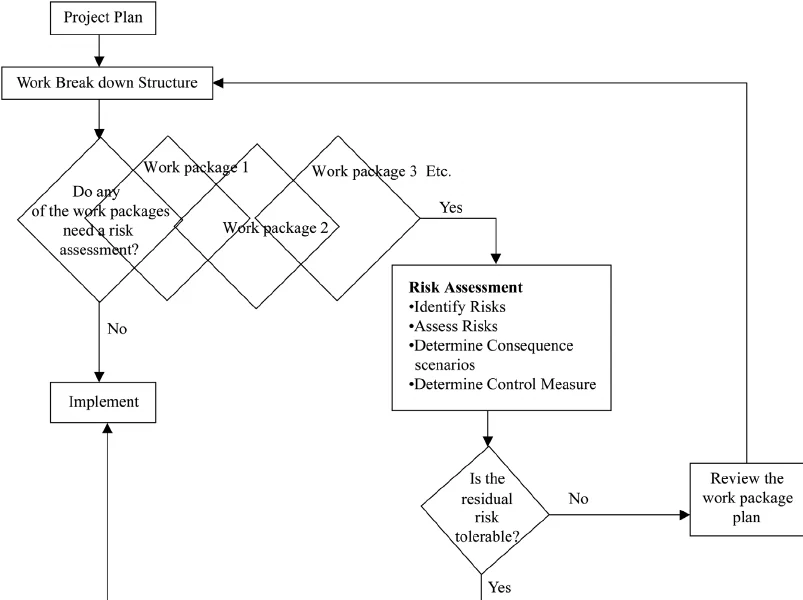
Modern frameworks promote proactive risk identification.
Instead of asking, “What went wrong?” organizations ask:
- What could go wrong?
- How likely is it?
- What controls can reduce the impact?
Tools commonly used include:
- Risk registers
- Threat modeling
- Business impact analysis
- Control testing
The goal is early detection and prevention.
5. Rapidly Expanding Cybersecurity Threats
Cybersecurity risk has become one of the primary drivers behind modern risk frameworks.
According to the IBM Cost of a Data Breach Report, the average cost of a data breach in the United States reached $9.48 million in 2023, the highest globally.
Modern frameworks address cybersecurity challenges by integrating security controls directly into organizational risk management processes.
Frameworks such as the NIST RMF provide structured approaches for:
- Identifying system vulnerabilities
- Implementing security controls
- Monitoring threats continuously
- Responding to incidents
This integration ensures cybersecurity is treated as an enterprise-level risk rather than just an IT problem.
6. Regulatory and Compliance Complexity
U.S. businesses face a growing number of regulatory requirements across industries.
Examples include:
- Financial reporting regulations
- Healthcare privacy laws
- Data protection requirements
- Environmental compliance rules
Without structured frameworks, compliance management becomes inefficient and error-prone.
Risk control frameworks simplify compliance by creating standardized control structures.
Organizations can map controls across multiple regulations simultaneously, reducing duplication and improving audit readiness.
For example, a single data protection control might satisfy requirements from multiple regulatory frameworks.
7. Decision-Making Under Uncertainty
One of the most valuable outcomes of modern risk frameworks is improved strategic decision-making.
Executives frequently make high-stakes decisions involving uncertain outcomes:
- Entering new markets
- Launching products
- Investing in technology
- Acquiring competitors
Risk frameworks provide structured analysis that supports these decisions.
Instead of relying solely on intuition, leaders can evaluate decisions using:
- Risk exposure estimates
- Scenario analysis
- Risk tolerance thresholds
- Cost-benefit assessments
This allows organizations to pursue opportunities while maintaining controlled exposure.
Key Components of a Modern Risk Control Framework
While frameworks differ slightly, most include several common elements.
Risk Identification
Organizations systematically identify potential threats across operational, financial, technological, and strategic domains.
Sources often include:
- Incident reports
- External threat intelligence
- Operational reviews
- Audit findings
Risk Assessment
Each identified risk is analyzed for:
- Likelihood of occurrence
- Potential impact
- Speed of onset
- Existing controls
This process helps prioritize mitigation efforts.
Risk Mitigation Controls
Controls are implemented to reduce likelihood or impact.
Examples include:
- Cybersecurity safeguards
- Supplier diversification
- Internal control procedures
- Compliance monitoring
Continuous Monitoring
Modern frameworks emphasize ongoing monitoring rather than one-time assessments.
Organizations track:
- Control effectiveness
- Emerging threats
- Risk level changes
Monitoring allows rapid response to evolving risks.
Governance and Reporting
Risk information must reach decision-makers.
Typical reporting includes:
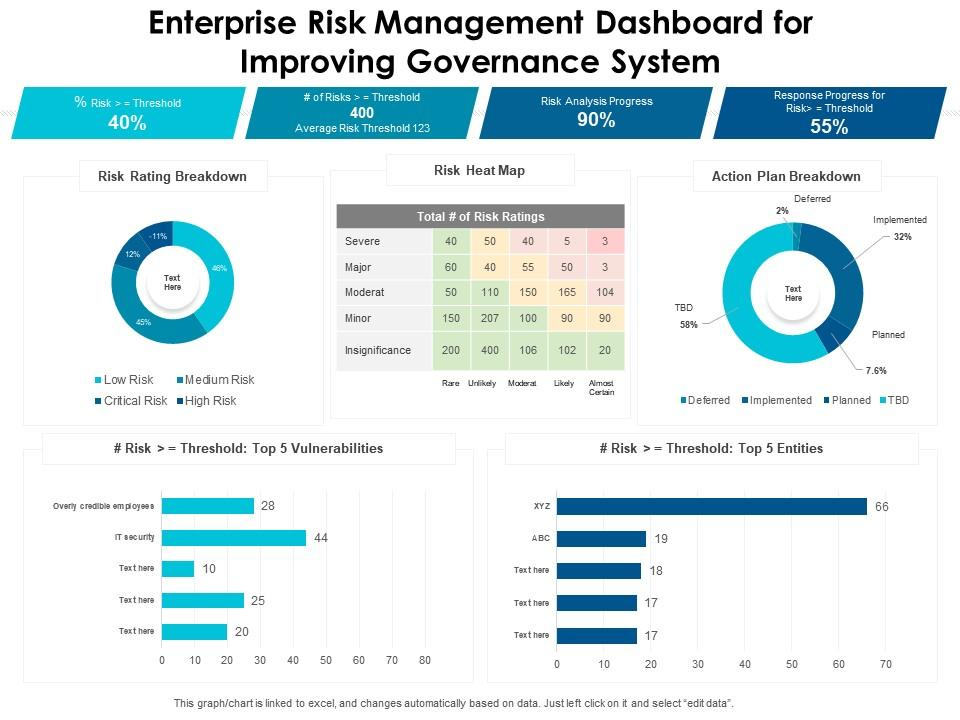
- Risk dashboards
- Board-level briefings
- Executive risk summaries
This ensures leadership maintains visibility.
Real-World Example: Risk Framework in Action
Consider a U.S. logistics company operating across multiple states.
Before implementing an enterprise risk framework, the company faced recurring disruptions:
- Regional weather events delayed deliveries.
- Cybersecurity systems varied across locations.
- Vendor dependencies created supply bottlenecks.
- Compliance tracking differed by region.
After adopting a structured risk management framework, the company implemented several changes:
- A centralized risk register covering all operational sites
- Standardized cybersecurity controls across systems
- Alternative supplier arrangements
- Executive-level risk oversight meetings
Within two years, the company reported:
- Reduced operational disruptions
- Faster incident response
- Improved compliance audit results
The framework didn’t eliminate risk—but it improved the company’s ability to manage it.
Common Misconceptions About Risk Frameworks
Organizations sometimes hesitate to adopt structured frameworks due to misconceptions.
“Risk frameworks are only for large corporations.”
While large enterprises rely heavily on them, small and mid-sized businesses increasingly adopt simplified frameworks to manage cybersecurity and operational risk.
“Risk frameworks slow down decision-making.”
In practice, they often speed up decisions because leaders have clearer information about potential outcomes.
“Risk management means avoiding risk.”
Effective frameworks focus on managing risk, not eliminating it. Many strategic opportunities involve risk, and frameworks help organizations pursue them responsibly.
How Organizations Typically Implement Risk Frameworks
Successful implementation usually follows a phased approach.
Typical steps include:
- Assessing the organization’s current risk environment
- Selecting a framework aligned with industry standards
- Defining governance structures and risk ownership
- Building a centralized risk register
- Implementing monitoring and reporting systems
- Training employees on risk identification and reporting
Organizations often integrate risk management into existing processes rather than creating entirely new systems.
Frequently Asked Questions
What is a modern risk control framework?
A modern risk control framework is a structured system that organizations use to identify, assess, manage, and monitor risks across operations, technology, finance, and compliance.
Why are risk frameworks important for businesses?
They provide consistency, visibility, and governance, helping organizations anticipate disruptions and make better decisions under uncertainty.
What are examples of widely used frameworks?
Common frameworks include ISO 31000, the NIST Risk Management Framework, and COSO Enterprise Risk Management.
How do risk frameworks improve cybersecurity?
They integrate cybersecurity risk into enterprise risk management, ensuring security controls are monitored, evaluated, and aligned with organizational priorities.
Are risk frameworks required by regulators?
Some industries strongly encourage or require structured risk management practices, especially in finance, healthcare, and critical infrastructure sectors.
How long does framework implementation take?
Implementation can take several months to a few years depending on organizational size and complexity.
Do small businesses need risk frameworks?
Even smaller organizations benefit from simplified frameworks, particularly for cybersecurity and operational continuity.
What role does leadership play in risk management?
Executive leadership and boards are responsible for setting risk tolerance levels and ensuring accountability across the organization.
How often should risks be reviewed?
Most organizations review risk registers quarterly, with continuous monitoring for high-impact threats.
Can risk frameworks reduce financial losses?
While they cannot eliminate losses entirely, they significantly improve an organization’s ability to anticipate, mitigate, and respond to risk events.
Strategic Resilience in an Unpredictable Environment
Modern organizations face risks that evolve faster than traditional management methods can handle. Digital infrastructure, global supply chains, and regulatory pressures create interconnected vulnerabilities that demand structured oversight.
Risk control frameworks provide that structure. They transform scattered awareness into coordinated action, ensuring leaders understand both threats and opportunities.
Ultimately, the goal is not to eliminate uncertainty—it is to build organizations capable of navigating it intelligently.
Essential Insights from This Guide
- Modern risk frameworks provide enterprise-wide visibility into threats.
- They standardize risk assessment and prioritization methods.
- Governance structures clarify accountability and oversight.
- Proactive monitoring replaces reactive incident response.
- Cybersecurity risk is now central to most frameworks.
- Compliance complexity drives structured control systems.
- Frameworks support better strategic decision-making.
- Implementation typically occurs in phased stages.
- Businesses of all sizes benefit from structured risk management.