Summary
In volatile markets, the ability to control risk often determines whether businesses and investors survive disruption or compound losses. Strong risk control systems allow organizations to anticipate threats, stabilize operations, and make confident strategic decisions during uncertainty. This article explains how disciplined risk management creates competitive advantage, protects capital, and supports long-term growth even when markets become unpredictable.
Why Risk Control Becomes Critical in Uncertain Markets
Uncertainty has become a defining feature of modern markets. Economic cycles move faster, geopolitical tensions influence supply chains, and technology disruptions can reshape industries almost overnight. For businesses and investors alike, the difference between resilience and instability often lies in how well risk is controlled.
Risk control is not simply about avoiding losses. It is about building systems that allow organizations to operate effectively when conditions change. Companies with strong risk frameworks are able to identify emerging threats earlier, evaluate potential impacts, and respond with structured decision-making rather than reactive guesswork.
During the 2020 pandemic shock, for example, companies with diversified supply chains and strong financial risk controls were able to continue operations while others struggled with inventory shortages and liquidity problems. According to data from the U.S. Federal Reserve, firms with stronger balance sheets and liquidity reserves experienced significantly lower bankruptcy rates during the early stages of the crisis.
In uncertain markets, risk control becomes a strategic advantage because it allows leaders to maintain stability while competitors may be forced into defensive or rushed decisions.
What Strong Risk Control Actually Means
Risk control is often misunderstood as a narrow financial function. In reality, it spans multiple areas of an organization and influences how decisions are made across departments.
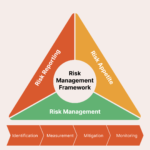
A strong risk control system typically includes several interconnected practices:
- Risk identification: Continuous monitoring of operational, financial, regulatory, and strategic threats
- Risk assessment: Evaluating probability and potential impact of each risk scenario
- Risk mitigation strategies: Policies designed to reduce exposure before problems occur
- Monitoring systems: Ongoing measurement of risk indicators and performance metrics
- Governance structure: Clear accountability for risk oversight at executive and board levels
In practice, this means organizations move from reactive management toward structured anticipation of challenges.
Financial institutions offer a clear example. After the 2008 global financial crisis, regulatory reforms required banks to implement stress testing, liquidity buffers, and stronger capital requirements. These changes forced institutions to embed risk control directly into their operating models.
Today, many of the world’s largest banks maintain dedicated risk committees, real-time market monitoring tools, and scenario analysis models that simulate potential economic shocks.
The Link Between Risk Control and Strategic Flexibility
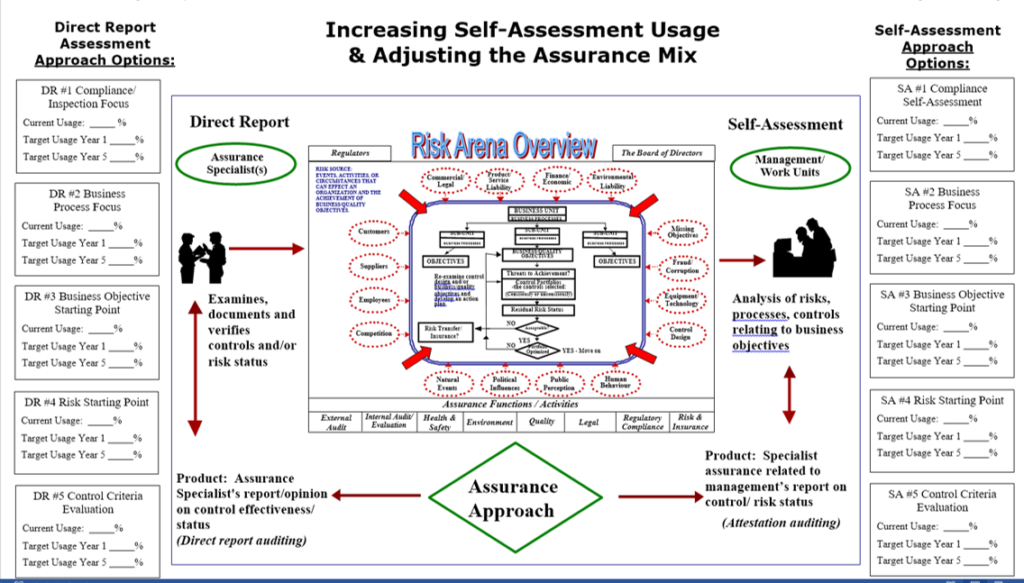
One of the most overlooked benefits of strong risk control is the strategic flexibility it creates.
Organizations that understand their risk exposure clearly are able to make faster and more confident decisions when market conditions change. Rather than reacting blindly to volatility, they operate with defined boundaries that guide leadership choices.
For example, a manufacturing company that tracks commodity price exposure can quickly adjust procurement strategies when prices spike. A retailer monitoring consumer demand data can scale inventory purchases without overcommitting capital.
Risk control therefore becomes a foundation for strategic agility.
Without this foundation, companies often face two damaging extremes:
- Overreaction: Sudden, defensive decisions that disrupt long-term plans
- Paralysis: Delayed decisions caused by uncertainty and lack of information
Organizations with structured risk frameworks are less likely to fall into either trap.
Real-World Example: Supply Chain Risk Management
Global supply chains illustrate how risk control can determine operational stability.
In recent years, disruptions such as port congestion, geopolitical tensions, and transportation bottlenecks have exposed weaknesses in supply networks. Companies that depended heavily on single suppliers or regions experienced severe production delays.
By contrast, firms that invested in risk diversification strategies were able to maintain continuity.
Examples of supply chain risk control include:
- Diversifying supplier locations across multiple countries
- Maintaining strategic inventory buffers
- Using predictive analytics to monitor shipping disruptions
- Establishing alternative logistics routes
- Conducting regular supplier risk assessments
Major retailers such as Walmart and Target have invested heavily in supply chain analytics systems that track inventory movement and supplier performance in real time. These systems allow companies to detect disruptions earlier and adjust sourcing strategies before shortages occur.
Financial Risk Control and Capital Preservation
In financial markets, risk control plays a direct role in capital preservation.
Professional investors often emphasize that protecting capital is more important than chasing short-term returns. A portfolio that avoids large losses has a much stronger probability of long-term growth.
Consider the mathematics of loss recovery. If an investment declines by 50 percent, it must increase by 100 percent just to return to its original value. Avoiding large drawdowns therefore becomes one of the most effective strategies for sustaining wealth.
Common financial risk control tools include:
- Position sizing: Limiting how much capital is allocated to a single investment
- Diversification: Spreading exposure across sectors, asset classes, and geographies
- Stop-loss rules: Automatically limiting downside risk in volatile markets
- Stress testing: Evaluating portfolio performance under adverse scenarios
- Liquidity management: Maintaining access to cash during market disruptions
Research from Morningstar has shown that portfolios with disciplined diversification and downside protection tend to produce more stable long-term performance compared with concentrated portfolios during volatile periods.
The lesson is simple: strong risk control protects not only against catastrophic loss but also against emotional decision-making.

Operational Risk Control in Business Environments
Risk control is not limited to financial markets. Operational risks can have equally significant consequences for companies.
Operational risk includes issues such as:
- Cybersecurity breaches
- Regulatory violations
- Equipment failures
- Data privacy incidents
- Workforce disruptions
Organizations increasingly rely on structured risk control frameworks to monitor these areas.
For instance, cybersecurity risk management has become one of the most important corporate priorities in the United States. According to IBM’s Cost of a Data Breach Report, the average data breach cost for U.S. companies exceeded $9 million in 2023, the highest in the world.
To reduce exposure, companies often implement layered risk control systems:
- Continuous network monitoring
- Multi-factor authentication protocols
- Incident response planning
- Regular security audits
- Employee cybersecurity training
These preventive measures dramatically reduce the likelihood and impact of security incidents.
Behavioral Risk: The Human Factor in Market Decisions
Even the most advanced systems cannot eliminate human decision-making errors. Behavioral risk is a major challenge in both business strategy and investment management.
Under stress, people tend to rely on emotional responses rather than disciplined analysis. This can lead to decisions such as panic selling, overconfidence during market rallies, or ignoring warning signals.
Risk control frameworks help counter these tendencies by establishing predefined rules.
For example:
- Investment committees may require multiple approvals before major portfolio changes.
- Corporate boards often require formal risk assessments before approving large acquisitions.
- Trading firms use algorithmic rules to enforce position limits.
These systems introduce structured discipline into environments where emotional decision-making can cause costly mistakes.
How Technology Is Transforming Risk Control
Technology has significantly improved how organizations detect and manage risk.
Modern risk management platforms integrate large volumes of real-time data from financial markets, operational systems, and global supply networks. Advanced analytics allow organizations to detect patterns and emerging threats earlier than traditional reporting systems.
Key technological developments include:
- Predictive analytics for identifying early risk signals
- Artificial intelligence models for fraud detection
- Real-time market monitoring dashboards
- Automated compliance systems
- Scenario simulation tools
Large financial institutions now run thousands of simulated stress scenarios to evaluate potential market shocks.
For example, banks participating in the Federal Reserve’s Comprehensive Capital Analysis and Review (CCAR) program must demonstrate their ability to withstand severe economic downturns through detailed stress testing models.
This shift toward data-driven risk monitoring is redefining how organizations prepare for uncertainty.
Building a Culture of Risk Awareness
Perhaps the most important element of effective risk control is organizational culture.
Risk management cannot function as an isolated department. It must be integrated into how decisions are made throughout the organization.
Companies that succeed in uncertain markets often share several cultural characteristics:
- Leadership openly prioritizes risk transparency
- Employees are encouraged to report emerging issues early
- Decision processes incorporate structured risk analysis
- Long-term stability is valued alongside short-term growth
When risk awareness becomes part of everyday decision-making, organizations become more resilient.
This cultural approach helps prevent the types of systemic failures that occur when warning signals are ignored.

Frequently Asked Questions
What is risk control in financial markets?
Risk control refers to strategies and systems used to limit potential losses and manage uncertainty in investments or business operations. It includes diversification, position sizing, monitoring, and contingency planning.
Why is risk management more important during uncertain markets?
Volatile markets increase the probability of sudden losses or disruptions. Strong risk control systems help organizations anticipate threats and respond with structured strategies rather than reactive decisions.
What are the most common risk control strategies for investors?
Common strategies include diversification, position limits, stop-loss rules, portfolio stress testing, and maintaining liquidity reserves.
How do companies manage supply chain risk?
Businesses often diversify suppliers, maintain inventory buffers, monitor logistics data in real time, and establish alternative sourcing options to reduce disruption risk.
What is operational risk in business?
Operational risk involves failures related to internal processes, systems, human error, or external events such as cyberattacks or regulatory violations.
Can technology improve risk control?
Yes. Modern risk management tools use analytics, artificial intelligence, and automated monitoring systems to identify emerging risks earlier and improve decision-making.
What role does corporate governance play in risk control?
Strong governance ensures that risk oversight occurs at executive and board levels, helping organizations maintain accountability and strategic discipline.
Why is diversification considered a core risk control method?
Diversification spreads exposure across different assets or business areas, reducing the impact of any single loss or disruption.
How does behavioral psychology affect risk management?
Human emotions such as fear and overconfidence can lead to poor decisions. Structured rules and risk frameworks help reduce these behavioral biases.
Can strong risk control improve long-term profitability?
Yes. By preventing large losses and stabilizing operations, risk control supports sustainable growth and long-term strategic planning.
Navigating Volatility with Confidence
Markets will always experience periods of instability. Economic cycles, technological disruption, and global events ensure that uncertainty remains a permanent feature of the financial and business landscape.
Organizations that treat risk control as a strategic discipline—rather than a defensive afterthought—are far better positioned to navigate these challenges. By investing in structured frameworks, data-driven monitoring, and risk-aware cultures, businesses and investors can transform uncertainty into an environment where stability and opportunity coexist.
Strong risk control does not eliminate volatility. Instead, it creates the resilience necessary to move through it with confidence.
Key Insights at a Glance
- Strong risk control enables organizations to maintain stability during volatile markets
- Diversification and capital preservation strategies reduce exposure to large losses
- Supply chain risk management has become critical in globalized economies
- Operational risks such as cybersecurity require structured monitoring systems
- Technology and data analytics are transforming modern risk management
- Behavioral discipline plays a major role in preventing costly decision errors
- Risk awareness must be embedded throughout organizational culture