Summary
Patience is one of the most powerful yet overlooked investment advantages. While many investors chase short-term gains, long-term discipline allows compounding, reduces costly mistakes, and helps investors benefit from market growth over time. This article explains why patience consistently outperforms impulsive strategies, how experienced investors use it, and how everyday investors can build patience into their portfolios.
The Quiet Power of Waiting in Investing
In the modern financial world, speed often dominates the conversation. News cycles move by the minute, social media pushes constant market commentary, and trading platforms make buying or selling stocks almost instantaneous. Yet the most reliable investment strategy throughout history has often been the simplest: patience.
Patience in investing means allowing time for businesses, markets, and compounding returns to work. It involves resisting the urge to react to every market fluctuation and instead focusing on long-term growth.
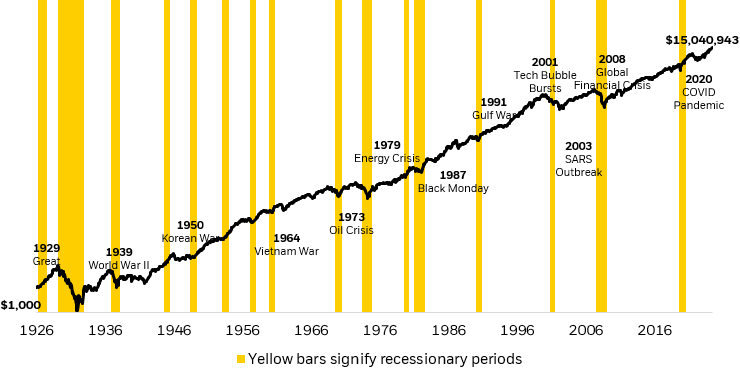
Historically, markets reward those who stay invested. According to data from Morningstar and Vanguard, the U.S. stock market has returned roughly 9–10% annually on average over the past century, despite recessions, wars, and financial crises. Investors who remained patient during these periods generally saw strong long-term gains.
The challenge is that patience often feels uncomfortable. Humans naturally react to uncertainty and volatility. Investors frequently feel pressure to act — to sell during downturns or chase rapidly rising assets. Ironically, these emotional reactions are often what damage long-term returns.

Why Investors Struggle With Patience
Patience sounds simple in theory but becomes difficult in practice. Several behavioral and psychological factors make it challenging.
Short-Term Market Noise
Markets fluctuate daily due to news events, interest rates, economic data, and investor sentiment. These movements can make long-term strategies feel uncertain.
Media Amplification
Financial media tends to focus on dramatic stories: sudden crashes, rapid rallies, or speculative opportunities. Constant exposure can make investors believe that immediate action is necessary.
Instant Trading Technology
Modern trading apps allow transactions in seconds. While convenient, this accessibility can encourage overtrading — a behavior shown to reduce returns.
Fear of Missing Out (FOMO)
When investors see others profiting from hot trends or speculative assets, patience can feel like inactivity. This fear often leads investors into poorly timed decisions.
Studies in behavioral finance show that individual investors who trade frequently often underperform the market. Research from Dalbar’s Quantitative Analysis of Investor Behavior consistently finds that emotional trading reduces long-term returns compared to simply staying invested.
The Mathematics of Patience: Compounding
One of the most compelling arguments for patient investing is the power of compounding.
Compounding occurs when investment returns generate additional returns over time. Small differences in patience can produce dramatic results.
Consider a simple example.
- An investor who earns 8% annually for 30 years will grow $10,000 into roughly $100,600.
- The same investment held for 40 years grows to about $217,000.
Those extra ten years nearly double the total value. The additional growth comes not from extra effort, but simply from allowing compounding to continue.
Patience is the engine that allows compounding to work.
Long-term investors understand that wealth accumulation rarely happens through sudden wins. It happens through steady, consistent growth over decades.
Evidence That Patience Outperforms Active Trading
Academic research consistently shows that long-term investing outperforms frequent trading for most individuals.
Several studies highlight this pattern:
- Barber and Odean (University of California) found that individual investors who traded the most frequently earned significantly lower returns than those who traded less.
- Research from J.P. Morgan Asset Management shows that missing just the 10 best days in the market over a 20-year period can cut returns nearly in half.
- Index funds — which typically follow long-term market exposure rather than active trading — have historically outperformed many actively managed funds.
What’s notable is that the best days in the market often occur close to the worst days. Investors who panic and sell during volatility risk missing these recovery periods.
Patience allows investors to remain positioned when markets rebound.
Real-World Examples of Patience in Investing
Some of the most successful investors built their wealth through patience rather than constant trading.
Long-Term Equity Investors
Investors who hold shares in strong companies over decades often benefit from business growth, reinvested dividends, and compounding.
A classic example is investors who bought shares in large U.S. companies decades ago and held them through multiple economic cycles. Many saw their investments multiply several times over.
Retirement Investors
Workers who consistently contributed to retirement plans like 401(k)s for 30–40 years have historically accumulated substantial portfolios even without aggressive strategies.
Regular contributions combined with patience can produce significant long-term wealth.
Index Fund Investors
Investors who adopted passive index strategies — buying diversified funds and holding them for decades — often outperformed more complex strategies that involved market timing.
The common factor in each example is time in the market rather than timing the market.
How Patience Reduces Investment Risk
Contrary to popular belief, patience does not simply increase returns — it can also reduce risk.
Short-term trading exposes investors to timing errors and emotional decisions. Patient investors focus on long-term fundamentals rather than daily volatility.
Benefits of patience include:
- Reduced transaction costs from frequent trading
- Lower tax exposure due to fewer short-term capital gains
- Less emotional decision-making during market swings
- Greater benefit from dividend reinvestment
For example, investors who repeatedly buy and sell stocks often incur trading fees and taxes that reduce net returns. Long-term investors avoid many of these costs.
Additionally, patient investors are less likely to panic during market corrections, which historically have been temporary.
Practical Ways to Build Patience Into Your Investment Strategy
Patience can be cultivated intentionally. Experienced investors often use structural methods to reduce emotional decision-making.
Some practical approaches include:
1. Automate Investments
Automatic monthly contributions to investment accounts remove the temptation to time the market.
2. Focus on Long-Term Goals
Investors saving for retirement or long-term financial independence benefit from framing investments around decades rather than months.
3. Limit Portfolio Monitoring
Checking portfolios constantly can amplify emotional reactions to short-term volatility.
4. Use Diversified Funds
Diversification reduces the pressure to react to individual stock movements.
5. Develop a Written Investment Plan
Having a documented strategy helps investors stay disciplined during market uncertainty.
These strategies create an environment where patience becomes the default behavior rather than a constant struggle.
When Patience Does Not Mean Doing Nothing
Patience in investing does not imply ignoring reality or refusing to adjust strategies.
Responsible long-term investors still review their portfolios periodically and respond to meaningful changes.
Situations that may require thoughtful action include:
- Major changes in financial goals
- Significant shifts in risk tolerance
- Rebalancing portfolios to maintain diversification
- Fundamental deterioration in a business investment
The key distinction is that patient investors make deliberate decisions based on long-term reasoning rather than reacting to short-term noise.
The Cultural Challenge of Long-Term Thinking
One reason patience remains underrated is that it runs counter to modern culture.
Many aspects of modern life prioritize speed:
- Instant communication
- Real-time financial news
- Rapid technological change
- Short attention spans in media
Investing, however, operates on much slower timelines. Corporate growth, economic cycles, and wealth accumulation unfold over years or decades.
This mismatch creates tension. Investors often feel pressure to behave like traders even when their financial goals are long-term.
Recognizing this cultural bias can help investors resist it.
Frequently Asked Questions
Why is patience important in investing?
Patience allows investments to benefit from compounding returns and long-term market growth while avoiding costly emotional decisions.
How long should investors hold investments?
Many financial advisors recommend holding diversified investments for at least 5–10 years, and often much longer for retirement goals.
Does patience mean never selling investments?
No. Investors should still review portfolios periodically and adjust when financial goals or fundamentals change.
Can short-term trading be profitable?
Some professional traders succeed, but research shows most individual investors underperform when trading frequently.
Why do investors panic during market declines?
Human psychology reacts strongly to losses. Behavioral biases such as loss aversion make downturns emotionally difficult.
What is the biggest advantage of long-term investing?
Compounding returns over long periods dramatically increase wealth potential.
Are index funds better for patient investors?
Index funds are often well-suited for long-term investors because they offer diversification and low costs.
How can beginners stay patient during volatility?
Setting long-term goals, automating contributions, and limiting exposure to daily market news can help maintain discipline.
What role does diversification play in patience?
Diversification reduces risk and makes it easier for investors to remain invested during market fluctuations.
Is patience more important than timing the market?
For most investors, remaining invested over long periods has historically produced better outcomes than attempting to time market movements.
Time as the Investor’s Most Powerful Ally
Patience transforms investing from speculation into a disciplined process of long-term wealth building. Instead of chasing short-term market movements, patient investors allow businesses to grow, dividends to accumulate, and compounding to amplify returns.
The greatest advantage patience offers is not simply higher returns — it is stability. By resisting emotional reactions and focusing on long-term goals, investors place themselves in alignment with the natural growth of markets over time.
While patience may lack the excitement of rapid trading strategies, it remains one of the most reliable tools available to investors seeking sustainable financial progress.
Key Insights Worth Remembering
- Markets historically reward long-term participation.
- Compounding becomes dramatically more powerful over decades.
- Frequent trading often reduces investor returns.
- Emotional reactions during volatility can damage long-term performance.
- Automated and diversified strategies help investors remain patient.
- Successful investing often involves inactivity rather than constant action.