Summary
High-performing companies treat risk control as a strategic discipline rather than a compliance exercise. They build systems that identify threats early, integrate risk awareness into daily operations, and use data to guide decisions. By combining strong governance, operational discipline, and transparent communication, these organizations reduce surprises, protect assets, and create stability that supports long-term growth.
Why Risk Control Matters More Than Ever
Risk control has moved far beyond insurance policies and internal audits. For modern companies operating in complex global markets, effective risk management is directly tied to performance. Supply chain disruptions, cybersecurity threats, regulatory shifts, and economic volatility all demand stronger operational safeguards.
Research from PwC shows that organizations with mature risk management programs are significantly more likely to report strong financial performance and operational resilience. Likewise, studies by Deloitte indicate that companies integrating risk management into strategic planning are better positioned to respond to market disruptions.
What distinguishes high-performing companies is not the absence of risk. Instead, it is their ability to anticipate, assess, and control risks before they become major problems.
Across industries—from manufacturing and healthcare to finance and technology—top performers consistently share several core risk control practices.

1. Risk Awareness Is Embedded in Leadership Culture
One of the clearest differences between average and high-performing organizations is leadership attitude toward risk. In strong companies, risk control is not delegated entirely to compliance teams. It is actively discussed at the executive and board levels.
Senior leaders understand that risk management supports strategic goals rather than slowing innovation.
For example, many companies now include risk discussions in quarterly strategy reviews. Executives assess emerging operational threats, geopolitical developments, regulatory trends, and technological changes that could impact the business.
High-performing companies also promote psychological safety, encouraging employees to report risks early rather than hide mistakes. This culture allows organizations to identify issues long before they escalate.
Common leadership behaviors include:
- Regular board-level risk reviews
- Clear accountability for risk ownership
- Open communication about potential vulnerabilities
- Integration of risk discussions into strategic planning
Companies with these practices often identify operational challenges months earlier than competitors.
2. Risk Identification Is Systematic, Not Reactive
Organizations that struggle with risk control often address issues only after problems appear. High-performing companies use structured processes to identify risks early.
They rely on a combination of operational data, scenario analysis, and cross-department input.
For example, a manufacturing firm might map risk exposure across:
- Supplier reliability
- Equipment failure probability
- Regulatory compliance risks
- Workforce safety concerns
A structured risk identification process typically includes:
- Enterprise risk assessments conducted annually
- Department-level risk reporting
- Monitoring of external risk indicators
- Ongoing updates to risk registers
The World Economic Forum regularly publishes global risk reports showing how interconnected risks have become. High-performing companies monitor these broader trends to anticipate disruptions.
This proactive mindset reduces the likelihood of unexpected operational crises.
3. Risk Control Is Integrated Into Daily Operations
In many organizations, risk management exists primarily in policies and documentation. High-performing companies go further by embedding controls directly into operational processes.
For example:
- Financial transactions require multi-level approvals
- Supply chain software monitors vendor reliability in real time
- IT systems automatically flag suspicious activity
- Safety systems trigger alerts when operational thresholds are exceeded
These controls create automatic safeguards that reduce human error.
A strong operational risk control environment typically includes:
- Automated monitoring tools
- Segregation of duties in sensitive functions
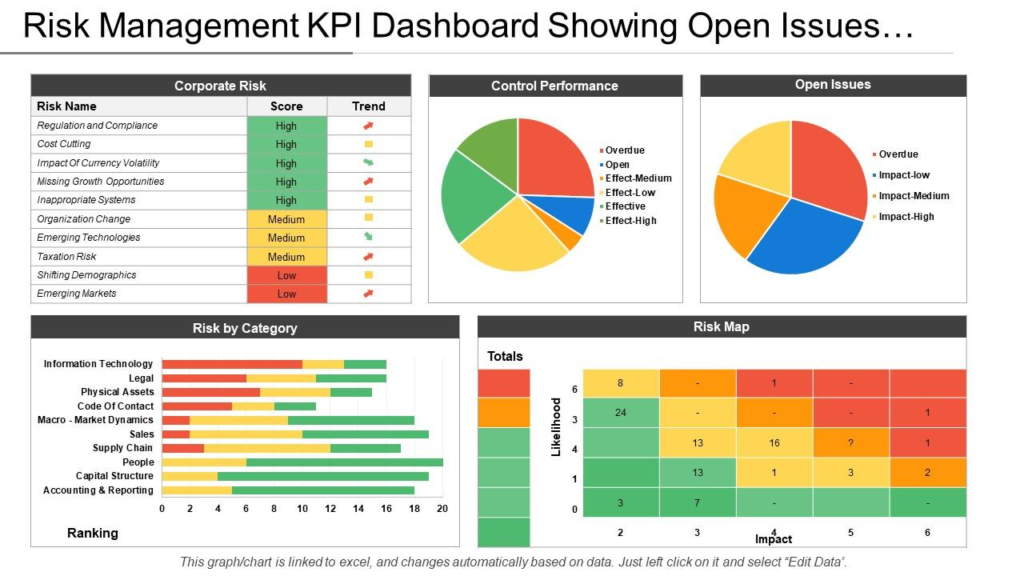
- Real-time operational dashboards
- Continuous compliance checks
Companies that implement operational risk controls reduce costly incidents while maintaining efficiency.
4. Data and Technology Drive Risk Insights
Technology has significantly transformed risk control over the past decade.
High-performing companies increasingly rely on data analytics and predictive tools to identify emerging risks.
For example:
- Retailers analyze customer transaction patterns to detect fraud
- Logistics companies use predictive models to anticipate supply chain delays
- Financial institutions monitor market volatility using real-time analytics
According to Gartner, organizations using advanced analytics for risk monitoring detect operational threats significantly faster than those relying on manual processes.
Technology commonly used in risk control includes:
- Predictive analytics platforms
- AI-driven fraud detection systems
- Cybersecurity monitoring tools
- Integrated risk management software
These tools help organizations shift from reactive risk response to predictive risk control.
5. Cross-Functional Collaboration Strengthens Risk Awareness
Risk rarely affects only one department. Operational failures, cybersecurity breaches, or compliance violations often have cascading effects across the entire organization.
High-performing companies recognize this reality and promote cross-functional collaboration in risk management.
For instance, cybersecurity planning may involve:
- IT teams managing infrastructure security
- Legal teams monitoring regulatory requirements
- Operations teams protecting data integrity
- Human resources providing employee training
By coordinating these efforts, organizations reduce blind spots that occur when departments operate independently.
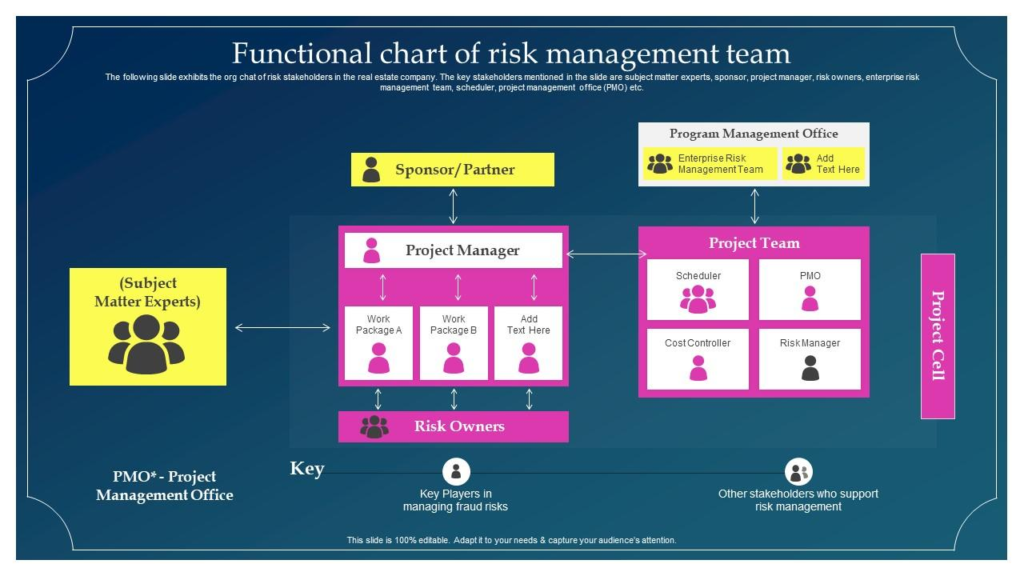
Companies with mature risk cultures often establish enterprise risk committees where leaders from multiple departments evaluate emerging risks together.
6. Continuous Monitoring Replaces Periodic Audits
Traditional risk management often relied heavily on annual audits. While audits remain important, they cannot detect problems that emerge between review cycles.
High-performing companies implement continuous monitoring systems.
Examples include:
- Automated compliance checks in financial systems
- Cybersecurity monitoring platforms running 24/7
- Supply chain dashboards tracking delivery disruptions
- Safety sensors monitoring equipment conditions
Continuous monitoring allows companies to detect anomalies quickly and respond before problems escalate.
According to research from The Institute of Internal Auditors, organizations that adopt continuous monitoring significantly improve early detection of operational risk events.
7. Employees Receive Practical Risk Training
Even the best risk frameworks fail if employees do not understand them.
High-performing companies invest heavily in practical risk training.
Instead of relying solely on policy documents, they use real-world examples to help employees recognize potential risks in daily work.
Effective programs often include:
- Cybersecurity simulations
- Safety scenario exercises
- Compliance workshops
- Fraud awareness training
These programs help employees understand how small actions—such as ignoring security protocols or bypassing approval procedures—can lead to major incidents.
Organizations with strong training programs often report higher compliance rates and fewer operational disruptions.
8. Scenario Planning Prepares Companies for Uncertainty
The past decade has demonstrated how quickly unexpected events can disrupt global markets.
High-performing companies regularly conduct scenario planning exercises to test their resilience.
Common scenarios include:
- Supply chain interruptions
- Cybersecurity breaches
- Economic downturns
- Regulatory changes
For example, many companies conducted pandemic response planning exercises long before COVID-19. Those with established contingency plans adapted more quickly when disruptions occurred.
Scenario planning allows companies to identify weaknesses in advance and strengthen their response strategies.
9. Transparent Communication Builds Trust
Transparency is another defining feature of strong risk control cultures.
High-performing organizations encourage open reporting of problems, near-misses, and operational concerns.
Employees are more likely to report risks when:
- Leadership responds constructively rather than punitively
- Reporting channels are clear and accessible
- Employees see real improvements after reporting issues
Transparent communication also strengthens relationships with investors, regulators, and customers.
Companies that openly discuss risk management practices often build stronger stakeholder confidence.
10. Risk Control Is Continuously Improved
Perhaps the most important characteristic of high-performing organizations is continuous improvement.
Risk environments evolve constantly as technologies, markets, and regulations change.
Top organizations regularly:
- Review risk frameworks
- Update control processes
- Adopt new technologies
- Incorporate lessons from incidents
Rather than treating risk management as a fixed system, they view it as an ongoing capability that must evolve alongside the business.
Frequently Asked Questions
What is risk control in business?
Risk control refers to processes organizations use to identify, assess, and reduce potential threats that could disrupt operations, finances, or reputation.
Why is risk control important for companies?
Effective risk control helps companies prevent costly incidents, comply with regulations, protect assets, and maintain operational stability.
How do companies identify operational risks?
Organizations use risk assessments, operational data analysis, employee reporting, and scenario planning to identify potential threats.
What role does technology play in risk management?
Technology enables real-time monitoring, predictive analytics, cybersecurity detection, and automated compliance checks.
How often should companies review their risk management framework?
Many organizations conduct formal reviews annually while maintaining continuous monitoring throughout the year.
What industries rely most heavily on risk control?
Financial services, healthcare, manufacturing, energy, and technology sectors all depend heavily on structured risk management.
Can small businesses implement effective risk control?
Yes. Even smaller companies can implement practical controls such as financial oversight, cybersecurity practices, and contingency planning.
What is enterprise risk management (ERM)?
ERM is a structured approach that evaluates risks across the entire organization rather than within individual departments.
How does company culture influence risk control?
Organizations with transparent communication and leadership support are more effective at identifying and managing risks.
What are common failures in risk management?
Typical failures include poor communication, outdated controls, lack of employee training, and ignoring emerging risks.
The Strategic Advantage of Strong Risk Discipline
High-performing companies understand that risk control is not simply about avoiding losses. It is about building a resilient organization capable of operating confidently in uncertain environments.
By embedding risk awareness into leadership culture, leveraging technology, training employees, and continuously improving controls, these organizations reduce operational surprises while supporting sustainable growth.
The companies that consistently outperform their peers are often those that treat risk management as a core business capability rather than a compliance requirement.
Key Insights at a Glance
- Leadership commitment is critical to strong risk control
- Proactive risk identification prevents operational surprises
- Technology enables faster risk detection and monitoring
- Cross-department collaboration reduces blind spots
- Continuous monitoring improves response speed
- Employee training strengthens daily risk awareness
- Scenario planning prepares organizations for uncertainty
- Transparent communication encourages early reporting
- Continuous improvement keeps risk frameworks effective