Summary
Successful investors rarely rely on quick wins. Instead, they share a long-term perspective built on patience, disciplined decision-making, and a focus on fundamentals. This mindset prioritizes steady growth over speculation, allowing investments to compound over time. By understanding market cycles, managing risk, and avoiding emotional decisions, investors can build resilient portfolios that perform consistently across decades.
Why Long-Term Thinking Defines Many Successful Investors
Across decades of market history, one pattern consistently emerges: the investors who achieve lasting success tend to think in years and decades—not days or months. Whether examining pension fund managers, disciplined individual investors, or renowned market figures, a shared philosophy appears repeatedly: wealth in markets is usually built through patience and compounding rather than rapid trading.
Financial markets naturally fluctuate. Economic cycles, geopolitical events, and shifts in corporate performance all contribute to volatility. Short-term traders often attempt to capitalize on these movements, but evidence suggests that consistently predicting short-term market behavior is extremely difficult. According to research published by Dalbar, the average investor’s returns historically lag behind market indices largely because of poor timing decisions driven by emotion.
Long-term investors take a different approach. Instead of reacting to daily news or price swings, they concentrate on broader economic trends, company fundamentals, and the power of compound growth.
This perspective allows them to remain invested during periods of volatility while positioning their portfolios for long-term expansion.
The Power of Compounding Over Time
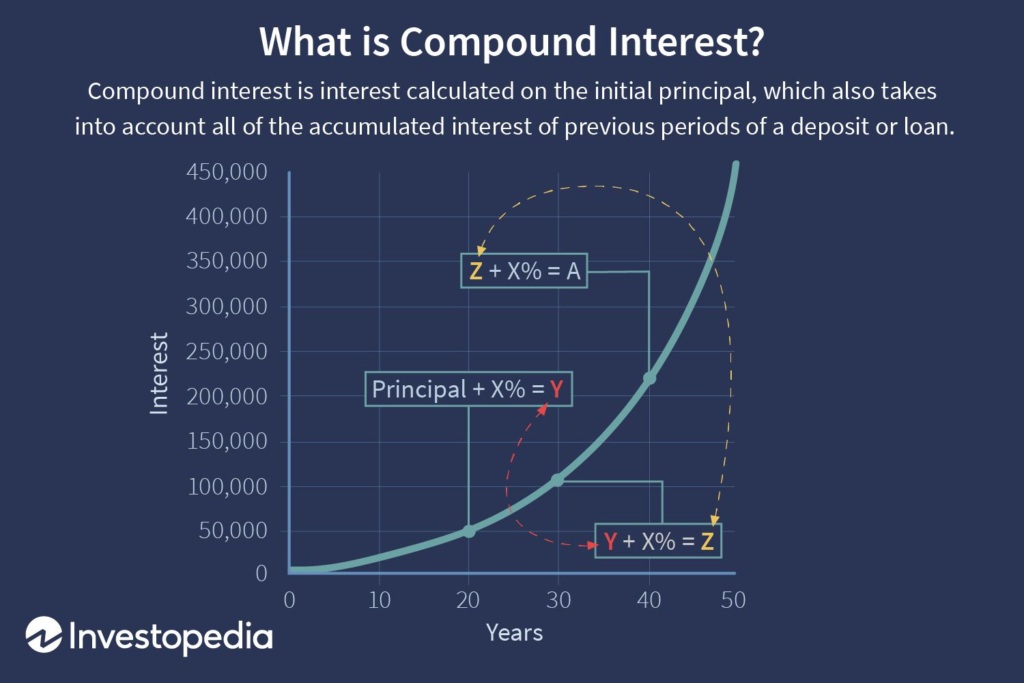
One of the strongest arguments for long-term investing is the mathematical effect of compounding.
Compounding occurs when investment returns generate additional returns over time. While the concept appears simple, its impact becomes profound over decades.
Consider a hypothetical example: an investor places $10,000 into a diversified index fund earning an average annual return of 8%. After 30 years, the investment grows to more than $100,000—without additional contributions.
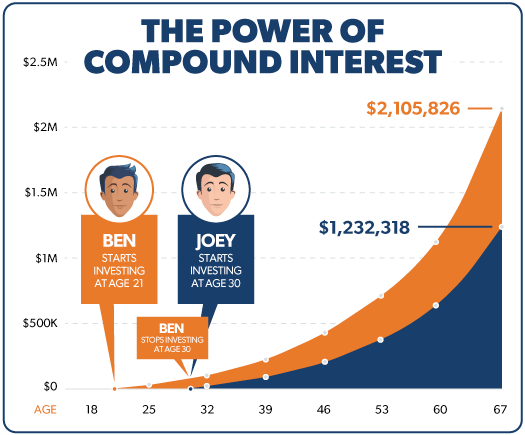
This phenomenon explains why investors who begin early and remain invested often outperform those who attempt frequent market timing.
Compounding becomes especially powerful when combined with disciplined contributions. Retirement accounts such as 401(k) plans demonstrate this principle clearly, as regular contributions compound over multiple decades.
How Long-Term Investors Approach Market Volatility
Market volatility often causes investors to panic. Sudden drops in asset prices can feel alarming, particularly when financial news emphasizes short-term losses.
Long-term investors interpret volatility differently.
They recognize that fluctuations are a natural feature of financial markets rather than an indication that the strategy itself is failing. Historically, markets have experienced numerous corrections yet continued to trend upward over time.
For example, despite major downturns such as the 2008 financial crisis and the 2020 pandemic crash, the U.S. stock market eventually recovered and reached new highs.
Investors with a long-term perspective typically follow several guiding principles during periods of volatility:
- Maintain diversified portfolios to reduce concentration risk
- Avoid panic selling during temporary downturns
- Continue regular contributions through market cycles
- Rebalance portfolios periodically rather than reacting emotionally
These habits help investors remain aligned with long-term goals rather than short-term market noise.
Patience: The Often-Overlooked Investment Skill
Patience is frequently discussed in investing but rarely appreciated as a measurable advantage.
Short-term trading environments reward speed and reaction, but long-term investors rely on patience as a strategic tool.
Patience allows investors to:
- Let high-quality companies grow over time
- Avoid unnecessary transaction costs
- Reduce tax liabilities by limiting frequent selling
- Benefit fully from compounding returns
Many investors underestimate how much value patience creates. Studies of long-term market performance repeatedly show that investors who hold diversified portfolios for extended periods often achieve stronger outcomes than those who frequently adjust strategies.
Focusing on Fundamentals Rather Than Headlines
Daily financial news can create the illusion that successful investing requires constant monitoring of economic developments.
In reality, long-term investors spend far more time analyzing fundamentals than reacting to headlines.
Fundamental analysis focuses on factors such as:
- Company earnings growth
- Competitive advantages
- Industry positioning
- Debt levels and financial stability
- Long-term demand trends
For example, an investor evaluating a healthcare company may consider demographic trends like aging populations, rising healthcare spending, and regulatory conditions rather than short-term stock price movements.
This fundamental perspective helps investors identify businesses capable of sustaining growth over many years.
Diversification as a Long-Term Stability Strategy
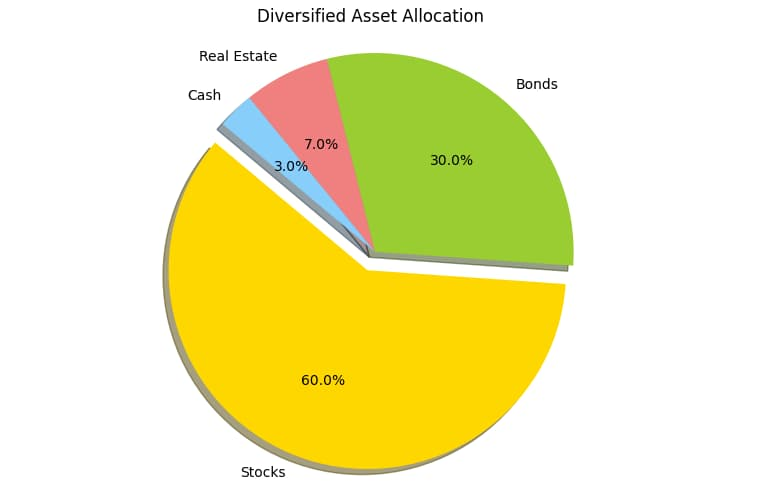
Another hallmark of successful investors is diversification. Instead of concentrating investments in a few high-risk opportunities, long-term portfolios typically spread risk across asset classes and sectors.
Diversification helps reduce the impact of individual asset declines while maintaining exposure to growth opportunities.
Common diversified portfolios may include:
- U.S. equities
- International stocks
- Bonds
- Real estate investment trusts (REITs)
- Index funds or exchange-traded funds (ETFs)
Research from Morningstar and Vanguard suggests diversified portfolios often deliver more consistent returns while reducing volatility.
This approach reflects a long-term mindset: the goal is not to maximize gains in a single year but to create sustainable growth over decades.
Emotional Discipline: The Hidden Advantage
One of the most underestimated factors in investment success is emotional control.
Markets naturally trigger emotional responses. Rising markets can create overconfidence, while falling markets produce fear. Both emotions can lead investors to make poor decisions.
Long-term investors deliberately develop habits that reduce emotional interference.
Examples include:
- Establishing predetermined asset allocations
- Using automatic contributions to remove timing decisions
- Setting clear investment horizons (often 10–30 years)
- Reviewing portfolios periodically rather than daily
These practices help investors remain consistent even during turbulent periods.
Real-World Example: Long-Term Investing in Practice
Consider a typical American retirement investor who begins contributing to a retirement account at age 30.
If the investor contributes $500 monthly into a diversified portfolio averaging 7% annual growth, the account could exceed $600,000 by age 65.
Importantly, this outcome depends far more on consistency and time in the market than on selecting the perfect stock.
Many successful investors follow a similar philosophy: make thoughtful decisions, remain patient, and allow time to do most of the work.
Why Short-Term Strategies Often Underperform
Short-term trading can appear appealing because it promises quick profits. However, several structural challenges make it difficult to sustain.
These include:
- High transaction costs
- Increased tax liabilities
- Difficulty predicting short-term price movements
- Emotional decision-making under pressure
Academic studies have consistently found that frequent trading reduces average investor returns.
Long-term investors avoid many of these challenges simply by minimizing unnecessary activity.
Building a Long-Term Investment Mindset
Developing a long-term perspective is less about technical expertise and more about disciplined habits.
Investors who adopt the following practices often find it easier to maintain long-term strategies:
- Define clear financial goals (retirement, education funding, etc.)
- Establish consistent investment contributions
- Maintain diversified portfolios
- Review investments annually rather than frequently
- Focus on economic fundamentals rather than short-term news
Over time, these behaviors create a framework that supports stable, long-term growth.
Frequently Asked Questions
Why do successful investors focus on the long term?
Long-term strategies allow investors to benefit from compounding, reduce emotional decision-making, and avoid the unpredictability of short-term market movements.
How long is considered “long-term investing”?
Most financial professionals consider an investment horizon of at least 5–10 years long-term, though retirement planning often involves 20–30 years.
Does long-term investing mean ignoring market changes?
No. Long-term investors monitor economic trends and portfolio performance but avoid reacting impulsively to short-term volatility.
What types of investments are commonly used for long-term portfolios?
Common long-term investments include index funds, diversified ETFs, blue-chip stocks, bonds, and retirement accounts such as 401(k)s or IRAs.
Is diversification necessary for long-term investors?
Yes. Diversification reduces risk and helps maintain stable returns over time by spreading investments across multiple asset classes.
How often should a long-term investor review their portfolio?
Many financial planners recommend reviewing portfolios annually or during major life changes rather than daily or weekly.
Can beginners benefit from long-term investing?
Absolutely. In fact, beginners often benefit the most because they have more time for compounding to work.
Does long-term investing eliminate risk?
No investment strategy eliminates risk entirely. However, longer time horizons historically reduce the impact of short-term volatility.
What is the biggest mistake long-term investors make?
One of the most common mistakes is abandoning a long-term plan during temporary market downturns.
Are index funds suitable for long-term investing?
Yes. Index funds are widely used by long-term investors because they provide diversification and typically have lower fees.
Investing With the Clock on Your Side
Time is one of the most powerful tools available to investors, yet it is often underestimated. The individuals who consistently build lasting wealth rarely rely on dramatic predictions or aggressive speculation. Instead, they rely on patience, disciplined decision-making, and the simple mathematics of compounding.
A long-term perspective transforms investing from a reactive activity into a strategic process. By focusing on fundamentals, maintaining diversification, and remaining consistent through market cycles, investors allow time—not constant activity—to drive results.
Key Lessons for Long-Term Investors
- Time in the market is often more important than timing the market
- Compounding significantly increases wealth over decades
- Diversification improves stability and risk management
- Emotional discipline prevents costly investment mistakes
- Consistency and patience are essential components of investment success