Modern risk control has expanded far beyond traditional compliance checklists and regulatory requirements. Organizations today face cyber threats, supply chain disruptions, operational vulnerabilities, reputational risks, and rapidly changing market conditions. As a result, risk management is becoming more proactive, data-driven, and integrated into business decision-making. Companies that successfully adapt are focusing on resilience, continuous monitoring, predictive analytics, and enterprise-wide accountability rather than relying solely on periodic compliance reviews.
Why Traditional Compliance Models Are No Longer Enough
For decades, many organizations viewed risk management primarily through the lens of compliance. The goal was straightforward: satisfy regulators, pass audits, and avoid penalties. Compliance programs were often built around policies, annual reviews, documentation requirements, and standardized reporting procedures.
While these practices remain important, today’s business environment has become significantly more complex. Risks now emerge faster than traditional compliance cycles can detect them. A company may pass a regulatory audit while simultaneously facing significant exposure from cyberattacks, third-party vendors, supply chain failures, or emerging technologies.
This shift has forced organizations to rethink the purpose of risk control. Instead of asking, “Are we compliant?” many leaders now ask, “Are we prepared?”
The distinction matters because compliance measures whether rules are being followed, while modern risk control evaluates whether the organization can identify, assess, and respond to evolving threats before they create serious consequences.
The Expanding Risk Landscape Facing Modern Organizations
Businesses today operate in an environment where risk originates from multiple directions simultaneously.
Several factors have contributed to this evolution:
- Increased digital transformation
- Growing cybersecurity threats
- Complex global supply chains
- Remote and hybrid work environments
- Increased regulatory scrutiny
- Greater stakeholder expectations
- Faster information sharing through social media
- Rising dependence on third-party vendors
A single disruption can quickly spread across multiple business functions. For example, a ransomware attack may affect operations, customer service, revenue generation, legal compliance, and public reputation at the same time.
This interconnected reality means risk management can no longer function as a separate department focused solely on audits and compliance reports.
Moving From Reactive to Proactive Risk Management
One of the most significant changes in modern risk control is the shift from reactive responses to proactive prevention.
Traditional approaches often relied on identifying problems after they occurred. An incident would trigger an investigation, corrective action plan, and policy update.
Modern organizations increasingly focus on identifying warning signs before major incidents develop.
For example, financial institutions frequently monitor transaction patterns in real time to identify unusual behavior that may indicate fraud. Manufacturers use predictive maintenance technologies to detect equipment failures before production lines shut down. Healthcare organizations monitor cybersecurity indicators continuously rather than waiting for breaches to occur.
This proactive approach allows organizations to:
- Reduce operational disruptions
- Lower financial losses
- Improve response times
- Strengthen customer trust
- Increase organizational resilience
The goal is not to eliminate risk entirely, which is impossible, but to improve visibility and preparedness.
The Growing Role of Data Analytics in Risk Control
Data analytics has become one of the most important tools in modern risk management.
Organizations now collect enormous amounts of operational, financial, customer, and security data. When analyzed effectively, this information can reveal patterns that traditional compliance reviews might miss.
Advanced analytics allows businesses to:
- Detect emerging risks earlier
- Identify unusual behaviors
- Monitor operational trends
- Evaluate vendor performance
- Measure risk exposure across departments
- Forecast potential disruptions
For example, retailers may analyze inventory trends, weather data, transportation delays, and supplier performance to anticipate supply chain disruptions before products become unavailable.
Similarly, financial institutions use machine learning models to identify suspicious activities that human reviewers might overlook.
Rather than relying solely on historical reports, organizations increasingly use real-time intelligence to support risk-based decision-making.

Cybersecurity Is Reshaping Risk Control Priorities
Few areas demonstrate the evolution of risk management more clearly than cybersecurity.
A decade ago, many organizations treated cybersecurity primarily as an IT issue. Today, executives and board members recognize it as a major business risk.
According to industry reports, cybercrime costs continue to rise globally, affecting organizations of every size and industry. Threats include ransomware, phishing attacks, insider threats, data breaches, and software vulnerabilities.
Modern risk control strategies now include:
- Continuous threat monitoring
- Employee cybersecurity training
- Multi-factor authentication
- Vendor security assessments
- Incident response planning
- Data protection programs
- Cyber resilience testing
Organizations increasingly assume that attacks may occur and focus on limiting damage, maintaining operations, and recovering quickly.
This mindset reflects a broader shift from prevention-only models toward resilience-based risk management.
Third-Party Risk Has Become a Major Concern
Modern businesses depend heavily on external partners.
Cloud service providers, software vendors, logistics companies, contractors, consultants, and suppliers all play critical roles in daily operations.
However, third-party relationships can introduce significant risks.
A vendor’s cybersecurity weakness, financial instability, regulatory violation, or operational failure can directly affect the organizations they serve.
As a result, modern risk programs increasingly include structured third-party risk management processes.
These programs often involve:
- Vendor due diligence reviews
- Financial stability assessments
- Security evaluations
- Ongoing performance monitoring
- Contractual risk controls
- Business continuity assessments
Organizations are moving beyond initial vendor screening and adopting continuous monitoring practices throughout the relationship lifecycle.
Enterprise Risk Management Is Breaking Down Silos
Historically, risk management responsibilities were often divided among separate departments.
Finance managed financial risks.
Legal teams handled regulatory concerns.
IT managed cybersecurity.
Operations focused on process controls.
This fragmented structure frequently created blind spots because risks often crossed departmental boundaries.
Modern Enterprise Risk Management (ERM) frameworks aim to provide a more holistic view.
Under an ERM approach, leaders evaluate how different risks interact and affect organizational objectives.
For example, a supply chain disruption may create:
- Revenue impacts
- Customer satisfaction issues
- Contractual obligations
- Regulatory concerns
- Reputational damage
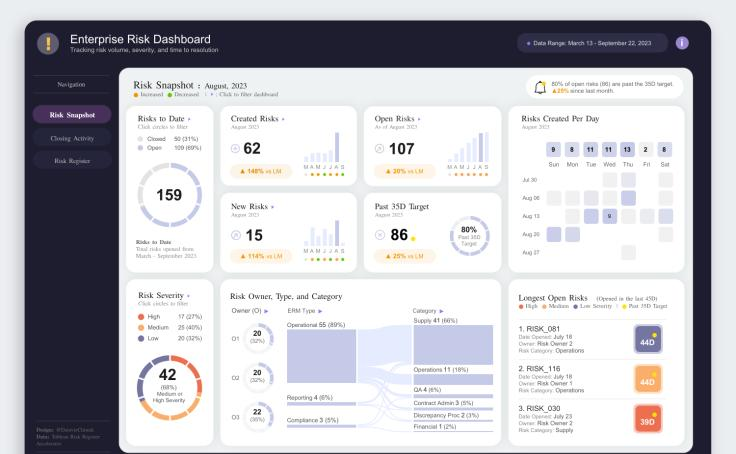
Viewing these risks collectively helps organizations allocate resources more effectively and prioritize mitigation efforts.
Increasingly, boards and executive leadership teams expect enterprise-wide visibility rather than isolated departmental reports.
Building a Culture of Risk Awareness
Technology alone cannot create effective risk control.
Organizations increasingly recognize that employees play a critical role in identifying and managing risks.
A strong risk culture encourages individuals at every level to recognize potential threats and report concerns without fear of retaliation.
Characteristics of effective risk cultures often include:
- Clear accountability
- Transparent communication
- Ongoing training
- Leadership engagement
- Ethical decision-making
- Continuous learning
For example, employees may notice suspicious emails, operational inefficiencies, safety hazards, or compliance concerns before management becomes aware of them.
When organizations foster open communication, they gain access to valuable frontline insights that improve overall risk visibility.
Scenario Planning and Organizational Resilience
Another major development in modern risk management is the growing emphasis on resilience.
Rather than focusing exclusively on preventing adverse events, organizations are increasingly asking how they would respond if those events occur.
Scenario planning helps answer this question.
Leadership teams evaluate potential disruptions such as:
- Major cyberattacks
- Supply chain failures
- Natural disasters
- Economic downturns
- Regulatory changes
- Technology outages
- Public relations crises
By modeling these scenarios, organizations can identify weaknesses before real-world events expose them.
Many companies now conduct tabletop exercises and simulation testing to improve preparedness.
These exercises help teams practice decision-making, communication, and recovery procedures under realistic conditions.
How Artificial Intelligence Is Influencing Risk Control
Artificial intelligence is beginning to transform risk management capabilities.
AI-powered systems can process large volumes of information far more quickly than traditional manual reviews.
Applications include:
- Fraud detection
- Cyber threat analysis
- Predictive maintenance
- Compliance monitoring
- Supply chain risk assessment
- Financial anomaly detection
For example, banks increasingly use AI systems to monitor millions of transactions for suspicious patterns.
Manufacturers use predictive analytics to identify equipment failures before they occur.
Healthcare organizations use AI tools to identify operational risks and improve patient safety processes.
However, AI also introduces new risks related to model accuracy, data privacy, transparency, and governance. As a result, organizations must balance technological innovation with appropriate oversight.
The Future of Risk Control
Risk control is becoming increasingly integrated into strategic planning rather than operating as a separate compliance function.
Future risk management programs will likely emphasize:
- Real-time monitoring
- Predictive analytics
- Cross-functional collaboration
- Greater automation
- Enhanced cyber resilience
- Third-party oversight
- Scenario-based planning
- Enterprise-wide accountability
Organizations that adopt these practices are often better positioned to respond to uncertainty and maintain operational stability.
The most effective risk programs of the future will not simply focus on avoiding problems. They will help organizations make informed decisions while pursuing growth opportunities in uncertain environments.

Frequently Asked Questions
1. What is the difference between compliance and risk control?
Compliance focuses on meeting legal and regulatory requirements, while risk control focuses on identifying, assessing, and managing threats that could affect organizational objectives.
2. Why are traditional compliance programs becoming less effective?
Many modern risks emerge rapidly and may not be captured through periodic audits or regulatory reviews alone. Organizations need continuous monitoring and proactive risk assessment.
3. What is enterprise risk management?
Enterprise Risk Management (ERM) is a framework that evaluates risks across the entire organization rather than within isolated departments.
4. How does cybersecurity fit into risk management?
Cybersecurity is now considered a core business risk because cyber incidents can affect operations, finances, customer trust, and regulatory compliance.
5. What role does data analytics play in risk control?
Analytics helps organizations identify patterns, monitor emerging threats, assess risk exposure, and support faster decision-making.
6. Why is third-party risk management important?
Organizations depend heavily on vendors and suppliers. Failures involving third parties can create significant operational, financial, and reputational risks.
7. What is risk resilience?
Risk resilience refers to an organization’s ability to withstand disruptions, adapt effectively, and recover quickly after adverse events.
8. How is artificial intelligence being used in risk management?
AI supports fraud detection, threat monitoring, predictive maintenance, compliance analysis, and other activities that improve risk visibility.
9. Can risk be completely eliminated?
No. Risk is an unavoidable part of business operations. Effective risk control focuses on understanding, reducing, and managing risk rather than eliminating it entirely.
10. What makes a modern risk management program effective?
Effective programs combine technology, data analytics, leadership involvement, employee engagement, continuous monitoring, and resilience planning.