Organizations face constant change, from economic uncertainty and technological disruption to evolving customer expectations and regulatory requirements. Companies that prioritize risk control are often better equipped to adapt because they identify potential challenges early, strengthen decision-making, and build operational resilience. Rather than slowing innovation, effective risk control creates the stability needed to manage change confidently and sustain long-term growth.
Understanding the Relationship Between Risk Control and Organizational Change
Change has become a permanent feature of modern business. Whether organizations are implementing new technologies, entering new markets, responding to economic shifts, or adapting to changing consumer behavior, leaders must make decisions in environments filled with uncertainty.
Many executives assume risk control is primarily about preventing losses or satisfying compliance requirements. In reality, risk control serves a much broader purpose. It provides organizations with the information, processes, and safeguards necessary to make better decisions during periods of transition.
Organizations that understand their risks tend to respond more effectively when unexpected events occur. Instead of reacting impulsively, they already have frameworks in place to evaluate options, allocate resources, and communicate with stakeholders.
This capability becomes increasingly valuable as the pace of change accelerates across industries.
What Is Risk Control?
Risk control refers to the processes organizations use to identify, assess, monitor, and reduce potential threats that could affect business objectives.
These threats may include:
- Financial risks
- Operational disruptions
- Cybersecurity incidents
- Supply chain interruptions
- Regulatory changes
- Reputational challenges
- Workforce shortages
- Strategic misalignment
Risk control does not eliminate uncertainty. Instead, it helps organizations understand uncertainty and prepare appropriate responses.
Successful companies recognize that risk control is not merely a defensive activity. It is a strategic capability that enables confident decision-making.
Why Change Often Exposes Organizational Weaknesses
Periods of stability can sometimes hide operational inefficiencies and vulnerabilities.
When significant change occurs, those weaknesses often become visible.
For example, a company implementing a new software platform may discover:
- Poor internal communication processes
- Inconsistent data management practices
- Limited employee training capabilities
- Inadequate cybersecurity controls
Similarly, economic downturns often reveal weaknesses in cash flow management, supplier relationships, and business continuity planning.
Organizations with mature risk-control systems identify these vulnerabilities before major disruptions occur, giving leaders time to address them proactively.
This proactive approach often separates successful change initiatives from costly failures.
The Role of Risk Control in Better Decision-Making
One of the most valuable benefits of risk control is improved decision quality.
Business leaders rarely operate with complete information. However, risk management frameworks help decision-makers evaluate potential outcomes more systematically.
Instead of asking only:
“How can we achieve this objective?”
Organizations also ask:
- What could go wrong?
- How likely is it?
- What would the impact be?
- How can we reduce exposure?
- What contingency plans should exist?
These questions encourage balanced decision-making.
For example, a healthcare provider expanding telehealth services may identify opportunities for growth while simultaneously evaluating cybersecurity risks, patient privacy concerns, and regulatory compliance requirements.
By addressing these issues early, the organization can pursue innovation with greater confidence.

Building Organizational Resilience Through Risk Control
Resilience refers to an organization’s ability to withstand disruptions and recover effectively.
Risk control plays a central role in building resilience because it encourages preparation before crises occur.
Organizations that prioritize risk control typically invest in:
- Business continuity planning
- Disaster recovery systems
- Crisis communication strategies
- Employee training programs
- Scenario planning exercises
- Supply chain diversification
When disruptions occur, these investments often reduce downtime and accelerate recovery.
The COVID-19 pandemic provided a clear example. Organizations with established remote-work capabilities, digital infrastructure, and continuity plans generally adapted more quickly than those forced to build solutions during the crisis.
While no organization could eliminate pandemic-related challenges, preparation significantly improved outcomes.
Why Risk-Aware Cultures Adapt Faster
Risk control is most effective when it becomes part of organizational culture.
In risk-aware organizations, employees understand that identifying potential problems is not viewed negatively. Instead, raising concerns is encouraged as part of responsible decision-making.
This cultural mindset creates several advantages:
- Faster identification of emerging issues
- Improved communication across departments
- Greater accountability
- More informed strategic planning
- Reduced likelihood of preventable errors
Organizations with strong risk cultures often detect warning signs earlier because employees feel empowered to report concerns.
For example, a manufacturing employee noticing quality-control issues may report them immediately, allowing leadership to address problems before they affect customers.
In organizations where risk discussions are discouraged, similar issues may remain hidden until they become significantly more expensive to resolve.
The Connection Between Risk Control and Innovation
A common misconception is that risk control slows innovation.
In practice, the opposite is often true.
Organizations that understand risks clearly are usually more willing to pursue innovation because they have mechanisms for managing uncertainty.
Innovation inherently involves risk. New products, technologies, and business models all carry unknowns.
Effective risk control allows organizations to:
- Test ideas systematically
- Evaluate potential impacts
- Monitor outcomes
- Adjust strategies quickly
- Protect critical operations
Consider a financial services company introducing artificial intelligence tools.
Without risk assessment, the initiative could expose the organization to compliance violations, data-security concerns, or reputational damage.
With proper risk controls, leaders can pilot the technology, monitor performance, and implement safeguards before broader deployment.
This approach supports innovation while maintaining organizational stability.
Managing External Risks During Periods of Change
Not all risks originate inside the organization.
External factors frequently influence business success, including:
- Economic fluctuations
- Regulatory developments
- Technological disruption
- Geopolitical events
- Competitive pressures
- Consumer behavior changes
Organizations that actively monitor external risks are often better positioned to respond quickly.
For example, businesses that closely tracked supply-chain vulnerabilities before major disruptions were able to diversify suppliers and reduce dependence on single sources.
Similarly, organizations that monitor regulatory developments can adapt policies before compliance deadlines arrive.
This forward-looking perspective helps leaders avoid being caught off guard.

Practical Examples of Risk Control Supporting Successful Change
Example 1: Retail Digital Transformation
A regional retailer decided to expand e-commerce capabilities.
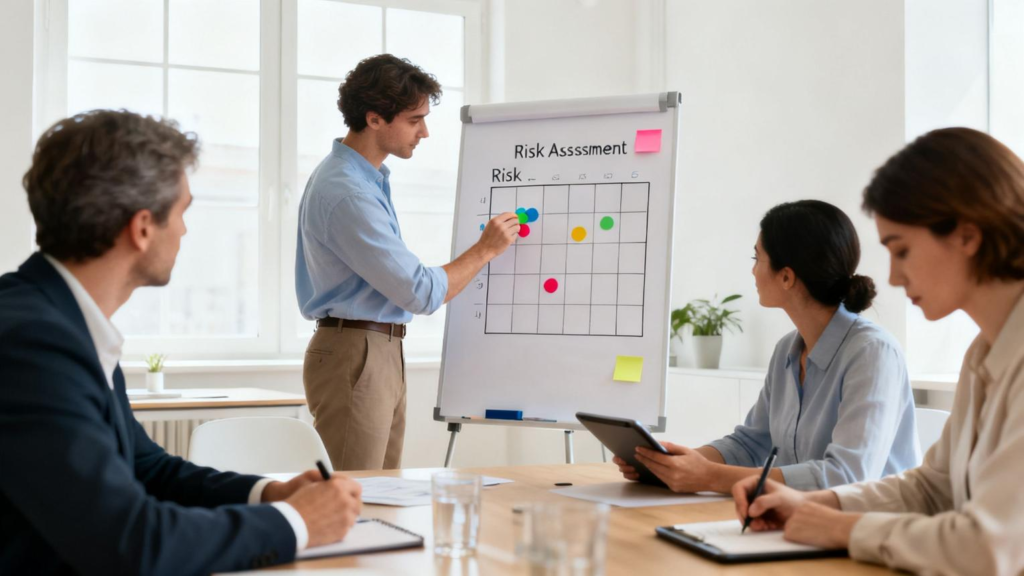
Before investing heavily, leadership conducted a comprehensive risk assessment.
The review identified:
- Cybersecurity vulnerabilities
- Inventory management challenges
- Fulfillment capacity limitations
- Customer-service risks
By addressing these issues before launch, the company reduced operational disruptions and improved customer satisfaction during the transition.
Example 2: Manufacturing Supply Chain Diversification
A manufacturer relied heavily on a single overseas supplier.
Risk assessments revealed potential vulnerabilities related to transportation delays and geopolitical uncertainty.
Leadership developed alternative supplier relationships before disruptions occurred.
When supply-chain challenges emerged, the organization maintained production while competitors experienced significant delays.
Example 3: Healthcare Technology Adoption
A healthcare organization implemented a new patient-records system.
Rather than focusing solely on technical deployment, leadership evaluated:
- Data privacy risks
- Staff training requirements
- Workflow disruptions
- Regulatory compliance concerns
The organization created detailed implementation plans and contingency procedures, resulting in a smoother transition and fewer operational issues.
Common Risk Control Strategies Used by Successful Organizations
Organizations that navigate change effectively often share several risk-control practices.
Enterprise Risk Assessments
Regular evaluations help identify emerging threats and opportunities.
Scenario Planning
Leaders examine multiple future outcomes and prepare responses in advance.
Strong Governance Structures
Clear accountability ensures risks are monitored and addressed consistently.
Data-Driven Monitoring
Organizations track key indicators that may signal developing issues.
Cross-Functional Collaboration
Departments work together to identify risks from multiple perspectives.
Continuous Improvement
Risk controls are reviewed and updated regularly as conditions evolve.
Together, these practices create a more adaptive and resilient organization.
How Small and Mid-Sized Businesses Can Strengthen Risk Control
Risk control is not limited to large corporations.
Small and mid-sized businesses often benefit significantly from structured risk-management practices.
Practical steps include:
- Documenting key operational risks
- Creating business continuity plans
- Conducting cybersecurity reviews
- Diversifying suppliers
- Training employees on risk awareness
- Reviewing insurance coverage regularly
- Establishing crisis communication procedures
Many of these measures require more planning than financial investment.
Even simple preparations can significantly improve an organization’s ability to respond to change.
What Leaders Should Ask Before Major Organizational Changes
Before launching significant initiatives, leaders can strengthen outcomes by asking several key questions:
- What assumptions are we making?
- Which risks could affect success?
- How prepared are we for unexpected disruptions?
- What early warning indicators should we monitor?
- Do we have contingency plans?
- Are responsibilities clearly defined?
- How will we communicate during challenges?
These questions encourage proactive thinking and reduce the likelihood of costly surprises.
Frequently Asked Questions
1. What is risk control in business?
Risk control is the process of identifying, assessing, and reducing threats that could negatively affect organizational objectives, operations, finances, or reputation.
2. Why is risk control important during organizational change?
Change introduces uncertainty. Risk control helps organizations anticipate challenges, prepare responses, and make informed decisions throughout the transition.
3. Does risk control reduce innovation?
No. Effective risk control often supports innovation by helping organizations understand and manage uncertainty while protecting critical operations.
4. How does risk control improve decision-making?
Risk control encourages leaders to evaluate potential outcomes, assess impacts, and develop contingency plans before making major decisions.
5. What is organizational resilience?
Organizational resilience is the ability to withstand disruptions, adapt to changing conditions, and recover effectively from challenges.
6. How often should organizations assess risks?
Most organizations conduct formal assessments annually while continuously monitoring emerging risks throughout the year.
7. What are examples of operational risks?
Examples include supply-chain disruptions, equipment failures, staffing shortages, cybersecurity incidents, and process breakdowns.
8. Can small businesses benefit from risk control?
Yes. Small businesses often gain significant benefits from identifying vulnerabilities and preparing for disruptions before they occur.
9. What role does leadership play in risk control?
Leadership establishes priorities, allocates resources, promotes accountability, and helps create a culture that values risk awareness.
10. How does risk control support long-term growth?
Risk control helps organizations avoid preventable disruptions, make informed investments, and adapt successfully to changing market conditions.