
Summary
Growth Watch analysts monitor a range of economic and market indicators to understand where momentum is building across the U.S. economy. From consumer spending and labor trends to capital investment and technological adoption, these signals provide early insights into shifting opportunities. Understanding these patterns helps investors, business leaders, and policymakers make informed decisions in an environment defined by change and long-term structural transformation.
Understanding the Role of Market Signals in Economic Analysis
Every year, analysts, economists, and institutional investors attempt to identify early indicators that hint at where the economy is heading. These signals—often subtle and scattered across industries—help explain shifts in business activity before they become widely visible in corporate earnings or headlines.
Growth Watch focuses on macro-level indicators and sector-specific developments that tend to precede broader market movements. Rather than relying on a single metric, analysts track multiple signals simultaneously to identify patterns.
This approach reflects a key reality of modern markets: economic change rarely occurs all at once. Instead, it unfolds through small signals—rising hiring in certain industries, increasing venture capital flows, supply chain adjustments, or evolving consumer spending habits.
According to the U.S. Bureau of Economic Analysis, the U.S. economy surpassed $27 trillion in GDP in 2023, yet growth remains uneven across sectors. Monitoring emerging signals helps explain where the next phase of expansion may appear.

Consumer Spending Trends: The Core Engine of the U.S. Economy
Consumer spending remains the most powerful driver of American economic activity. In fact, personal consumption accounts for roughly 68–70% of U.S. GDP, making it one of the most closely monitored signals in any market analysis.
Growth Watch analysts track several consumer-related indicators:
- Retail sales trends
- Credit card spending data
- Consumer sentiment surveys
- Household savings rates
- Housing and rent expenditures
Organizations like the National Retail Federation frequently report shifts in consumer behavior months before they show up in broader economic statistics.
For example, during periods of economic uncertainty, analysts often see a shift from discretionary purchases to essential goods. Conversely, rising spending on travel, dining, and entertainment can signal improving confidence.
A practical example emerged after the pandemic recovery. Spending on experiences—such as travel and live events—grew faster than physical goods, indicating a structural shift in consumer priorities.
These patterns help Growth Watch identify which industries may experience stronger demand over the coming year.
Labor Market Dynamics: Reading the Signals Behind Employment Data
Employment statistics provide one of the clearest windows into economic momentum.
Data released monthly by the U.S. Bureau of Labor Statistics includes information on:
- Job creation
- Wage growth
- Labor force participation
- Unemployment levels
However, experienced analysts often look deeper than headline unemployment figures.
Growth Watch tracks signals such as:
- Job openings by sector
- Wage growth in high-skill industries
- Regional hiring patterns
- Shifts in gig and contract employment
For instance, strong hiring in technology infrastructure, renewable energy, and healthcare services has been a recurring signal in recent years.
These hiring patterns often reflect long-term economic transitions, including demographic shifts, digital transformation, and the expansion of specialized services.
Business Investment and Capital Spending
Corporate investment decisions provide another powerful signal about future economic activity.
When businesses increase spending on equipment, infrastructure, and research, it usually reflects confidence in long-term demand.
Growth Watch monitors:
- Corporate capital expenditure (CapEx) trends
- Manufacturing investment
- Infrastructure projects
- Research and development spending
Data from the Federal Reserve often shows that capital spending rises before productivity gains and economic growth accelerate.
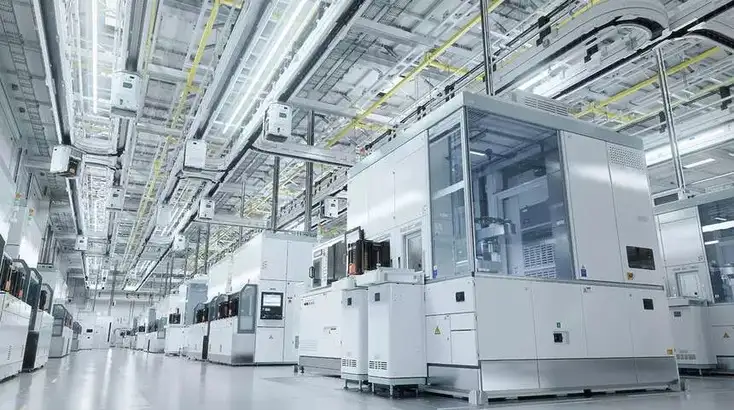
A practical example can be seen in the semiconductor and data-center industries. Over the past several years, major technology firms have committed billions to expanding computing infrastructure—an investment that supports cloud services, artificial intelligence, and digital commerce.
These investments create ripple effects across supply chains, engineering services, and energy markets.
Technology Adoption Across Traditional Industries
Technology adoption is no longer limited to Silicon Valley. One of the signals Growth Watch monitors closely is how quickly traditional industries integrate digital tools and automation.
Key sectors experiencing rapid technological transformation include:
- Healthcare systems adopting digital patient platforms
- Manufacturing companies using robotics and automation
- Logistics networks implementing real-time tracking systems
- Financial institutions expanding digital services
According to research from the McKinsey & Company, companies that invest consistently in digital capabilities often experience higher productivity growth over time.
A notable example is the transformation of supply chain management. Companies increasingly rely on predictive analytics and real-time inventory tracking to manage disruptions and reduce costs.
For Growth Watch analysts, widespread technology adoption often signals long-term industry modernization rather than short-term market fluctuations.
Supply Chain Stability and Global Trade Patterns
The past few years have highlighted the importance of supply chain resilience.
Growth Watch monitors changes in:
- Shipping costs
- Manufacturing backlogs
- Trade flows
- Inventory levels
Reports from the World Trade Organization and logistics data providers offer insights into global trade trends.
Recent signals suggest several structural shifts:
- Increased nearshoring and domestic manufacturing
- Diversification of supplier networks
- Investment in logistics infrastructure
These developments indicate that businesses are prioritizing supply chain stability alongside efficiency, a trend likely to influence investment decisions for years.
Capital Flows and Venture Investment
Another important signal involves where capital is being deployed.
Venture capital, private equity, and institutional investment can reveal which sectors investors believe have long-term potential.
Growth Watch tracks funding activity in areas such as:
- Artificial intelligence
- Climate technology
- biotechnology
- financial technology
Data from the PitchBook shows that even during periods of tighter financial conditions, investment continues to flow into sectors tied to major structural trends.
For example, climate-focused technologies have attracted increasing investment as governments and corporations pursue sustainability targets.
These capital flows often serve as early indicators of future industry expansion.
Housing and Real Estate Indicators
Housing markets provide valuable insight into broader economic health.
Growth Watch monitors several real estate indicators, including:
- Mortgage rates
- Housing starts
- Building permits
- Home affordability metrics
Data from the National Association of Realtors often reveals shifts in housing demand months before they affect construction employment or consumer spending.
Housing trends can influence:
- Consumer confidence
- household wealth
- regional economic growth
For example, rising housing construction can stimulate job creation in materials, transportation, and local services.
Energy Markets and Infrastructure Investment
Energy markets play a critical role in shaping economic conditions.
Growth Watch monitors signals such as:
- Energy production trends
- renewable energy investment
- infrastructure development
- electricity demand from data centers and manufacturing
According to the U.S. Energy Information Administration, the United States remains one of the world’s largest energy producers while simultaneously expanding renewable energy capacity.
Investment in energy infrastructure—particularly power grids and transmission networks—has become a key signal for analysts tracking long-term industrial growth.
Why Monitoring Multiple Signals Matters
No single economic indicator tells the full story.
Growth Watch emphasizes cross-analysis, combining signals from multiple sectors to understand broader trends.
For example:
- Rising consumer spending combined with strong hiring can indicate expanding economic activity.
- Increased venture investment alongside technology adoption may signal future industry growth.
- Supply chain improvements combined with capital spending often suggest improving business confidence.
By observing these patterns together, analysts gain a clearer picture of how economic forces interact.
Frequently Asked Questions
What are market signals in economic analysis?
Market signals are measurable indicators—such as employment data, investment trends, or consumer spending—that provide insight into the direction of economic activity.
Why do analysts monitor multiple economic indicators?
Because no single data point fully explains economic conditions. Combining several indicators provides a more accurate understanding of trends.
How often do economic signals change?
Some indicators change monthly, such as employment reports, while others evolve over several quarters or years.
Which signals matter most for investors?
Commonly monitored signals include interest rates, corporate investment, consumer spending, labor trends, and capital flows.
Are economic signals reliable predictors?
They are not perfect predictors, but they help analysts identify emerging patterns and potential risks.
How does consumer sentiment influence markets?
Consumer confidence often affects spending behavior, which directly influences business revenue and economic growth.
What role does technology adoption play in economic growth?
Technology adoption increases productivity, enables new services, and often creates entirely new markets.
Why is housing considered a leading economic indicator?
Housing affects employment, construction activity, consumer wealth, and local economic development.
Do global trends affect U.S. market signals?
Yes. Trade flows, supply chains, and international investment patterns all influence domestic economic activity.
Where can individuals track these signals?
Many indicators are publicly available through organizations such as the Bureau of Labor Statistics, Federal Reserve, and major economic research institutions.
Interpreting Signals in a Changing Economic Landscape
Economic signals rarely point in a single direction. Some indicators may suggest expansion while others reflect caution. The role of Growth Watch is not to predict markets with certainty but to identify emerging patterns that deserve attention.
By monitoring consumer behavior, investment trends, labor dynamics, and technological adoption, analysts can better understand how industries evolve. These insights help investors, policymakers, and business leaders make decisions grounded in data rather than speculation.
In a complex global economy, the most valuable insights often come not from a single headline figure but from the intersection of multiple signals unfolding simultaneously.
Key Insights at a Glance
- Consumer spending remains the largest driver of U.S. economic activity
- Labor market trends reveal structural shifts in industries
- Corporate capital investment signals long-term business confidence
- Technology adoption continues reshaping traditional sectors
- Supply chain resilience is becoming a strategic priority
- Venture investment highlights emerging industries
- Housing trends provide insight into regional economic health
- Energy infrastructure investment reflects long-term industrial growth