Summary
Many organizations believe their greatest risks come from market volatility, competitors, or economic downturns. In reality, the biggest threats often arise from overlooked operational weaknesses, poor controls, and flawed assumptions about how risk behaves. Companies that implement structured oversight, data visibility, and accountability consistently outperform peers by reducing preventable losses and improving decision quality.
Why Businesses Often Misjudge Risk
Risk is rarely misunderstood because leaders ignore it. More often, it is misjudged because the signals are subtle, delayed, or buried inside everyday operations.
In many organizations, risk discussions focus heavily on macro-level threats: recessions, supply chain disruption, geopolitical issues, or competitive pressure. While those factors matter, the majority of operational failures originate from internal blind spots rather than external shocks.
According to research from the Association of Certified Fraud Examiners, organizations lose an estimated 5% of annual revenue to fraud and internal control failures. Meanwhile, operational risk events—such as compliance failures, process breakdowns, or poor data oversight—continue to generate billions in losses annually across industries.
The problem is not that companies lack risk frameworks. Many have formal systems. The issue is that risk assessments frequently rely on assumptions rather than operational evidence.
Common misjudgments often occur in areas such as:
- Overconfidence in existing controls
- Underestimation of human error
- Poor visibility into operational processes
- Fragmented responsibility across departments
- Delayed recognition of emerging risks
When these weaknesses accumulate, small issues compound into larger failures.
The Difference Between Risk Awareness and Risk Control
Many organizations talk about risk management. Far fewer truly control risk.
Risk awareness is simply recognizing that something could go wrong. Risk control, on the other hand, involves actively shaping processes, systems, and behavior so that problems are prevented or detected early.
In practical terms, this distinction is what separates companies that absorb occasional losses from those that avoid them altogether.
A company with basic risk awareness may identify fraud as a possibility. But a company with strong controls implements structured approval workflows, independent audits, and automated monitoring that significantly reduces the opportunity for fraud to occur.
This difference matters financially. A Harvard Business Review analysis of operational failures found that organizations with robust internal control environments experience significantly fewer severe loss events and recover faster when disruptions occur.
Risk control is not about eliminating uncertainty. It is about ensuring that when uncertainty appears, it does not cascade into systemic failure.
The Most Common Areas Where Risk Is Misjudged
Despite decades of research in corporate governance and enterprise risk management, several recurring areas continue to cause trouble for organizations.
1. Operational Process Weakness
Processes evolve over time, especially in growing companies. Unfortunately, controls rarely evolve at the same pace.
Manual steps, undocumented workflows, and inconsistent oversight create hidden vulnerabilities.
For example, a mid-sized logistics company may add multiple new regional offices. Each office develops its own billing procedures, approvals, and reporting methods. Over time, inconsistencies begin to appear in revenue recognition and expense approvals.
What begins as operational flexibility eventually becomes financial exposure.
Organizations often assume that “the process works” simply because no major incident has occurred yet.
2. Overreliance on Trust Instead of Verification
Trust is essential in organizations, but controls should never rely on trust alone.
Internal fraud cases frequently occur in companies where long-tenured employees are granted excessive autonomy without oversight.
The ACFE consistently reports that fraud schemes last a median of 12 months before detection, often because organizations lack monitoring controls rather than because employees are intentionally deceptive.
Effective control systems assume that errors and misconduct are possible. Verification protects both the organization and its employees.
3. Fragmented Risk Ownership
In many companies, responsibility for risk management is scattered.
Compliance teams monitor regulatory issues. Finance manages financial controls. IT handles cybersecurity. Operations manages supply chain risks.
When these responsibilities remain siloed, systemic risk can fall between organizational boundaries.
For instance, a technology failure may initially appear to be an IT issue. But if it disrupts billing systems, regulatory reporting, or financial controls, the problem becomes a cross-functional risk event.
Companies that centralize risk oversight or establish enterprise-wide governance structures are far better equipped to detect these connections early.
4. Misinterpreting Data Signals
Data is abundant in modern organizations, yet it is frequently misunderstood.
Executives often review high-level dashboards that summarize key metrics. While these dashboards provide visibility, they may obscure underlying anomalies.
Consider a retail company reviewing monthly sales growth. Revenue may appear stable at the aggregate level, yet certain product lines may be experiencing abnormal returns, inventory shrinkage, or pricing inconsistencies.
Without deeper analysis, warning signs remain hidden until the problem becomes costly.
5. Assuming Past Stability Predicts Future Risk
One of the most dangerous assumptions in risk management is that historical performance predicts future reliability.
Processes that functioned well in the past may become fragile as the organization grows.
Rapid expansion, new technology platforms, remote work models, and outsourcing relationships can all introduce new vulnerabilities that legacy controls were never designed to address.
Companies that revisit their control environment regularly are far more resilient than those that rely on outdated assumptions.

What Strong Risk Control Actually Looks Like
Organizations that manage risk effectively do not necessarily spend more money on compliance. Instead, they focus on clarity, transparency, and accountability.
Several structural elements consistently appear in companies with mature risk controls.
Clear Accountability
Each critical process should have a clearly defined owner responsible for monitoring risks and maintaining controls.
When ownership is ambiguous, accountability disappears.
Documented and Repeatable Processes
Documented procedures reduce variability and help organizations identify where breakdowns may occur.
Key characteristics of strong processes include:
- Clear approval hierarchies
- Standardized documentation
- Defined escalation paths
- Independent verification checkpoints
This structure ensures that operational decisions are traceable and auditable.
Data Transparency
Modern risk management relies heavily on data visibility.
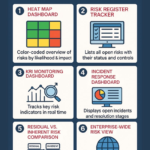
Companies that integrate operational data, financial reporting, and risk indicators into centralized dashboards gain earlier insight into potential issues.
For example, automated alerts can identify:
- Unusual transaction patterns
- Sudden vendor payment increases
- Inventory discrepancies
- Compliance reporting delays
These signals often appear weeks or months before a major failure occurs.
Independent Oversight
Independent review is one of the most powerful risk controls available to organizations.
Internal audit functions, compliance reviews, and third-party assessments provide objective perspectives that operational teams may overlook.
Organizations with strong oversight cultures treat audits not as punishment but as a valuable diagnostic tool.
Continuous Improvement
Risk control is not static.
Effective organizations regularly review incidents, near misses, and operational anomalies to refine their systems.
A manufacturing company, for instance, may investigate small quality defects that occur in only 0.5% of production units. While minor individually, these defects may reveal systemic issues that would otherwise escalate.
Real-World Example: When Weak Controls Become Expensive
Consider the case of a rapidly growing U.S. healthcare services provider that expanded through acquisitions.
Each acquired clinic retained its own billing systems and documentation procedures. At first, leadership prioritized speed of integration over control standardization.
Within two years, auditors discovered inconsistencies in insurance billing practices across several clinics. Some procedures were billed incorrectly due to variations in coding standards.
Although the errors were unintentional, they resulted in regulatory scrutiny and millions in repayment obligations.
The problem was not fraud. It was inconsistent controls across decentralized operations.
Once the company implemented standardized billing processes, centralized oversight, and automated coding validation, billing accuracy improved dramatically and regulatory risk declined.
This example illustrates a broader lesson: operational complexity often grows faster than control systems.
How Leaders Can Strengthen Risk Controls Without Slowing Growth
Many executives worry that stronger oversight may reduce agility. In practice, well-designed controls usually enhance efficiency rather than hinder it.
Companies can strengthen their risk posture through several practical steps.
Conduct Independent Risk Reviews
External perspectives often reveal blind spots internal teams cannot see.
Periodic independent assessments help organizations identify weaknesses before regulators, auditors, or customers discover them.
Integrate Risk Into Strategic Planning
Risk management should not exist only within compliance departments.
When evaluating new markets, technologies, or partnerships, leadership teams should assess operational implications alongside financial opportunities.
Use Technology to Automate Monitoring
Automation significantly improves control reliability.
Examples include:
- Automated approval workflows
- Continuous transaction monitoring
- AI-assisted anomaly detection
- Real-time compliance reporting
Technology does not eliminate risk, but it dramatically improves detection speed.
Encourage a Culture of Escalation
Employees must feel comfortable reporting anomalies or potential issues.
Many operational failures occur because early warning signs were dismissed or ignored.
Organizations that reward transparency and problem reporting tend to resolve issues faster and more effectively.

Frequently Asked Questions
Why do companies often underestimate operational risk?
Operational risk is frequently underestimated because it develops gradually and often appears routine until a failure occurs. Leaders tend to focus on external threats rather than internal processes, even though most losses originate from operational weaknesses.
What is the difference between risk management and internal control?
Risk management identifies potential threats and evaluates their likelihood and impact. Internal controls are the systems, policies, and procedures designed to prevent or detect those risks within daily operations.
Can small companies benefit from formal risk controls?
Yes. Smaller companies may actually benefit more because they typically rely on fewer individuals and less redundancy. Simple controls—such as approval workflows and financial oversight—can prevent major problems.
How often should companies review their risk controls?
Most organizations conduct formal reviews annually, but critical processes should be monitored continuously through dashboards, automated alerts, and periodic audits.
What industries face the highest operational risk?
Industries with complex regulatory environments and high transaction volumes—such as healthcare, finance, logistics, and manufacturing—tend to face elevated operational risk.
Do strong controls slow down innovation?
Well-designed controls typically improve efficiency by clarifying responsibilities and preventing costly mistakes. Innovation thrives when teams understand the boundaries within which they can operate safely.
What role does company culture play in risk management?
Culture plays a significant role. Organizations that prioritize transparency, accountability, and open communication detect risks earlier and respond more effectively.
How does technology improve risk control?
Technology enables automated monitoring, real-time data analysis, and predictive risk detection, allowing organizations to identify anomalies long before they become major issues.
What is the biggest mistake companies make in risk management?
The most common mistake is assuming that existing processes are sufficient simply because no major failure has occurred yet.
Why is independent oversight important?
Independent oversight provides objectivity and helps organizations detect blind spots that operational teams may overlook due to familiarity with existing processes.
Building Organizations That Anticipate Problems Instead of Reacting to Them
The organizations that handle risk best are not those that avoid uncertainty. They are the ones that design systems capable of absorbing it.
By strengthening operational visibility, clarifying accountability, and implementing structured oversight, companies reduce the likelihood that small issues will evolve into large disruptions.
Risk control is ultimately about foresight. Businesses that invest in understanding how their operations truly function—rather than how they assume they function—gain a meaningful advantage in resilience, credibility, and long-term performance.
Key Lessons Leaders Should Remember
- Risk is often misjudged because internal processes receive less scrutiny than external threats.
- Operational weaknesses frequently cause more damage than market volatility.
- Effective risk control relies on accountability, transparency, and independent oversight.
- Data visibility and automated monitoring significantly improve early detection.
- Organizations that review and refine controls regularly are better prepared for growth.