Summary
Inflation, interest rates, and global uncertainty have reshaped today’s investing environment. For everyday investors, the challenge is not predicting markets but understanding how changing economic conditions affect portfolios. This guide explains current market dynamics, what they mean for stocks, bonds, and savings, and how individuals can make informed, practical decisions in a volatile but opportunity-filled investment landscape.
Understanding the Current Market Environment
The financial markets Americans face today look different from the ultra-low-interest-rate era that dominated the 2010s. Inflation spikes, higher borrowing costs, and geopolitical tensions have reshaped how money moves through the economy.
For everyday investors, this environment can feel confusing. Headlines often focus on daily stock market swings, recession fears, or the latest comments from the Federal Reserve. But successful investing rarely depends on reacting to daily news. Instead, it requires understanding the broader forces shaping the market.
Three key dynamics are currently influencing investments across the United States:
1. Higher interest rates
After years of near-zero rates, the Federal Reserve raised borrowing costs aggressively to combat inflation. According to Federal Reserve data, the federal funds rate climbed above 5% in recent tightening cycles, dramatically altering the cost of loans, mortgages, and corporate financing.
Higher rates affect markets in several ways:
- Bond yields become more attractive
- Growth stocks face valuation pressure
- Savings accounts offer higher returns
- Borrowing becomes more expensive for businesses and consumers
For investors, this means income-generating assets—like Treasury bonds or dividend stocks—are more competitive than they were a decade ago.
2. Persistent but moderating inflation
Inflation surged above 9% in 2022, the highest in four decades according to the U.S. Bureau of Labor Statistics. Although it has since cooled, price pressures remain elevated compared to pre-pandemic levels.
Inflation erodes purchasing power and influences investment behavior. Investors increasingly prioritize assets that historically hold value during inflationary periods, such as:
- Dividend-paying companies
- Commodities
- Real estate investment trusts (REITs)
- Treasury Inflation-Protected Securities (TIPS)
3. Slower but resilient economic growth
Despite recession fears, the U.S. economy has remained relatively resilient. Employment levels remain historically strong, consumer spending continues, and corporate profits—while uneven—have not collapsed.
This creates a complex environment: uncertainty remains high, but long-term investment opportunities persist.
Why Market Volatility Feels Higher Today
Many investors believe markets have become unusually unpredictable. In reality, volatility often increases during economic transitions.
The shift from ultra-low rates to tighter financial conditions naturally creates uncertainty across asset classes.
Several forces contribute to today’s volatility:
- Rapid policy changes from central banks
- Geopolitical tensions and supply chain shifts
- Artificial intelligence reshaping technology markets
- Elevated government debt levels
- Shifting global trade relationships
For example, technology stocks experienced dramatic valuation changes as interest rates rose. Companies that were once priced based on long-term growth suddenly faced scrutiny over current earnings.
This doesn’t mean markets are broken—it means investors are recalibrating expectations.
What Higher Interest Rates Mean for Your Investments
Interest rates influence almost every investment category.
For many years, investors were pushed toward stocks because bonds offered extremely low yields. Today, that dynamic is changing.
Bonds Are Relevant Again
Government and corporate bonds now offer yields not seen in over a decade. For conservative investors, this creates opportunities to earn income without taking excessive risk.
Examples include:
- U.S. Treasury bonds yielding 4–5%
- Investment-grade corporate bonds with competitive yields
- Municipal bonds offering tax advantages for some investors
This doesn’t mean investors should abandon stocks. Instead, balanced portfolios are once again meaningful.
Growth Stocks Face Higher Scrutiny
High-growth technology companies often rely on future earnings expectations. When interest rates rise, those future profits are discounted more heavily, which can compress valuations.
That’s why many investors have shifted attention toward:
- profitable companies
- businesses with strong cash flow
- firms paying consistent dividends
This shift represents a return to more traditional valuation thinking.
The Changing Role of Cash and Savings
For years, holding cash felt like a losing strategy because savings accounts offered almost no return.
Today, that is no longer true.
High-yield savings accounts, money market funds, and short-term Treasury bills often offer yields above 4%.
For everyday investors, this means:
- emergency funds can earn meaningful interest
- short-term savings goals are easier to plan
- investors have more flexibility while waiting for opportunities
However, cash still carries a long-term risk: inflation gradually reduces purchasing power. For this reason, financial planners typically recommend balancing cash with long-term investments.
How Diversification Matters More Than Ever
One lesson reinforced by recent market cycles is the importance of diversification.
When interest rates rise or inflation spikes, different assets react in different ways. A diversified portfolio helps smooth these fluctuations.
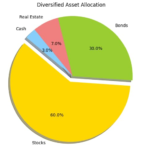
A typical diversified strategy may include:
- U.S. equities
- international stocks
- government bonds
- corporate bonds
- real estate exposure
- cash or short-term securities
Diversification does not eliminate risk, but it reduces the likelihood that a single economic shock will dramatically damage a portfolio.
What Long-Term Investors Should Focus On
Daily market headlines often exaggerate short-term movements. But long-term investors benefit more from focusing on durable principles.
Time in the Market Still Matters
Historically, the U.S. stock market has delivered strong long-term returns despite wars, recessions, inflation spikes, and political changes.
According to historical data from sources like Vanguard and Fidelity, the S&P 500 has produced average annual returns of roughly 10% before inflation over long periods.
Missing just a few of the best days in the market can dramatically reduce overall returns.
Consistency Beats Timing
Many investors try to predict market peaks and crashes. In practice, even professionals rarely succeed consistently.
Strategies that tend to work better include:
- regular investing through dollar-cost averaging
- maintaining asset allocation targets
- periodically rebalancing portfolios
- avoiding emotional decisions during market swings
Investment Costs Matter
Low-cost index funds and ETFs have become increasingly popular for a reason: fees compound over time.
Even a 1% difference in annual fees can significantly reduce lifetime returns.
Real-World Example: How an Average Investor Might Adjust
Consider a typical American household saving for retirement.
In 2018, their portfolio might have looked like:
- 80% stocks
- 15% bonds
- 5% cash
In today’s higher-rate environment, a financial advisor might suggest something closer to:
- 60–70% stocks
- 20–30% bonds
- 5–10% cash
This doesn’t represent a universal formula, but it reflects how rising bond yields make fixed income more attractive.
The key point is not dramatic changes—it’s thoughtful adjustments.
The Growing Influence of Artificial Intelligence and Technology
Technology continues to play a powerful role in shaping markets.
The rapid expansion of artificial intelligence has triggered enormous investment into data centers, semiconductors, and cloud infrastructure. Companies involved in AI development have seen significant investor attention.
However, experienced investors recognize a pattern familiar from past technology waves:
- early innovation generates excitement
- capital floods into the sector
- valuations fluctuate dramatically
- long-term winners emerge slowly
Not every company associated with emerging technology will succeed. This reinforces the importance of diversification.
Why Economic Headlines Shouldn’t Drive Investment Decisions
Financial news often focuses on short-term developments:
- daily stock market swings
- political debates over economic policy
- predictions of imminent recessions
But successful investing rarely depends on predicting these events.
Instead, experienced investors focus on factors they can control:
- savings rate
- diversification
- investment costs
- long-term discipline
Markets respond to thousands of variables simultaneously. Attempting to outguess them consistently is extremely difficult.

Questions Everyday Investors Are Asking
Is now a good time to invest in the stock market?
Historically, consistent investing over time has proven more reliable than waiting for the “perfect moment.” Market timing rarely works consistently.
Are bonds finally worth buying again?
Yes. Higher interest rates have made bonds more attractive, particularly for investors seeking income or lower volatility.
Should investors hold more cash today?
Moderate cash reserves can make sense due to higher yields and economic uncertainty, but long-term portfolios still benefit from growth assets like stocks.
How much diversification is enough?
Most financial planners recommend exposure to multiple asset classes, including U.S. stocks, international equities, bonds, and possibly real estate.
Are index funds still a good strategy?
Low-cost index funds remain one of the most widely recommended tools for long-term investors because of their diversification and minimal fees.
How does inflation affect retirement planning?
Inflation reduces purchasing power, meaning retirement savings must grow enough to outpace rising costs.
Should younger investors worry about market volatility?
Younger investors often benefit from volatility because it allows them to buy assets at lower prices while contributing regularly.
Is the U.S. economy heading toward recession?
Economists remain divided. Some indicators suggest slowing growth, while others—like employment levels—remain strong.
How often should investors rebalance portfolios?
Many advisors suggest reviewing allocations annually or when asset weights shift significantly from target levels.
Do geopolitical events affect long-term investments?
Yes, but markets have historically adapted over time. Long-term investors typically focus on broader economic trends rather than individual events.
Navigating Uncertainty Without Overreacting
Every market cycle introduces new concerns. Today’s environment includes inflation worries, technological disruption, and geopolitical uncertainty.
Yet history shows that markets continually adapt.
Companies innovate, economies evolve, and investors adjust expectations. The individuals who benefit most are rarely those who perfectly predict the next economic shift.
Instead, successful investors tend to demonstrate patience, diversification, and long-term discipline.
The Long View: Investing Beyond the Headlines
The current market environment may feel uncertain, but it also represents a transition toward more balanced financial conditions.
Higher interest rates create new income opportunities. Technological innovation continues to drive economic growth. And diversified investors still have access to one of the most dynamic capital markets in the world.
For everyday investors, the most valuable strategy remains surprisingly simple: stay informed, remain disciplined, and focus on long-term financial goals rather than short-term noise.
Quick Perspective Recap
- Interest rates have reshaped the investment landscape
- Bonds and cash now offer meaningful yields
- Inflation remains a key consideration for portfolios
- Diversification helps manage uncertainty
- Consistent investing often beats market timing
- Technology and AI are driving new market trends
- Long-term discipline remains the foundation of successful investing