Summary
Companies that manage risk effectively rarely rely on dramatic interventions. Instead, they build quiet, structured systems that identify threats early, standardize decision-making, and strengthen accountability across teams. These systems combine governance, data visibility, operational discipline, and culture. Understanding how these mechanisms work can help organizations reduce costly surprises while maintaining stability, compliance, and long-term growth.
Why Risk Management Often Works Best When It’s Quiet
When risk management is effective, it rarely draws attention.
Most employees don’t notice it. Leaders rarely talk about it publicly. Customers never see it. Yet behind the scenes, these systems quietly shape how organizations make decisions, monitor operations, and respond to potential problems.
In many well-run companies, risk control functions like infrastructure. It operates continuously, supports other systems, and becomes most visible only when it fails.
Organizations that manage risk well do not rely solely on large compliance teams or dramatic crisis responses. Instead, they build structured processes that detect problems early and distribute responsibility across the business.
These quiet systems tend to share a few characteristics:
- They are embedded in daily operations
- They emphasize early detection rather than reaction
- They provide consistent decision frameworks
- They make accountability visible across teams
- They reduce reliance on individual judgment alone
This approach allows companies to maintain stability even in uncertain economic or regulatory environments.
How Leading Organizations Build Risk Awareness Into Daily Operations
One of the most effective risk control strategies is integrating risk thinking into everyday workflows rather than isolating it in a compliance department.
Employees across departments—from procurement to product development—interact with risk management tools without necessarily labeling them that way.
For example, in manufacturing companies, risk controls often appear in the form of standardized operating procedures, supplier qualification processes, and quality checkpoints. These systems ensure that operational decisions follow structured evaluation rather than improvisation.
Financial services firms take a similar approach. According to data from the Risk Management Society (RIMS), organizations with integrated enterprise risk management frameworks are significantly more likely to detect operational disruptions early and maintain regulatory compliance.
Practical examples include:
- Procurement teams using supplier risk scoring before vendor approval
- IT departments running automated vulnerability scans
- Finance teams reviewing transaction anomalies through internal controls
- Operations managers monitoring safety indicators through dashboards
Because these systems are embedded into normal work, they reduce the need for last-minute interventions.
The Role of Data Visibility in Modern Risk Control
Data visibility has become one of the most important components of risk management.
When leaders can see operational indicators in real time, they can identify potential problems before they escalate into major disruptions.
A 2023 survey by Deloitte’s Global Risk Management Study found that companies with strong data monitoring capabilities were significantly more likely to identify emerging operational risks early.
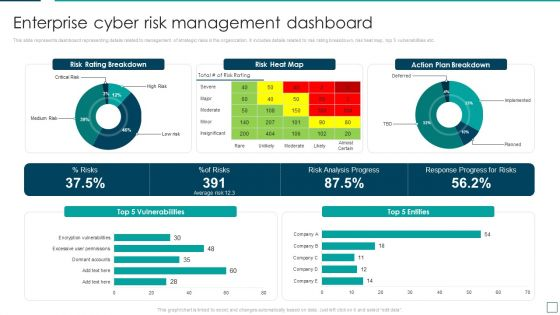
Modern organizations often use centralized dashboards that consolidate information from multiple departments, including:
- financial reporting metrics
- cybersecurity alerts
- supply chain disruptions
- compliance incidents
- operational performance indicators
Rather than waiting for quarterly reports, leadership teams review these signals regularly to detect patterns.
For example, a logistics company might monitor delivery delays across multiple regions. If delays begin rising in one area, leaders can investigate supplier issues, labor shortages, or weather disruptions before customers are affected.
This kind of visibility turns risk management from a reactive process into a continuous monitoring system.
Governance Structures That Prevent Small Problems From Escalating
Many companies underestimate the role governance plays in controlling risk.
Governance structures determine how decisions are made, who reviews them, and what checks exist before major actions occur.
Strong governance frameworks typically include:
- clear escalation paths
- defined approval authorities
- documented policies
- independent oversight
Public companies in the United States often implement board-level risk committees. These committees review strategic risks such as regulatory exposure, cybersecurity threats, and financial volatility.
But governance is not limited to large corporations.
Mid-sized businesses increasingly adopt similar structures at smaller scales. For instance, a healthcare provider may require executive review of new vendor partnerships to ensure compliance with patient privacy regulations.
These review layers prevent risky decisions from moving forward without scrutiny.
When governance works well, it quietly filters decisions through structured evaluation rather than relying solely on individual judgment.
The Cultural Signals That Support Risk Discipline
Technology and policies matter, but culture plays an equally important role in risk management.
Organizations that manage risk well tend to encourage employees to raise concerns early without fear of retaliation.
Research from the Ethics & Compliance Initiative shows that employees are far more likely to report potential issues when they believe leadership takes ethical behavior seriously.
This cultural foundation often includes:
- leadership modeling responsible decision-making
- open communication channels
- whistleblower protections
- consistent policy enforcement
Consider a retail company that encourages store managers to report inventory irregularities immediately. If managers feel comfortable raising these concerns, the company can detect fraud or supply chain errors early.
In contrast, organizations with rigid hierarchies or punitive environments often discover problems only after significant damage occurs.
Culture acts as an early warning system that technology alone cannot replace.

Standardized Decision Frameworks That Reduce Uncertainty
Another quiet system behind effective risk management is the use of standardized decision frameworks.
Rather than making decisions ad hoc, organizations create structured evaluation processes that guide leaders through complex choices.
These frameworks often involve checklists or scoring models that evaluate factors such as:
- financial impact
- operational disruption
- regulatory implications
- reputational risk
- strategic alignment
For example, when launching a new product, a consumer goods company might require cross-departmental review covering legal compliance, supply chain resilience, and safety testing.
This process ensures that potential risks are examined systematically rather than overlooked during rapid growth.
Standardization also improves consistency across large organizations, especially those operating across multiple regions.
Technology Systems Quietly Supporting Risk Detection
Modern risk control relies heavily on technology that operates in the background.
Many companies deploy automated systems that continuously monitor operational activity and flag unusual behavior.
Examples include:
- cybersecurity threat detection software
- fraud monitoring tools in banking
- automated financial controls
- supply chain risk analytics platforms
In financial institutions, transaction monitoring software analyzes millions of daily payments to detect suspicious patterns associated with fraud or money laundering.
Similarly, cybersecurity platforms scan networks continuously to identify unusual access attempts.
These technologies reduce the burden on human teams while enabling rapid response when anomalies appear.
Importantly, these systems do not eliminate human oversight. Instead, they provide signals that allow experts to investigate potential problems more efficiently.
Learning Systems That Improve Risk Response Over Time
Companies that manage risk well rarely treat incidents as isolated events.
Instead, they treat them as learning opportunities.
After disruptions occur, organizations conduct structured reviews to understand:
- what happened
- why it happened
- what systems failed
- how processes should change
This practice is common in industries where reliability is critical.
Airlines, for example, conduct detailed safety investigations after even minor operational incidents. The goal is not only to address immediate problems but also to strengthen long-term safety systems.
Similarly, technology companies often conduct “post-incident reviews” after system outages.
These reviews produce process improvements that reduce the likelihood of similar disruptions in the future.
Over time, these learning systems gradually strengthen organizational resilience.
Why Effective Risk Control Often Goes Unnoticed
The paradox of risk management is that success often appears invisible.
When systems function well:
- major disruptions are avoided
- compliance violations are prevented
- operational errors are caught early
As a result, leaders and employees may underestimate the value of the underlying processes.
Yet history provides many examples of what happens when these systems weaken. Corporate failures, regulatory penalties, and operational crises often trace back to breakdowns in risk oversight.
Organizations that invest consistently in quiet systems rarely appear in headlines—but they tend to maintain stability over long periods.
FAQ: Risk Control Systems in Modern Organizations
What is risk control in business?
Risk control refers to the systems and processes organizations use to identify, evaluate, and reduce potential threats that could disrupt operations, finances, compliance, or reputation.
Why do successful companies emphasize early risk detection?
Early detection allows organizations to address issues before they escalate into costly crises. Preventative monitoring is generally less expensive and less disruptive than reactive responses.
How does data monitoring support risk management?
Data monitoring provides real-time visibility into operational indicators, helping organizations detect anomalies, trends, or emerging risks quickly.
What role does company culture play in risk control?
A culture that encourages transparency and ethical behavior helps employees report concerns early, improving an organization’s ability to identify problems.
Are risk management systems only necessary for large corporations?
No. Small and mid-sized businesses also benefit from structured risk controls, especially as they grow and face more regulatory or operational complexity.
What technologies support modern risk management?
Common technologies include cybersecurity monitoring tools, fraud detection software, compliance management systems, and supply chain risk analytics platforms.
How often should companies review risk management processes?
Many organizations conduct formal reviews annually while continuously monitoring operational risk indicators throughout the year.
What is enterprise risk management (ERM)?
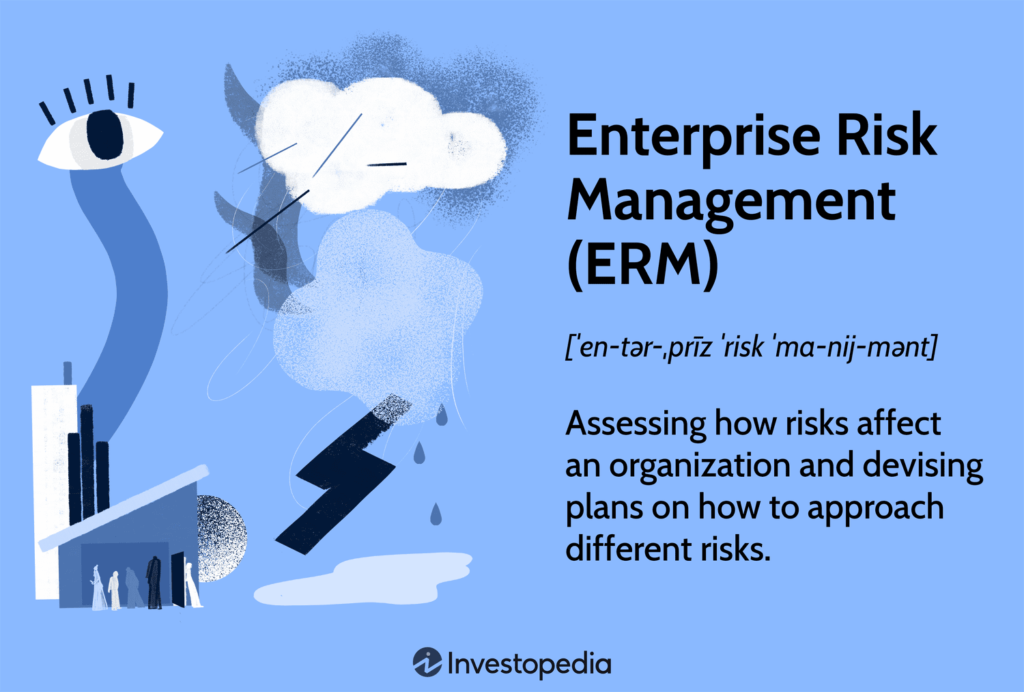
Enterprise Risk Management is a structured framework that evaluates risks across the entire organization rather than treating risks as isolated departmental issues.
How do governance structures reduce organizational risk?
Governance frameworks establish oversight mechanisms, decision approvals, and escalation processes that help prevent risky decisions from proceeding unchecked.
What happens when companies ignore risk management systems?
Weak risk controls can lead to operational disruptions, regulatory penalties, financial losses, and reputational damage.
Why the Best Risk Systems Operate in the Background
The most reliable risk management frameworks rarely rely on dramatic interventions.
Instead, they operate through quiet systems—structured governance, data monitoring, standardized decision processes, and supportive cultures.
These mechanisms rarely attract attention when they work well. But they quietly shape how organizations navigate uncertainty.
Companies that understand this dynamic focus less on reacting to crises and more on strengthening the systems that prevent them.
Over time, these invisible safeguards become one of the most valuable forms of organizational stability.
Core Insights at a Glance
- Effective risk management is built into daily operations rather than isolated in compliance teams
- Data visibility allows organizations to detect problems earlier
- Governance frameworks prevent risky decisions from moving forward unchecked
- Culture plays a critical role in encouraging early reporting of issues
- Technology provides continuous monitoring and automated detection
- Structured decision frameworks improve consistency
- Post-incident learning systems strengthen long-term resilience