Summary
Technology is reshaping how Americans invest—often in subtle ways. Mobile apps, automated portfolios, AI-driven analytics, and zero-commission trading have lowered barriers and changed investor behavior. While access has improved, new risks and habits are emerging. Understanding these changes helps investors use modern tools wisely while avoiding the pitfalls of frictionless, technology-driven investing.
The Silent Transformation of American Investing
Over the past decade, technology has quietly restructured the investing landscape in the United States. What once required brokerage offices, expensive commissions, and professional advisors can now be done in seconds from a smartphone. Millions of Americans who once saw investing as complicated or inaccessible now manage portfolios with a few taps.
The shift didn’t happen overnight. It unfolded through a series of incremental technological innovations: mobile trading apps, automated portfolio management, low-cost index funds, algorithmic research tools, and real-time financial data. Each change lowered friction, reduced costs, and broadened participation.
According to data from the Federal Reserve’s Survey of Consumer Finances, the share of U.S. households owning stocks either directly or through funds reached roughly 58% in 2022, one of the highest levels on record. Technology played a central role in this expansion.
But the most significant change isn’t simply that more Americans are investing—it’s how they are investing.
Today’s investors operate in a system where trading is instant, information flows constantly, and decision-making is increasingly shaped by software.
Mobile Apps Turn Investing Into an Everyday Activity
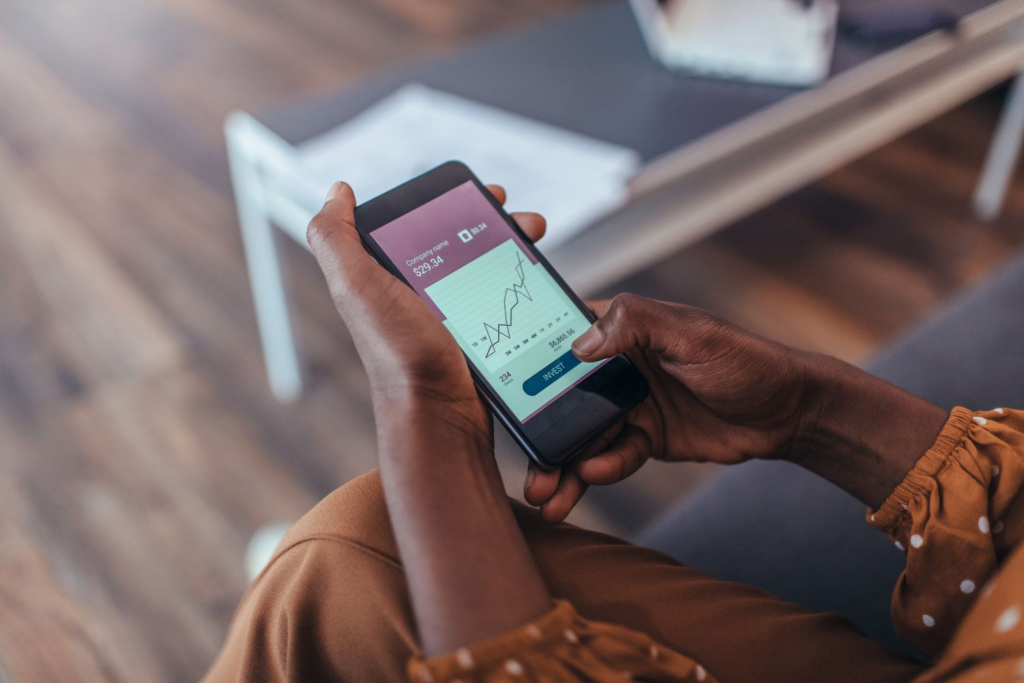
One of the most visible changes in modern investing is the rise of mobile-first brokerage platforms.
Apps like Robinhood, Webull, and Fidelity Investments allow users to open accounts, deposit funds, research companies, and place trades entirely from their phones. What once took days can now be completed in minutes.
This shift has had a powerful psychological impact. Investing no longer feels like a specialized financial activity—it feels like part of everyday digital life.
Several behavioral changes have followed:
- Higher participation among younger investors
- More frequent trading activity
- Greater exposure to real-time market swings
- Shorter decision cycles
Many Americans now check their portfolios as casually as they check the weather or social media.
For example, a 28-year-old professional might buy shares of an S&P 500 ETF during a lunch break, track performance through push notifications, and rebalance investments later that evening. Technology has turned investing into a continuous, accessible process.
While this accessibility has democratized investing, it has also introduced the temptation to trade too frequently—a pattern research shows can reduce long-term returns.
Zero-Commission Trading Changed the Economics of Investing
For decades, investors paid commissions for every trade. Buying or selling stocks often cost between $5 and $15 per transaction.
That changed dramatically around 2019 when many major U.S. brokerages eliminated trading commissions. Platforms such as Charles Schwab, TD Ameritrade, and E*TRADE adopted zero-commission stock trading, forcing the entire industry to follow.
The immediate impact was clear:
- Smaller investors could participate without worrying about fees.
- Investors could diversify more easily.
- Entry barriers dropped for first-time traders.
But the deeper effect was behavioral.
When the cost of trading drops to zero, investors naturally trade more. Studies from academic institutions and brokerage data show that frequent traders tend to underperform long-term market averages.
Technology made investing easier—but not necessarily easier to do well.
Robo-Advisors Are Automating Portfolio Management
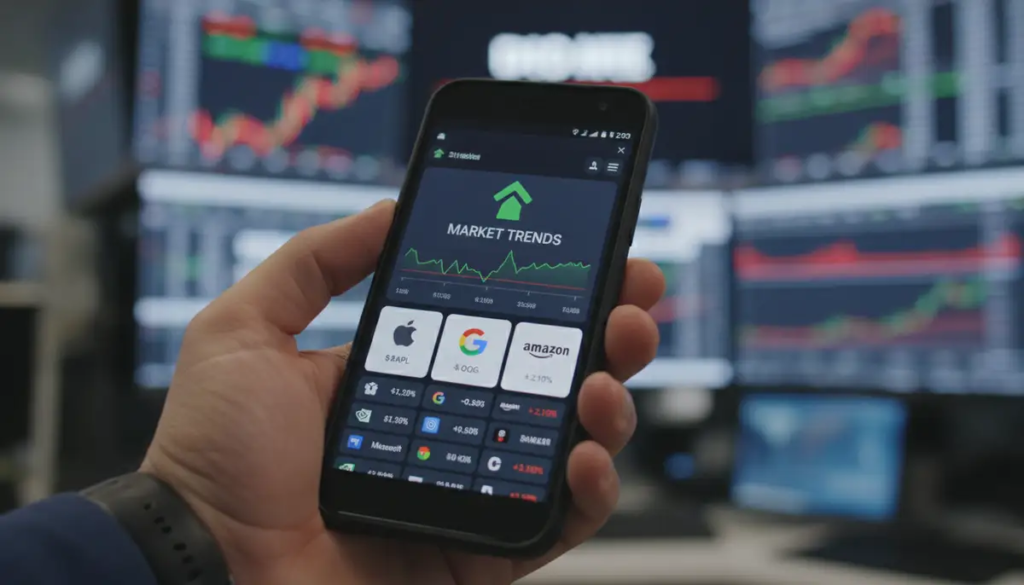
Another major shift is the rise of automated investment management.
Platforms like Betterment and Wealthfront use algorithms to build and maintain diversified portfolios based on a user’s risk tolerance and financial goals.
Instead of selecting individual stocks, investors answer a few questions:
- What is your investment horizon?
- How comfortable are you with market fluctuations?
- What are you saving for?
The platform then constructs a portfolio typically composed of low-cost ETFs and automatically rebalances it over time.
Robo-advisors provide several advantages:
- Lower management fees compared to traditional advisors
- Automatic diversification
- Tax-loss harvesting in some accounts
- Emotion-free portfolio adjustments
For investors who prefer a hands-off approach, automation has made disciplined investing easier.
According to industry estimates from Statista, assets managed by robo-advisors in the United States are expected to exceed $2 trillion within the next decade.
Data, Analytics, and AI Are Changing Investor Research
Technology hasn’t just made trading easier—it has transformed how investors gather information.
Modern platforms provide tools that were once reserved for institutional investors:
- Real-time market data
- Advanced charting
- Options analytics
- Financial modeling tools
- AI-generated insights
Even retail investors can now analyze earnings reports, screen stocks by financial metrics, and simulate investment scenarios in seconds.
Artificial intelligence is beginning to play a larger role as well. Some platforms now summarize company earnings calls, generate market analysis, or flag unusual trading activity.
However, access to more information doesn’t necessarily guarantee better decisions. In fact, an overload of data can sometimes encourage overconfidence or impulsive trading.
Experienced investors often emphasize that the most important tools remain simple:
- Diversification
- Long-term discipline
- Cost control
Technology can support these strategies—but it cannot replace them.
Fractional Shares Are Opening the Market to Smaller Investors
Another quiet but meaningful innovation is fractional share investing.
Traditionally, investors had to buy whole shares of a company’s stock. For companies with high share prices—like Amazon or Tesla—that requirement created barriers.
Fractional investing changed this.
Now investors can purchase a dollar amount of stock rather than a full share. A beginner can invest:
- $10 in a tech company
- $25 in an ETF
- $100 spread across multiple companies
This innovation has made diversification possible even for investors with limited capital.
For younger Americans starting with small amounts of money, fractional shares are often the first step toward building a portfolio.
Social Media Is Quietly Influencing Investment Behavior
Technology has also changed where investors get ideas.
Financial discussion increasingly happens on social platforms, online communities, and video channels. Retail investors now exchange strategies, discuss earnings reports, and analyze market trends collectively.
During the 2021 meme-stock phenomenon involving companies like GameStop and AMC Entertainment, online communities demonstrated how quickly sentiment could spread among retail investors.
This social dimension has introduced both opportunities and risks.
On one hand, communities can provide educational insights and crowd-sourced analysis. On the other hand, rapid information sharing can amplify hype and speculation.
Successful investors typically treat online discussions as starting points for research rather than final conclusions.
Automated Investing Is Reinforcing Long-Term Strategies
Despite the noise surrounding day trading and speculative trends, technology has also reinforced a quieter movement: long-term automated investing.
Many Americans now use automated contributions and portfolio management tools that:
- Invest a portion of every paycheck
- Rebalance portfolios automatically
- Maintain target asset allocations
- Reinvest dividends
These features encourage consistent investing habits—one of the most reliable predictors of long-term wealth building.
For example, a worker contributing monthly to an automated retirement account through a brokerage platform can steadily accumulate investments without constantly monitoring the market.
In many ways, technology is making disciplined investing easier than ever before.
The Hidden Trade-Offs of Frictionless Investing
While technology has created enormous benefits, it has also introduced subtle risks.
When investing becomes frictionless, it can feel more like entertainment than long-term financial planning.
Some common pitfalls include:
- Overtrading due to constant market access
- Chasing trends driven by online hype
- Overconfidence from advanced tools
- Short-term thinking encouraged by real-time price updates
Financial professionals increasingly emphasize that successful investing still relies on timeless principles:
- patience
- diversification
- cost efficiency
- emotional discipline
Technology is a powerful tool—but it works best when paired with thoughtful strategy.

Frequently Asked Questions
1. How has technology made investing easier for Americans?
Technology allows investors to open brokerage accounts, research companies, and trade securities entirely online. Mobile apps, real-time market data, and automated portfolios have lowered barriers to entry and simplified the investing process.
2. Are robo-advisors a good option for beginners?
For many beginners, robo-advisors offer a simple way to start investing. They automatically build diversified portfolios and rebalance investments, reducing the need for active management.
3. What are fractional shares?
Fractional shares allow investors to buy a portion of a stock instead of a full share. This makes it easier to invest small amounts and diversify portfolios.
4. Does zero-commission trading mean investing is free?
Not entirely. While commissions are often eliminated, brokerages may still earn revenue through spreads, payment for order flow, or other services.
5. Has technology increased the number of investors in the U.S.?
Yes. Easier account access, lower costs, and educational resources have contributed to increased participation in the stock market.
6. Are mobile trading apps safe?
Most major brokerage apps use strong encryption and regulatory oversight. However, investors should still use secure passwords and enable two-factor authentication.
7. Can AI help individual investors pick stocks?
AI tools can analyze large amounts of data quickly, but they are not guaranteed to predict market outcomes. They are best used as research aids rather than decision-makers.
8. Why do experts warn about overtrading?
Frequent trading can increase mistakes and reduce returns due to poor timing and emotional decisions.
9. Is automated investing better than picking stocks?
For many investors, diversified automated portfolios outperform self-directed stock picking over long periods.
10. What is the biggest technological trend in investing right now?
Automation, AI-driven analytics, and seamless mobile investing platforms are currently reshaping how investors interact with financial markets.
The New Shape of Everyday Investing
Technology hasn’t replaced traditional investing principles—but it has reshaped the environment in which those principles operate.
Investors now have unprecedented access to markets, tools, and information. The challenge is learning how to use those tools thoughtfully.
For many Americans, the future of investing will likely look less like active trading and more like intelligent automation—supported by technology but guided by long-term financial goals.
Key Insights at a Glance
- Technology has dramatically lowered the barriers to investing in the U.S.
- Mobile trading apps have made investing part of everyday digital life.
- Zero-commission trading reshaped brokerage industry economics.
- Robo-advisors automate diversified portfolio management.
- Fractional shares allow investors to start with very small amounts.
- AI and analytics provide powerful research tools—but require discipline.
- Social media influences investment ideas and market sentiment.
- Automated investing tools encourage consistent long-term habits.