Summary
Growth Watch analyzes emerging technologies, investment flows, and industry shifts across major U.S. sectors to identify where innovation is happening and why it matters. By combining market data, startup activity, regulatory developments, and enterprise adoption trends, the platform helps professionals understand how industries such as healthcare, energy, manufacturing, and finance evolve in response to new technologies and economic forces.
Understanding Innovation Monitoring in the U.S. Economy
Innovation rarely happens in isolation. It emerges from the intersection of technology breakthroughs, regulatory changes, investment cycles, and real-world demand. In the United States—home to the world’s largest economy—tracking these shifts requires continuous monitoring across multiple industries simultaneously.
Growth Watch operates within this landscape by identifying where innovation is accelerating and where structural changes are reshaping entire sectors. Instead of focusing solely on startups or venture capital headlines, it analyzes broader signals that reveal meaningful transformation.
These signals often include:
- Patent activity and technology research trends
- Venture capital and private equity investment patterns
- Adoption of emerging technologies within established companies
- Regulatory developments affecting industries
- Supply chain shifts and workforce changes
- Mergers, acquisitions, and strategic partnerships
Together, these indicators create a more accurate picture of how industries evolve over time.
For American business leaders, policymakers, and analysts, this type of insight helps answer practical questions:
- Which industries are experiencing the fastest technological change?
- What innovations are actually reaching commercial scale?
- Where are new opportunities emerging for investment or career growth?
Understanding these patterns helps organizations anticipate change rather than react to it.

Why Innovation Tracking Matters Across American Industries
The U.S. economy is highly diversified. Industries such as healthcare, technology, manufacturing, agriculture, and financial services all operate under different regulatory frameworks and technological cycles.
Because of this complexity, innovation often appears first in niche applications before spreading widely across sectors.
For example, cloud computing initially transformed software development. Today it influences industries ranging from healthcare data management to advanced manufacturing systems.
Organizations tracking innovation effectively typically focus on three critical dimensions:
1. Technology Breakthroughs
Emerging technologies frequently reshape industries faster than expected. Artificial intelligence, advanced robotics, and biotechnology are examples currently influencing multiple sectors.
Growth Watch tracks how these technologies move from research labs into commercial products.
2. Capital Allocation
Investment trends reveal where markets believe future growth will occur. According to data from the National Venture Capital Association, U.S. venture capital investment reached over $170 billion in recent years despite market fluctuations.
Analyzing where that capital flows—AI infrastructure, clean energy startups, medical devices—offers early signals of industry transformation.
3. Regulatory and Policy Changes
Government policy can accelerate or slow innovation. Legislation such as the CHIPS and Science Act reshaped the American semiconductor industry by funding domestic manufacturing and research.
Tracking these policy shifts is essential for understanding long-term innovation trajectories.
Healthcare Innovation: From Research to Patient Care
Healthcare represents one of the most dynamic areas of American innovation. Advances in biotechnology, medical devices, and digital health platforms are transforming how patients receive care.
Growth Watch monitors healthcare innovation through multiple indicators, including clinical trials, FDA approvals, and healthcare system adoption rates.
Key areas currently driving change include:
- AI-assisted diagnostics and medical imaging
- Remote patient monitoring and telehealth platforms
- Precision medicine and genetic therapies
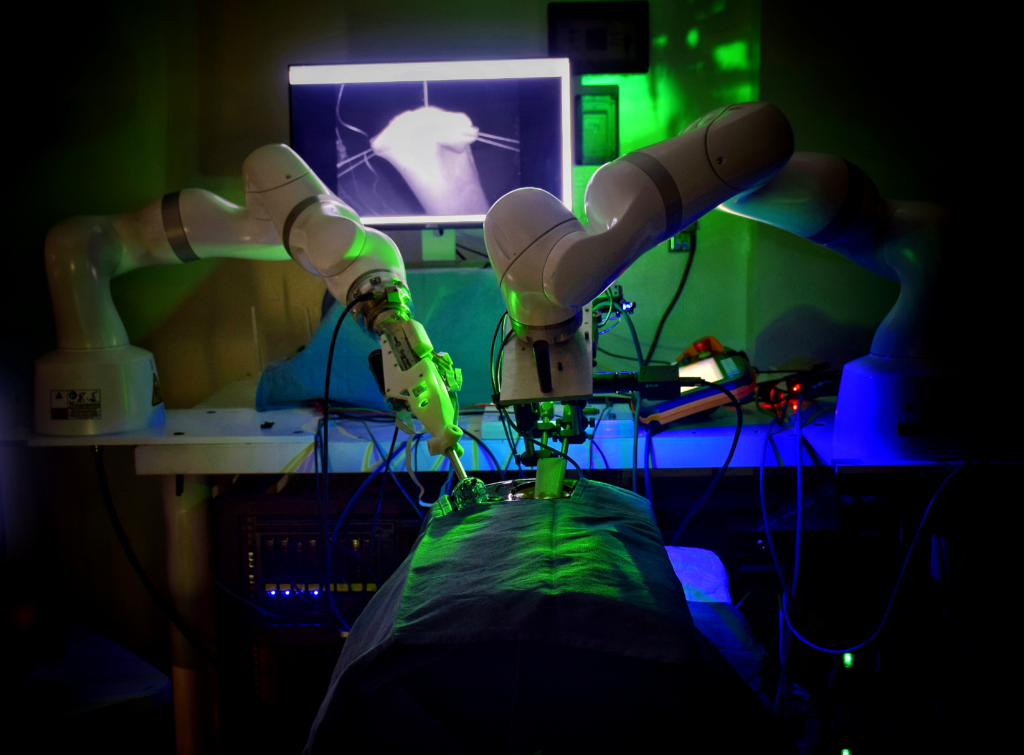
- Robotics-assisted surgery
- Healthcare data interoperability systems
For example, hospitals across the United States increasingly deploy machine-learning tools to assist radiologists in detecting abnormalities in scans. These systems do not replace physicians but help improve detection accuracy and efficiency.
The U.S. Food and Drug Administration has also accelerated approval pathways for certain digital health technologies, encouraging faster adoption of software-based medical tools.
Growth Watch analyzes how these technologies move from clinical research environments into everyday hospital operations—an important distinction when evaluating real-world innovation.
Energy Transformation and the Rise of Clean Technologies
Energy innovation in the United States is no longer limited to oil and gas extraction technologies. The industry now includes rapid advancements in renewable power generation, battery storage, and grid modernization.
Growth Watch evaluates this sector by tracking infrastructure investments, corporate adoption of clean energy, and policy incentives designed to accelerate the energy transition.
Several key trends currently shaping the industry include:
- Utility-scale solar and wind expansion
- Grid-scale battery storage projects
- Electric vehicle charging infrastructure
- Carbon capture and hydrogen energy technologies
According to the U.S. Energy Information Administration, renewable energy generation in the United States has grown steadily over the past decade and now represents a substantial portion of new electricity capacity additions.
Growth Watch monitors how utilities, private investors, and federal programs influence the speed of this transition.
For example, energy companies increasingly combine solar farms with battery storage systems to stabilize power supply. Tracking these integrated projects provides a clearer understanding of how innovation reaches practical implementation.
Manufacturing and Industrial Technology
American manufacturing is undergoing a quiet but significant transformation. Advanced robotics, industrial automation, and digital supply chain platforms are reshaping how goods are produced.
Growth Watch focuses on several signals that indicate modernization across the sector.
These include:
- Adoption of industrial automation systems
- Smart factories using real-time data monitoring
- Additive manufacturing (3D printing) for specialized components
- Reshoring and regional supply chain restructuring
The concept of “Industry 4.0” has gained traction among American manufacturers seeking to improve efficiency and resilience.
Companies now use sensor networks and analytics software to monitor production lines in real time. These tools help predict equipment failures before they occur, reducing downtime and improving productivity.
Growth Watch evaluates which technologies move beyond pilot programs and become standard practice across manufacturing operations.
This distinction helps businesses understand where true industry transformation is happening.

Financial Technology and the Future of Banking
Innovation in financial services has accelerated rapidly over the past decade. Mobile banking platforms, digital payment systems, and blockchain-based infrastructure are redefining how consumers and businesses interact with financial institutions.
Growth Watch tracks fintech innovation by analyzing startup activity, regulatory frameworks, and partnerships between traditional banks and technology firms.
Important developments include:
- Real-time payment networks
- Digital identity verification systems
- AI-driven fraud detection
- Embedded finance platforms within e-commerce systems
Institutions such as the Federal Reserve are also experimenting with faster payment infrastructure and modernized financial networks.
For example, the FedNow real-time payments system allows financial institutions to process transactions instantly rather than waiting hours or days for settlement.
Monitoring how quickly banks and businesses adopt these systems provides insight into the future structure of financial services.
Technology Infrastructure and Artificial Intelligence
Few technologies currently influence as many industries as artificial intelligence. From logistics to healthcare to finance, AI is becoming embedded within everyday business operations.
Growth Watch analyzes AI development through several metrics:
- Corporate AI investment levels
- Enterprise software adoption rates
- Semiconductor and computing infrastructure growth
- Research publications and patent filings
Companies such as NVIDIA and Microsoft play critical roles in building the computing infrastructure required for modern AI systems.
However, innovation is not limited to large technology firms. Many smaller companies integrate AI capabilities into logistics platforms, manufacturing processes, or customer service systems.
Growth Watch evaluates how these technologies move from experimental tools into core operational systems across industries.
This transition often signals the beginning of large-scale economic impact.
Agriculture and Food Technology
Agriculture remains a foundational part of the American economy, and technological innovation is transforming how food is produced, monitored, and distributed.
Growth Watch tracks developments in agricultural technology by observing equipment manufacturers, research institutions, and startup ecosystems focused on food production.
Important innovation areas include:
- Precision agriculture using satellite and sensor data
- Autonomous tractors and harvesting equipment
- Soil monitoring technologies
- Alternative protein development
- Supply chain transparency systems
Precision agriculture allows farmers to analyze soil conditions and crop health with unprecedented accuracy. Sensors placed across farmland collect real-time data on moisture, nutrient levels, and temperature.
This information enables farmers to apply fertilizers or irrigation only where needed, reducing costs and environmental impact.
Growth Watch monitors how quickly these technologies move from early adopters to widespread industry use.
How Growth Watch Connects Data Across Industries
Innovation rarely stays confined to a single sector. Many of the most impactful technologies emerge from cross-industry collaboration.
For example:
- AI developed for tech companies later improves healthcare diagnostics.
- Battery technology advances benefit both electric vehicles and energy storage.
- Data analytics tools used in finance eventually improve manufacturing logistics.
Growth Watch examines these cross-sector interactions to identify patterns of technological diffusion.
This approach helps analysts and business leaders understand how breakthroughs in one industry may reshape others.
Rather than viewing industries as isolated markets, the platform treats them as interconnected systems influenced by shared technologies, capital flows, and regulatory environments.
Frequently Asked Questions
What is Growth Watch?
Growth Watch is an analytical platform that tracks technological and economic innovation across multiple U.S. industries, using data such as investment trends, policy developments, and enterprise adoption patterns.
Why is monitoring innovation important for businesses?
Tracking innovation helps companies anticipate technological shifts, identify emerging competitors, and make informed investment or strategic decisions before market changes become widely visible.
Which industries experience the most rapid innovation?
Technology, healthcare, energy, financial services, and manufacturing currently experience the fastest innovation cycles due to rapid advances in artificial intelligence, automation, and digital infrastructure.
How does Growth Watch gather its insights?
It analyzes data from venture capital activity, research institutions, corporate filings, government policy updates, and real-world technology adoption across industries.
What role does government policy play in innovation?
Government policy influences funding, research priorities, and industry regulations. Programs such as the CHIPS and Science Act significantly affect sectors like semiconductor manufacturing.
How does AI influence multiple industries simultaneously?
AI provides automation and predictive capabilities that improve efficiency across fields including logistics, healthcare diagnostics, financial risk management, and manufacturing quality control.
Why are cross-industry insights valuable?
Innovations developed in one sector often become foundational technologies in another. Monitoring these transitions helps identify broader economic shifts.
Is venture capital the main indicator of innovation?
No. Venture capital is only one signal. Real-world adoption by established companies and regulatory developments often provide more reliable indicators of lasting innovation.
How can professionals benefit from innovation tracking?
Industry professionals can identify emerging technologies early, understand workforce skill demands, and evaluate long-term economic trends affecting their sectors.
Does innovation tracking focus only on startups?
No. Established corporations, government research programs, and universities also play major roles in driving innovation across the U.S. economy.
Where Industry Signals Converge
Innovation rarely follows a straight path. Breakthroughs often begin in research labs, move through startup ecosystems, and eventually reach large-scale adoption through established industries.
Growth Watch provides value by connecting these stages together. By analyzing data across sectors—from energy infrastructure to healthcare technology—the platform reveals how innovations spread and where meaningful economic transformation is taking place.
For business leaders, investors, and policymakers, understanding these connections provides a clearer view of the forces shaping the future of American industries.
Key Insights at a Glance
- Innovation often emerges from cross-industry technology adoption
- Capital investment trends reveal early signals of industry change
- Government policy can accelerate technological development
- Healthcare, energy, and AI remain major innovation drivers
- Manufacturing modernization continues through automation and data systems
- Fintech innovation is reshaping payment infrastructure
- Agricultural technology improves productivity and sustainability