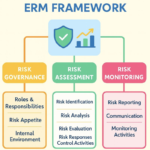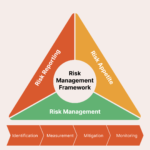
Summary
Companies are no longer treating risk management as a compliance task handled once a year. Instead, leading organizations are embedding risk control directly into daily operations—from procurement and finance to cybersecurity and supply chains. By integrating risk awareness into routine decision-making, businesses improve resilience, prevent costly disruptions, and create stronger governance structures that support long-term growth.
Why Risk Control Is Moving Into Daily Operations
For decades, many companies treated risk management as a periodic exercise—something handled by legal teams, auditors, or compliance officers once or twice a year. That approach is rapidly changing.
Modern businesses operate in environments where disruptions occur constantly: cyberattacks, regulatory changes, supplier instability, geopolitical shifts, and evolving consumer expectations. According to research from the Deloitte Global Risk Management Survey, organizations with integrated risk frameworks are significantly more likely to identify threats early and reduce operational losses.
As a result, companies are embedding risk controls into the everyday workflows of employees across departments.
Instead of relying solely on top-down oversight, risk awareness now appears in:
- procurement approvals
- IT access management
- supplier onboarding
- project planning
- product development
- financial decision-making
The goal is simple: make risk visibility part of normal business operations rather than an isolated compliance activity.
What “Integrated Risk Control” Actually Means
Integrated risk control refers to systems, policies, and operational habits that continuously monitor potential threats while work is happening—not after the fact.
In practice, this means companies are combining:
- risk assessment tools
- internal control systems
- data monitoring
- employee accountability
- automated compliance checks
Instead of asking, “What risks did we face this quarter?” leaders are asking, “What risks are emerging right now?”
A manufacturing firm, for example, may embed risk indicators into supply chain dashboards. If supplier delivery times begin slipping or geopolitical risk increases in a sourcing region, the system flags the issue automatically.
Similarly, finance teams now rely on real-time transaction monitoring to identify fraud indicators before payments are finalized.
This operational integration significantly shortens response times.
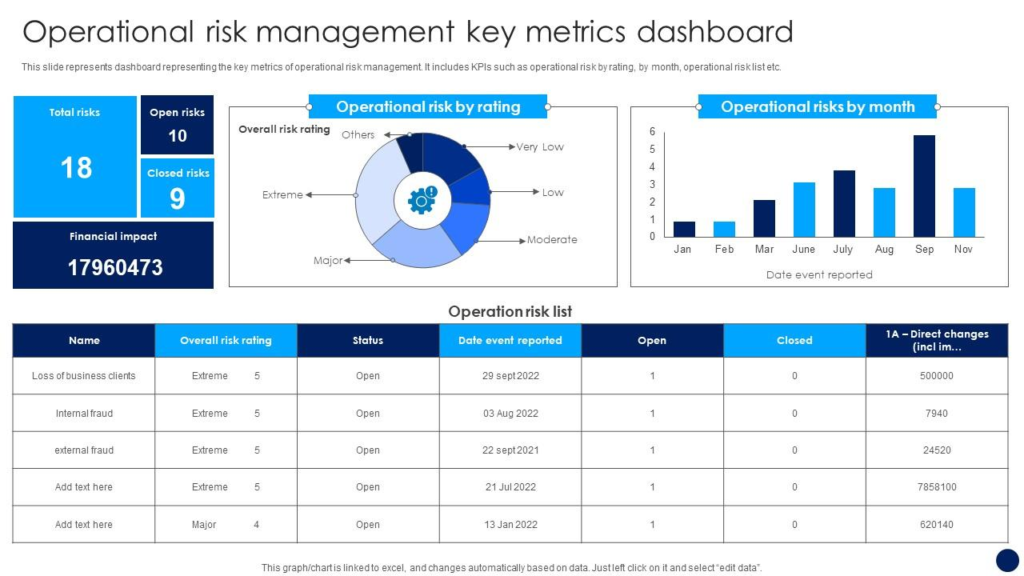
Why Companies Are Prioritizing Operational Risk Controls
Several structural changes in business environments are pushing companies toward this model.
1. Cybersecurity threats require constant vigilance
Cybercrime costs are projected to exceed $10 trillion annually by 2025, according to Cybersecurity Ventures. Because threats evolve daily, companies cannot rely solely on annual security reviews.
Instead, they embed risk checks directly into software development, employee login protocols, and cloud infrastructure monitoring.
2. Supply chain disruptions exposed weak oversight
The pandemic revealed how fragile global supply networks can be. Companies that relied on single suppliers or lacked real-time visibility struggled to respond.
As a result, procurement teams now track risk metrics such as:
- supplier financial health
- geopolitical exposure
- environmental disruptions
- transportation bottlenecks
These indicators appear inside procurement systems used daily.
3. Regulatory expectations are increasing
Industries such as finance, healthcare, and technology face growing regulatory scrutiny.
Agencies expect organizations to demonstrate continuous oversight, not just periodic reporting.
Embedding risk controls into everyday operations helps companies document compliance automatically.
4. Data availability enables real-time monitoring
Cloud platforms and analytics tools now allow organizations to monitor operational metrics instantly.
This technology makes continuous risk assessment possible.
How Risk Control Is Embedded Across Business Departments
The shift toward operational risk integration affects nearly every function inside an organization.
Finance
Finance teams increasingly use automated systems to detect unusual financial activity.
Examples include:
- transaction monitoring software
- automated segregation-of-duties checks
- AI-based fraud detection tools
- expense approval workflows with built-in policy validation
A mid-size U.S. healthcare company, for example, reduced fraudulent reimbursement claims by implementing automated billing risk flags inside its accounting system.
Employees cannot submit high-risk claims without additional review.
Supply Chain and Procurement
Supply chain teams are embedding risk evaluation directly into sourcing decisions.
Common approaches include:
- supplier risk scoring
- geopolitical risk monitoring
- dual-supplier strategies
- digital supplier verification systems
Retailers now routinely track supplier reliability data before approving purchase orders.
If risk scores fall below a threshold, procurement systems automatically require secondary approvals.
IT and Cybersecurity
Risk control in IT environments focuses heavily on prevention.
Organizations are integrating:
- identity access management systems
- automated vulnerability scanning
- continuous threat detection
- endpoint monitoring tools
For example, many U.S. companies now require multi-factor authentication and automated privilege reviews as standard operational procedures.
These controls run continuously rather than during periodic audits.
Operations and Manufacturing
Operational teams incorporate risk monitoring through process controls and quality systems.
Manufacturers often rely on:
- sensor-based equipment monitoring
- predictive maintenance software
- safety incident tracking systems
- quality deviation alerts
By identifying mechanical or safety risks early, organizations reduce downtime and workplace injuries.
Technology Driving Integrated Risk Management
Technology plays a major role in enabling everyday risk control.
Enterprise platforms now combine data from multiple departments, creating unified risk visibility.
Common technologies include:
Governance, Risk, and Compliance (GRC) platforms
GRC software centralizes risk monitoring across the organization.
These systems track:
- compliance tasks
- control testing
- risk assessments
- policy management
Examples used widely in the U.S. include platforms from companies such as ServiceNow and RSA.
Data analytics and predictive modeling
Advanced analytics help companies anticipate potential disruptions.
For example:
- retail companies predict inventory shortages
- banks identify credit risk patterns
- logistics firms anticipate transportation delays
Predictive models allow organizations to address risks before they escalate.
Automated internal controls
Automation ensures policies are enforced consistently.
Examples include:
- automated approval workflows
- real-time financial reconciliation
- security configuration checks
- audit trail generation
Automation reduces the risk of human error.
Real-World Example: Risk Integration in the Banking Sector
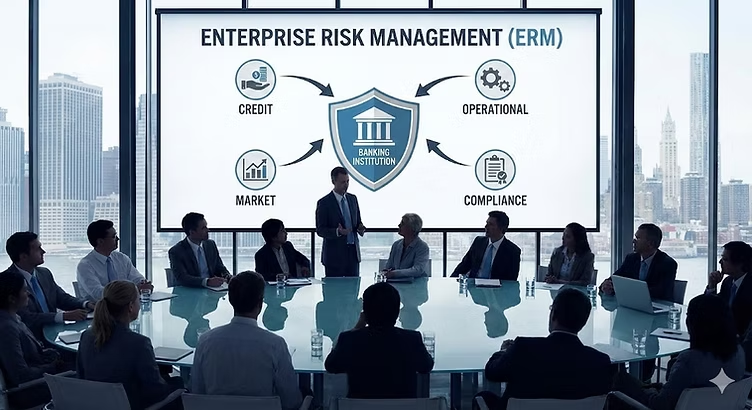
Banks are among the most advanced adopters of integrated risk controls.
In many U.S. financial institutions, risk monitoring occurs across thousands of daily processes.
Examples include:
- automated transaction monitoring to detect money laundering
- real-time credit exposure tracking
- continuous cybersecurity monitoring
- fraud detection algorithms for payment systems
According to the Federal Reserve, modern banks rely heavily on automated risk indicators embedded into operational systems to meet regulatory requirements.
Without these controls, compliance with financial regulations would be nearly impossible.
Cultural Changes Required for Operational Risk Integration
Technology alone does not solve risk challenges.
Organizations must also build a culture where employees understand and manage risk within their roles.
Effective companies promote risk awareness by:
- training employees on operational risks
- clearly assigning accountability for risk decisions
- integrating risk metrics into performance evaluations
- encouraging early reporting of potential issues
When risk awareness becomes part of daily work culture, employees proactively identify problems rather than hiding them.
Common Challenges When Implementing Integrated Risk Controls
Despite its advantages, operational risk integration can be difficult to implement.
Organizations frequently encounter several obstacles.
Over-reliance on manual processes
Some companies still rely heavily on spreadsheets and manual reviews, which slow risk detection.
Fragmented data systems
Risk insights become limited when data is spread across disconnected platforms.
Employee resistance
Staff may initially view risk controls as bureaucratic barriers to productivity.
Leadership must explain how these controls protect both the organization and employees.
Excessive complexity
Too many controls can overwhelm teams.
Successful companies prioritize high-impact risks instead of trying to monitor everything.
Benefits of Embedding Risk Controls Into Operations
Organizations that successfully integrate risk management into daily workflows typically see measurable benefits.
Key advantages include:
- faster identification of emerging threats
- fewer operational disruptions
- stronger regulatory compliance
- improved decision-making
- increased organizational resilience
A PwC global risk study found that companies with mature risk integration programs report significantly higher confidence in their ability to handle unexpected disruptions.
Frequently Asked Questions
What is operational risk control?
Operational risk control refers to systems and procedures designed to identify, monitor, and mitigate risks that arise from daily business activities, such as system failures, human error, fraud, or supply chain disruptions.
Why are companies integrating risk management into operations?
Because risks now emerge rapidly in digital and global business environments. Embedding controls into everyday processes helps organizations detect and respond to threats immediately.
What industries rely most on integrated risk controls?
Highly regulated industries—including banking, healthcare, insurance, energy, and technology—tend to adopt integrated risk systems first due to regulatory requirements and high operational complexity.
How does technology support operational risk management?
Technology enables real-time monitoring, automated compliance checks, predictive analytics, and centralized reporting across departments.
What is a GRC platform?
A Governance, Risk, and Compliance platform is software that helps organizations manage policies, track risk assessments, monitor compliance activities, and document internal controls.
What role do employees play in risk management?
Employees are often the first to detect operational issues. Training and accountability ensure that risk awareness becomes part of everyday decision-making.
Can small businesses integrate risk controls too?
Yes. Even small companies can embed simple controls such as approval workflows, cybersecurity protocols, and supplier verification procedures.
How often should operational risks be reviewed?
Modern organizations monitor many risks continuously through automated systems, while conducting broader strategic risk reviews quarterly or annually.
What is the difference between compliance and risk management?
Compliance focuses on meeting regulatory requirements, while risk management addresses broader threats that could affect operations, finances, or reputation.
How does integrated risk management improve resilience?
By identifying threats early and enabling faster responses, organizations can reduce the impact of disruptions and maintain operational stability.
Operational Resilience in Practice
The most resilient companies today treat risk control not as a bureaucratic exercise but as a core operational capability.
By embedding risk monitoring into finance systems, procurement workflows, cybersecurity infrastructure, and manufacturing processes, organizations create early warning systems that protect both daily operations and long-term strategy.
As business environments continue evolving, the companies that thrive will be those that recognize risk awareness as a routine part of how work gets done.
Key Insights at a Glance
- Risk management is shifting from periodic reviews to continuous operational monitoring
- Technology platforms now enable real-time risk detection across departments
- Cybersecurity and supply chain disruptions are major drivers of integrated risk programs
- Automation helps enforce internal controls consistently
- Organizational culture plays a critical role in successful risk integration
- Companies with embedded risk systems respond faster to disruptions