
In 2026, smart investors are paying close attention to a handful of variables that matter more than headlines alone: the path of interest rates, the durability of corporate earnings, the role of bonds after years of uncertainty, concentration risk in U.S. equities, and whether portfolios are still aligned with real goals. The big theme is not prediction—it is positioning for multiple plausible outcomes.
Why 2026 Feels Different From the Last Few Investing Years
Investors entered 2026 after an unusual stretch of market conditions. Inflation has cooled from its peak but has not fully disappeared. Interest rates are lower than their 2023 highs, yet still elevated enough to influence mortgages, bond yields, stock valuations, and cash returns. Meanwhile, U.S. equities have continued to benefit from strong earnings growth in parts of the market, especially in technology and AI-linked businesses, even as valuations in some segments have become harder to ignore.
That combination—slower inflation progress, still-restrictive rates, strong but uneven earnings, and expensive pockets of the stock market—is why many experienced investors are spending less time asking “What will the market do next month?” and more time asking “What assumptions are built into my portfolio right now?”
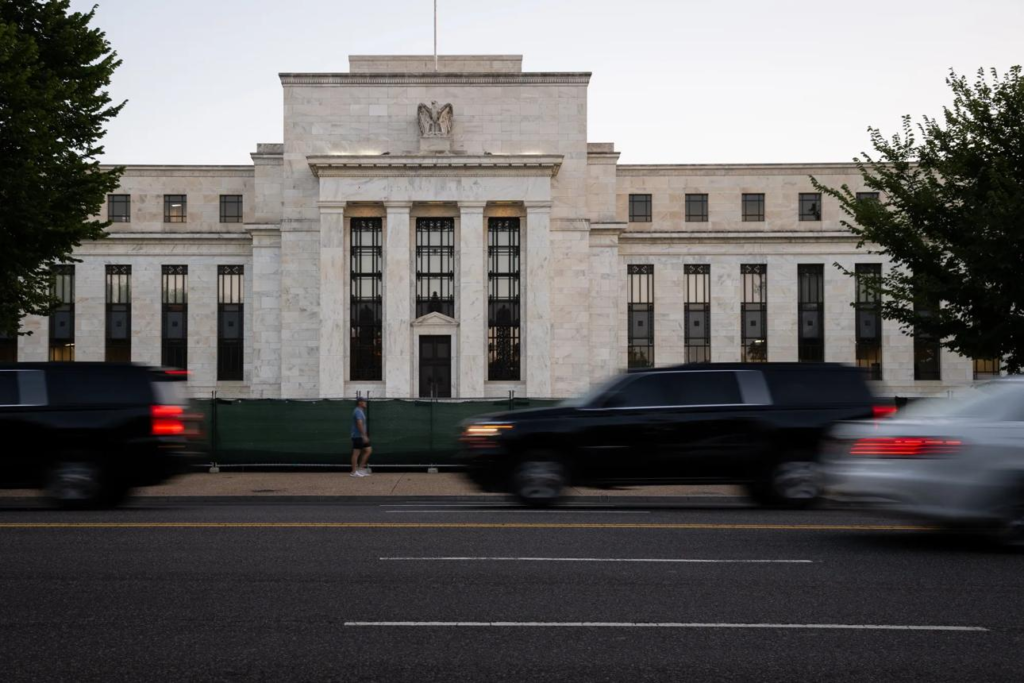
That is a more useful question because 2026 is shaping up as a year in which a few macro variables can pull markets in very different directions. The Federal Reserve held its target range at 3.5% to 3.75% in June, while continuing to emphasize inflation and labor-market data. At the same time, 10-year Treasury yields have remained elevated, and long-term bond yields have occasionally pushed above psychologically important levels, keeping borrowing costs and valuation math front and center.
For long-term investors, the practical implication is straightforward: this is not a year for abandoning a plan, but it is absolutely a year for checking whether the plan still makes sense.
The First Big Variable: Where Interest Rates Actually Settle
A great deal of 2026 investing still runs through one question: are rates staying higher for longer, or are they simply normalizing after a historic tightening cycle?
The answer matters because interest rates shape almost every major asset class. Higher rates can support yields on cash and short-term Treasuries, but they also raise financing costs for businesses, pressure richly valued growth stocks, and make future corporate earnings worth slightly less in present-value terms. Lower rates, by contrast, can support equity valuations and reduce pressure on housing and corporate borrowing, but they can also shrink the attractive yields investors have finally been earning on cash.
The Fed’s own projections in 2026 still point to an economy growing modestly with inflation gradually moving lower rather than collapsing quickly back to 2%. Vanguard’s 2026 outlook likewise argued that persistent inflation and steady growth could limit the Fed’s room to cut aggressively, while J.P. Morgan projected that Treasury yields could remain elevated rather than falling sharply.
For investors, the practical takeaway is not that they need to predict the next Fed move precisely. It is that they should understand which parts of their portfolio benefit from rates staying relatively high and which parts become more vulnerable.
A few examples:
- A retiree sitting in a checking account earning almost nothing may still be missing meaningful yield available in Treasury bills, money market funds, or high-yield savings products.
- A younger investor who loaded up on speculative growth stocks during a lower-rate period may be more exposed than they realize if long-term yields keep drifting higher.
- A balanced investor who abandoned bonds after 2022 may be overlooking the fact that fixed income now offers income levels that were unavailable for much of the previous decade.
This is why smart investors in 2026 are watching not only the Fed funds rate, but also the shape of the Treasury curve, real yields, and inflation expectations.
The Second Variable: Whether Earnings Keep Doing the Heavy Lifting
The U.S. stock market has been supported by something that matters more than social-media sentiment: earnings. Reuters reported in early July that analysts expected S&P 500 profits to rise sharply in the second quarter, with markets looking to earnings season for confirmation that the rally still has a fundamental backbone. BlackRock has also highlighted strong U.S. earnings momentum even as valuation concerns have risen.
That matters because stocks can stay expensive for longer than many expect if earnings keep surprising to the upside. But if earnings growth narrows to a smaller group of mega-cap companies while the rest of the market struggles, the picture becomes less comfortable.
This is one of the central debates of 2026: is the market rally broadening, or is it still leaning too heavily on a relatively small cluster of winners?
Investors do not need to answer that question with a binary yes or no. They do, however, need to examine whether their portfolio has become unintentionally concentrated. That can happen in several ways:
- owning a total market fund and then separately adding large positions in the same mega-cap names
- holding multiple technology funds that overlap heavily
- letting one or two winning positions grow so large that they begin to dominate portfolio risk
- assuming diversification exists simply because the account contains many ticker symbols
A practical portfolio review in 2026 often starts with one unglamorous exercise: list the top 10 holdings across every account you own and calculate how much of your total portfolio they represent. Many investors are surprised by the answer.
The Third Variable: Whether Bonds Are Back to Doing Their Job
One of the most important changes in the investment landscape is that bonds are no longer offering the near-zero yields that defined much of the 2010s. That does not mean bonds are risk-free or that every bond fund is attractive. It does mean that fixed income deserves a more serious look than it received during the “there is no alternative” era of ultra-low rates.
Morningstar’s 2026 work on stock and bond return expectations and income opportunities points to a more balanced environment for long-term investors, with fixed income once again able to contribute meaningful yield and diversification. Vanguard has similarly argued that fixed income remains a key part of diversified portfolios.
The smart question in 2026 is not “Should I own bonds?” but “What role do I need bonds to play?”
That role could be:
- Stability: high-quality intermediate bond funds or Treasuries can reduce the volatility of an all-equity portfolio.
- Income: retirees and near-retirees may be able to lock in more attractive yields than they could a few years ago.
- Liquidity for rebalancing: a bond allocation gives investors something to trim or redeploy during equity sell-offs.
- Goal matching: if money is needed in the next two to five years, short-duration bonds or Treasuries may be more appropriate than stocks.
An example helps. Imagine a 62-year-old investor planning to retire in 2028. In 2021, it may have felt frustrating to keep meaningful money in bonds or cash because yields were so low. In 2026, that same investor can often earn a materially better yield while reducing sequence-of-returns risk heading into retirement. The math of “safe money” has changed.

The Fourth Variable: How Much of the Rally Is Already Priced In
Bull markets often create a subtle problem: investors begin to think in narratives rather than in prices.
AI, automation, reshoring, productivity gains, infrastructure, and healthcare innovation are all legitimate long-term themes. But a good theme does not automatically equal a good investment at any price. Morningstar has noted elevated valuations in parts of the U.S. market, while BlackRock has pointed out that even if forward earnings make valuations look more reasonable than some historical measures suggest, investors still need to be selective.
In practical terms, smart investors are asking questions like:
- If I buy this fund or stock today, what growth assumptions am I implicitly paying for?
- Would I still want this position if the stock went nowhere for two years but earnings kept compounding?
- Am I buying because the business is attractive, or because the chart has gone up?
This is especially relevant in sectors tied to AI and semiconductors. There may absolutely be durable long-term winners there. But there is a difference between investing in a transformative trend and overpaying for the most obvious names after a major run-up.
For many households, the sensible response is not to avoid innovation-driven sectors entirely. It is to avoid making them the whole plan.
The Fifth Variable: Cash, But Used Intentionally
Cash is more interesting in 2026 than it was in much of the prior decade. High-yield savings accounts have continued to offer yields far above traditional bank savings rates, and Treasury bills have remained a legitimate place to park near-term money.
That said, smart investors are careful not to let “cash is finally paying something” turn into a permanent excuse for inaction. Cash is a tool, not a strategy by itself.
A useful framework is to separate cash into three buckets:
1) Emergency cash
This is the money that should not be in stocks because its job is resilience, not return.
2) Near-term spending cash
This covers expenses expected within the next one to three years: a home down payment, tuition, a tax bill, or a planned renovation.
3) Strategic dry powder
This is optional capital set aside for future opportunities, such as rebalancing after a correction or funding a deliberate portfolio change.
Where investors get into trouble is when all three categories blur together. Someone may say they are “waiting for a better entry point,” but in reality they have been sitting on long-term investment cash for 18 months without a rules-based plan for deploying it.
The Sixth Variable: Tax Efficiency Is Back in the Conversation
When market returns are easy, investors often underappreciate taxes. In a more mixed return environment, taxes matter more.
That is one reason smart investors are paying attention to:
- Asset location: keeping tax-inefficient assets, such as taxable bond funds or REIT-heavy strategies, in tax-advantaged accounts when possible
- Tax-loss harvesting opportunities: especially after volatile stretches in sectors or international markets
- Capital gains exposure in actively managed funds
- Retirement account contribution limits and catch-up opportunities
For 2026, the IRS increased the 401(k) contribution limit to $24,500, with additional catch-up rules for eligible workers, including a higher catch-up contribution limit for some participants ages 60 to 63 under SECURE 2.0 provisions.
That may sound administrative, but it is strategically important. A household earning strong income in peak career years can materially improve long-term after-tax wealth simply by using available retirement-account space efficiently. In many cases, improving savings placement is a more reliable source of long-term value than trying to outguess the market.

The Seventh Variable: Global Diversification, Even When the U.S. Looks Strong
U.S. markets have outperformed many international markets for an extended period, and it is understandable that some investors feel little urgency to diversify abroad. But smart investors in 2026 are still watching international exposure for two reasons.
First, valuation differences still matter over long horizons. Second, concentration in one country—even a strong one—creates risk if leadership changes.
The SEC continues to emphasize the role and risks of international investing, including currency, political, and market-structure considerations.
This does not mean every investor needs a dramatic shift overseas. It does mean investors should be able to explain why they hold the international allocation they do—or why they do not. “Because U.S. stocks have been winning recently” is not a strategy. It is a rearview-mirror observation.
What Smart Investors Are Actually Doing With Their Portfolios in 2026
The most disciplined investors are not necessarily making dramatic bets. They are making targeted adjustments where needed. In many cases, that looks like:
- rebalancing portfolios that have drifted heavily toward large-cap U.S. growth
- rebuilding a bond allocation after years of underweighting fixed income
- moving idle cash into intentional buckets with defined purposes
- maxing out tax-advantaged accounts before increasing taxable investing
- stress-testing retirement plans under multiple return assumptions rather than one optimistic scenario
- checking whether insurance, estate documents, and beneficiary designations still align with the financial plan
That last point deserves more attention than it usually gets. Smart investing is not just security selection. It is coordinating portfolio choices with taxes, retirement timing, spending needs, and risk tolerance.
An investor who says, “I’m 55, hope to retire at 62, want to help with one child’s graduate school costs, and need part of my portfolio to support that timeline,” is asking a much better question than “What’s the best stock for 2026?”
A Better Question Than “What Should I Buy Right Now?”
If there is one mindset shift worth making this year, it is this: replace prediction with preparation.
Preparation means building a portfolio that can function if rates stay elevated, if the economy slows modestly, if earnings remain strong but concentrated, or if market leadership broadens beyond the most obvious winners. It means deciding in advance how much risk you actually want to take rather than discovering the answer during the next correction.
For many investors, the smartest move in 2026 is not a new ticker symbol. It is a portfolio audit:
- What is my actual stock/bond/cash allocation across all accounts?
- How concentrated am I in the top 10 holdings?
- What money do I need in the next three years?
- Am I earning a reasonable yield on cash that is supposed to be safe?
- Have I used my retirement-account contribution space efficiently?
- If stocks fell 20%, what would I sell, buy, or rebalance—and do I already know that answer?
Those are the questions that turn market noise into useful action.
The Portfolio Checkpoint That Matters Most This Year
The defining investing skill of 2026 may be selective patience. Not passive neglect, and not hyperactive trading—selective patience.
That means being patient enough not to chase every hot theme, but active enough to rebalance when risk drifts too far. It means accepting that some of the best portfolio improvements are boring: tightening your cash strategy, improving tax placement, extending a bond ladder, or trimming concentration after a strong run. It means recognizing that a long-term strategy can evolve without becoming a reaction to every headline.
Markets, rates, and leadership will keep shifting. Smart investors are not trying to forecast every turn. They are building portfolios sturdy enough to handle more than one path from here.
Key Signals Worth Keeping on Your Radar
- Interest-rate direction matters, but long-term Treasury yields may matter even more for portfolio positioning.
- Earnings quality and breadth are critical to judging whether the market rally remains healthy.
- Bonds are relevant again—not because they are exciting, but because they can finally provide meaningful income and diversification.
- Concentration risk is one of the easiest problems to miss in a strong market.
- Tax efficiency, contribution limits, and cash management can improve outcomes without requiring bold market calls.
- Diversification still matters, especially when one market or one theme dominates headlines.
Frequently Asked Questions
1) Is 2026 a good year to invest in stocks?
For long-term investors, the better framing is whether your asset allocation and time horizon support owning stocks now. If your goals are years away, waiting for a “perfect” year often backfires. The more important question is whether your stock exposure is diversified and sized appropriately for your risk tolerance.
2) Should I keep more money in cash while rates are still relatively high?
Possibly for emergency savings or near-term spending needs, yes. But long-term investment money should not sit in cash indefinitely without a plan. Cash is useful for liquidity and optionality; it is usually not the best long-term growth engine.
3) Are bonds worth buying again in 2026?
For many investors, yes. Higher yields have made bonds more competitive as a source of income and diversification. The right bond allocation depends on time horizon, tax situation, and whether the money is intended for stability, income, or short-term spending.
4) What is the biggest portfolio mistake investors are making in 2026?
A strong candidate is hidden concentration risk—especially in mega-cap U.S. growth and overlapping technology exposure. Another is leaving too much long-term money in low-yield or undefined cash positions.
5) Should I invest internationally if U.S. stocks still look stronger?
International diversification can still make sense for valuation, currency, and regime-diversification reasons. The right allocation varies, but it should be intentional rather than accidental.
6) How often should I rebalance in 2026?
For many investors, a calendar-based review once or twice a year works well, with additional rebalancing if allocations drift beyond a set threshold. The goal is not constant tinkering; it is disciplined risk control.
7) Are AI-related investments still worth owning after the run-up?
Potentially, yes—but selectivity matters. A strong long-term theme does not remove valuation risk. Investors should know whether they are buying durable cash-flow businesses, broad diversified exposure, or simply chasing momentum.
8) What should pre-retirees be watching most closely this year?
Sequence-of-returns risk, withdrawal timing, bond allocation, cash reserves for the first years of retirement, and tax-efficient drawdown planning are all important. The closer retirement is, the more portfolio design matters relative to return chasing.
9) How much should I contribute to retirement accounts in 2026?
As much as is realistic after emergency savings and high-interest debt management, especially if you have access to employer matching or tax advantages. The 2026 401(k) limit is higher than in 2025, and eligible catch-up contributions can further increase savings capacity.
10) What should I do before making any major portfolio change?
Review your full allocation across all accounts, tax consequences, time horizon for each pool of money, and whether the change solves a real planning problem or merely responds to recent headlines. If the move is large, it may be worth discussing with a fiduciary financial professional.