Summary
Confident investors rarely rely on luck or market timing. Instead, they develop consistent habits that guide how they research opportunities, manage risk, and stay disciplined during volatility. This article explores the investment behaviors that often distinguish confident investors—from long-term thinking to portfolio diversification—along with practical examples and research-backed insights relevant to everyday American investors.
Why Investment Habits Matter More Than Market Predictions
Many people assume that confident investors simply know which stocks will rise. In reality, confidence in investing usually comes from disciplined habits rather than predictive ability.
According to research from DALBAR’s Quantitative Analysis of Investor Behavior, the average U.S. equity investor often underperforms the market largely because of emotional decision-making—buying during peaks and selling during downturns. The difference between confident investors and the rest frequently lies in how they structure their behavior around uncertainty.
Confident investors tend to build repeatable systems: processes for evaluating investments, rules for risk management, and habits that prevent emotional reactions during market swings.
These behaviors allow them to make rational decisions even when headlines, market volatility, or economic uncertainty create pressure.

1. They Prioritize Long-Term Thinking
One of the most defining habits of confident investors is a clear long-term perspective.
Short-term market movements can be dramatic, but historically the U.S. stock market has rewarded long-term investors. Data from Morningstar and S&P Global show that over multi-decade periods, diversified equity investments have consistently outperformed cash and many fixed-income assets.
Confident investors rarely ask, “What will the market do this month?” Instead, they focus on questions like:
- Where might the economy be in 10–20 years?
- Which industries could continue growing?
- How will compounding affect this investment over decades?
Consider a practical example. An investor who regularly contributed to an S&P 500 index fund through both the 2008 financial crisis and the 2020 pandemic downturn would have experienced short-term volatility but long-term growth.
The habit here isn’t just patience—it’s a structural commitment to time horizons that reduce the impact of temporary noise.
2. They Build Structured Diversification
Diversification is widely recommended, but confident investors treat it as an intentional design choice rather than a vague concept.
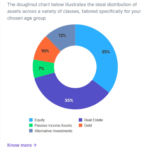
Diversification spreads risk across asset classes, industries, and geographic regions. This prevents a single downturn from significantly damaging an entire portfolio.
Rather than concentrating everything into a handful of popular stocks, experienced investors often distribute their investments across areas such as:
- U.S. equities
- International stocks
- Bonds
- Real estate investment trusts (REITs)
- Cash or short-term instruments
For example, during periods when technology stocks experience declines, other sectors like energy or healthcare may perform differently. Diversification helps smooth portfolio volatility over time.
A well-balanced portfolio doesn’t eliminate risk—but it prevents a single mistake from becoming catastrophic.
3. They Invest Consistently Instead of Waiting for the “Perfect Time”
Another common habit among confident investors is regular, automated investing.
Instead of attempting to predict market highs and lows, they often use dollar-cost averaging, investing fixed amounts at regular intervals.
This approach reduces emotional decision-making and spreads purchases across different market prices.
For example, many American workers follow this strategy without realizing it through their 401(k) retirement contributions. Each paycheck automatically invests a portion of income regardless of market conditions.
Over long periods, consistent investing often produces more reliable outcomes than trying to time entries and exits.
Research from Vanguard suggests that lump-sum investing may outperform in certain scenarios, but consistent investing remains effective for most individuals because it reduces behavioral mistakes.
4. They Understand the Power of Compounding
Confident investors develop a deep appreciation for compounding returns.
Compounding occurs when investment earnings generate additional earnings over time. The longer money remains invested, the more powerful this effect becomes.
A simple example illustrates the impact.
An investor who contributes $500 per month into a portfolio earning an average annual return of 7% could accumulate roughly $610,000 after 30 years, according to many standard retirement calculators.
What separates confident investors is their ability to visualize this long-term growth. Because they understand compounding, they avoid frequent withdrawals or unnecessary trading that interrupts the process.
They see time as an asset—not just a waiting period.

5. They Focus on Risk Management, Not Just Returns
Many inexperienced investors concentrate only on potential gains.
Confident investors think first about risk.
Professional portfolio managers often describe investing as a balance between expected return and downside protection. Avoiding large losses can be just as important as capturing gains.
Common risk-management habits include:
- Limiting position sizes in individual stocks
- Maintaining emergency cash reserves
- Diversifying across sectors
- Rebalancing portfolios periodically
- Avoiding excessive leverage
For example, a confident investor may limit any single stock to 5% of a portfolio. If that company encounters unexpected trouble, the impact remains manageable.
This approach helps investors remain calm during volatility because no single event can derail their entire financial plan.
6. They Develop a Clear Investment Framework
Confident investors typically follow a defined strategy rather than reacting to market headlines.
Different investors may adopt different frameworks. Some prefer index investing. Others focus on dividend stocks or value investing.
What matters is consistency.
Common frameworks include:
- Index investing: Tracking broad market indices like the S&P 500
- Dividend investing: Prioritizing companies with stable cash flow and dividend growth
- Value investing: Buying undervalued companies relative to fundamentals
- Asset allocation strategies: Balancing stocks, bonds, and alternatives
A defined approach reduces decision fatigue and prevents constant strategy changes.
Without a framework, investors often chase trends—buying popular assets after they have already surged in price.
7. They Continue Learning About Markets and Economics
Confident investors rarely stop learning.
Financial markets evolve constantly. Interest rates change, new technologies emerge, and global economic trends reshape industries.
Many experienced investors build routines around staying informed, such as:
- Reading financial publications
- Reviewing company earnings reports
- Studying economic indicators
- Following reputable analysts and economists
For instance, understanding how interest rate changes affect bond prices or housing markets can provide useful context when evaluating investment decisions.
Continuous learning doesn’t mean constantly trading. It simply helps investors maintain perspective and avoid common misconceptions.
8. They Control Emotional Decision-Making
Perhaps the most overlooked investment habit is emotional discipline.
Market volatility can trigger powerful psychological reactions—fear during downturns and excitement during rallies.
Confident investors recognize these emotional cycles and design safeguards to prevent impulsive decisions.
Typical methods include:
- Setting predetermined asset allocation targets
- Using automatic investments
- Limiting portfolio checks during volatile periods
- Rebalancing on a fixed schedule
Behavioral finance research shows that emotional reactions often reduce investment performance. Investors who maintain discipline during downturns tend to recover more effectively when markets rebound.
Confidence, in this sense, is less about certainty and more about emotional stability.
9. They Review and Rebalance Periodically
Confident investors rarely leave their portfolios untouched indefinitely.
Instead, they schedule periodic reviews—often annually or semiannually—to evaluate whether their asset allocation still aligns with long-term goals.
Rebalancing involves adjusting holdings to restore the intended portfolio structure.
For example, if strong stock market growth increases equity exposure from 60% to 75% of a portfolio, rebalancing might involve selling some equities and increasing bond holdings.
This process enforces a disciplined version of the classic investing principle: buy low and sell high.
It also ensures that portfolios remain aligned with changing life circumstances such as retirement planning or major expenses.

Frequently Asked Questions
What habits do successful investors tend to share?
Successful investors typically emphasize long-term thinking, diversification, consistent investing, and disciplined risk management. They also avoid emotional trading and follow structured investment frameworks.
Is confidence in investing the same as taking bigger risks?
No. Confident investors often take measured risks, not reckless ones. Their confidence usually comes from understanding diversification, asset allocation, and risk management strategies.
How often should someone review their investments?
Many financial advisors recommend reviewing portfolios once or twice per year unless major life changes occur. Excessive monitoring can encourage emotional decision-making.
Do confident investors actively trade?
Most confident investors trade less frequently than beginners. They tend to focus on long-term holdings and portfolio management rather than constant buying and selling.
What is the biggest mistake new investors make?
One of the most common mistakes is reacting emotionally to market movements—selling during downturns or chasing popular investments during rallies.
Is diversification still important today?
Yes. Even in modern markets with advanced financial products, diversification remains one of the most reliable methods for managing portfolio risk.
How much should beginners invest initially?
Many financial advisors suggest starting with amounts that fit comfortably within a budget. Consistency is usually more important than starting with a large investment.
Can regular investing really outperform market timing?
For most individuals, consistent investing tends to outperform market timing because predicting short-term price movements reliably is extremely difficult.
What role do index funds play in confident investing?
Index funds offer broad diversification and low fees, making them a popular foundation for many long-term investors.
How long should investments typically be held?
While it depends on financial goals, many long-term investors hold core investments for years or even decades to allow compounding to work.
The Quiet Discipline Behind Investor Confidence
Confidence in investing rarely comes from bold predictions or complex strategies. More often, it develops through consistent habits practiced over many years.
Long-term thinking, diversification, disciplined risk management, and continuous learning create stability even when markets fluctuate. Investors who cultivate these behaviors gradually replace uncertainty with clarity.
Over time, confidence becomes less about predicting the future and more about trusting a well-designed process.
Key Behavioral Traits Worth Remembering
- Long-term time horizons often outperform short-term speculation
- Diversification reduces the impact of individual investment risks
- Consistent investing builds discipline and captures market growth
- Compounding rewards patience and early participation
- Risk management protects portfolios during market volatility
- Emotional discipline prevents costly behavioral mistakes
- Structured investment frameworks improve decision-making
- Periodic portfolio reviews maintain alignment with goals