Summary
Market uncertainty can make investing feel uncomfortable, but it also highlights the importance of disciplined strategy. A thoughtful approach focuses on long-term goals, diversification, risk awareness, and emotional control rather than short-term reactions. By understanding market cycles and maintaining a structured plan, investors can navigate volatility more confidently while protecting their financial future and positioning portfolios for sustainable growth.
Understanding Market Uncertainty
Periods of market uncertainty are a natural part of investing. Economic slowdowns, geopolitical events, interest rate changes, and inflation concerns can all influence investor sentiment. When uncertainty rises, financial markets often become more volatile, with prices fluctuating more dramatically over short periods.
For individual investors in the United States, this volatility can be unsettling. However, historical data shows that market fluctuations are not unusual. According to long-term research from investment firms such as Vanguard and Morningstar, markets have experienced numerous downturns over the past century while still delivering long-term growth.
The S&P 500, for example, has historically returned roughly 10% annually on average over many decades before inflation adjustments. That figure includes periods of major crises such as the 2008 financial crisis, the COVID-19 market shock in 2020, and inflation-driven market shifts in recent years.
Understanding this broader perspective helps investors recognize that uncertainty does not necessarily invalidate a long-term investment strategy.
Why Investors React Emotionally During Volatility
Market uncertainty triggers emotional responses because money is closely tied to personal security and future plans. When markets fall, investors may feel pressure to sell investments in order to avoid further losses.
Behavioral finance research has consistently shown that emotional reactions often lead to poor investment decisions. Selling during downturns or chasing rapidly rising assets can disrupt a carefully built financial plan.
Common emotional responses during uncertain markets include:
- Loss aversion, where investors fear losses more than they value gains
- Recency bias, which causes people to assume current trends will continue indefinitely
- Market timing attempts, where investors try to predict short-term movements
- Overreaction to headlines or economic news
These reactions can lead to buying high and selling low—the opposite of what most successful long-term investors aim to do.
A thoughtful investment approach recognizes these tendencies and builds safeguards against emotional decision-making.

The Role of Long-Term Perspective
One of the most effective ways to navigate market uncertainty is maintaining a long-term perspective. Markets move in cycles, often recovering after periods of decline.
Looking at historical patterns can provide reassurance. The U.S. stock market has recovered from every major downturn over time, though recovery periods can vary.
For investors saving for retirement, education funding, or long-term wealth building, short-term volatility often matters less than consistent participation in the market.
Several factors support a long-term approach:
- Compounding returns over time
- Reinvestment of dividends
- Gradual economic growth
- Technological innovation and productivity gains
When investors remain invested through market cycles, they allow these forces to work in their favor.
Diversification: A Core Risk Management Tool
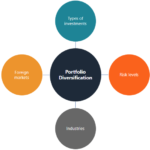
Diversification remains one of the most widely recommended strategies for managing investment risk. Instead of relying on a single asset class, diversified portfolios spread investments across different types of assets.
This approach helps reduce the impact of volatility in any single sector or investment.
A diversified portfolio often includes:
- U.S. large-cap stocks
- International equities
- Bonds or fixed-income securities
- Real estate investment trusts (REITs)
- Cash or short-term instruments
When one asset category performs poorly, others may perform better or decline less sharply, helping stabilize overall portfolio performance.
For example, during periods when stock markets decline, government bonds have sometimes provided relative stability. While diversification does not eliminate risk, it can help manage it more effectively.
Asset Allocation: Aligning Investments With Goals
Asset allocation refers to how investments are distributed among different asset classes. This decision often plays a larger role in portfolio performance than selecting individual securities.
Investors typically adjust asset allocation based on factors such as:
- Age and investment timeline
- Financial goals
- Risk tolerance
- Income needs
For example, younger investors saving for retirement may hold a higher percentage of stocks, which historically offer greater long-term growth potential. Investors nearing retirement often shift toward more conservative allocations that emphasize income and stability.
During uncertain markets, maintaining a consistent asset allocation strategy helps investors avoid reactive changes that could undermine their long-term plan.
Periodic portfolio rebalancing—returning allocations to their intended targets—can also help maintain discipline.
The Importance of Cash Reserves
Maintaining adequate cash reserves is another often overlooked component of investment resilience.
Financial planners typically recommend keeping several months of living expenses in accessible savings accounts or money market funds. This buffer allows investors to cover short-term financial needs without selling long-term investments during market downturns.
Without an emergency reserve, investors may be forced to liquidate assets at unfavorable prices during periods of volatility.
Cash reserves also provide psychological stability. Knowing that immediate expenses are covered can make it easier to stay invested during turbulent markets.
Evaluating Risk Tolerance Honestly
Market uncertainty often reveals whether investors truly understand their risk tolerance.
Risk tolerance is not simply a theoretical preference; it reflects how comfortably someone can handle real financial fluctuations.
An investor who believes they can tolerate volatility may feel differently when their portfolio declines by 20% or more.
Questions investors may ask themselves include:
- Would I be comfortable if my investments temporarily declined in value?
- How long do I plan to keep these investments?
- Do I rely on this money for near-term expenses?
Financial advisors often encourage investors to design portfolios that align with both financial goals and emotional comfort levels.
A strategy that is sustainable during market stress is far more valuable than one that appears optimal only during stable conditions.
The Role of Dollar-Cost Averaging
Dollar-cost averaging is a strategy where investors contribute fixed amounts of money at regular intervals regardless of market conditions.
This approach can help reduce the impact of market volatility because investments are spread over time rather than concentrated at a single price point.
Benefits of dollar-cost averaging include:
- Reduced pressure to time the market
- Automatic participation during market downturns
- Gradual accumulation of assets
- Greater consistency in saving habits
Many retirement accounts in the United States, such as 401(k) plans, naturally follow this approach because contributions occur regularly through payroll deductions.
Over long time horizons, consistent investing often matters more than perfect timing.
Monitoring the Economic Environment Without Overreacting
Investors benefit from understanding major economic indicators, but reacting impulsively to every market headline can be counterproductive.
Key indicators that often influence markets include:
- Inflation trends
- Interest rate decisions by the Federal Reserve
- Employment data
- Corporate earnings growth
- Consumer spending patterns
While these indicators shape the economic landscape, they rarely provide precise signals for short-term market movements.
Instead of reacting to every piece of news, thoughtful investors evaluate how economic developments might affect their long-term strategy.
This measured approach allows them to remain informed without becoming reactive.
The Value of Professional Guidance
For many investors, working with a financial advisor can provide structure and reassurance during uncertain markets.
Advisors help clients:
- Clarify financial goals
- Construct diversified portfolios
- Manage tax efficiency
- Maintain discipline during volatile periods
According to research by Vanguard, behavioral coaching—helping investors avoid emotional decisions—can add meaningful value over time.
Even experienced investors sometimes benefit from having an objective perspective when markets become unpredictable.

Frequently Asked Questions
Is it better to stop investing during a market downturn?
Not necessarily. Continuing to invest during downturns can allow investors to purchase assets at lower prices, which may support long-term growth.
Should I move my investments to cash during uncertainty?
Moving entirely to cash can reduce risk temporarily but may also prevent participation in market recoveries. Decisions should align with long-term goals and risk tolerance.
How much diversification is enough?
There is no universal number, but many diversified portfolios include multiple asset classes such as domestic stocks, international stocks, bonds, and alternative assets.
How often should I rebalance my portfolio?
Many investors rebalance annually or when allocations drift significantly from target levels.
Can market volatility create opportunities?
Yes. Market declines sometimes allow investors to acquire quality assets at lower prices, though timing these opportunities consistently is difficult.
What role do bonds play during uncertain markets?
Bonds often provide income and stability within diversified portfolios, though their performance can vary depending on interest rate conditions.
How important is an emergency fund for investors?
Extremely important. Emergency savings reduce the likelihood of needing to sell investments during unfavorable market conditions.
Should younger investors worry about market downturns?
Younger investors often have longer time horizons, which historically allows more time for markets to recover from downturns.
How do inflation and interest rates affect investments?
Higher inflation and rising interest rates can influence stock and bond valuations, affecting overall portfolio performance.
Is professional financial advice necessary?
Not always, but many investors find value in guidance that supports long-term planning and disciplined decision-making.
Navigating Uncertainty With Discipline
Market uncertainty is unavoidable, but it does not need to derail a well-structured investment strategy. Investors who focus on fundamentals—diversification, long-term thinking, disciplined saving, and risk awareness—often navigate volatility more effectively.
Rather than attempting to predict every market movement, thoughtful investors concentrate on factors they can control: saving consistently, maintaining balanced portfolios, and aligning investments with personal goals.
Over time, patience and discipline tend to play a larger role in investment outcomes than short-term reactions.
Key Insights at a Glance
- Market volatility is a normal part of long-term investing
- Emotional reactions can undermine investment strategies
- Diversification helps reduce risk exposure
- Asset allocation should reflect long-term financial goals
- Cash reserves support financial stability during downturns
- Dollar-cost averaging promotes consistent investing
- Understanding risk tolerance is essential for sustainable strategies
- Professional guidance can help investors stay disciplined